- Salary statistics
- Industrial sheet metal workers, heavy sheet metal workers salary
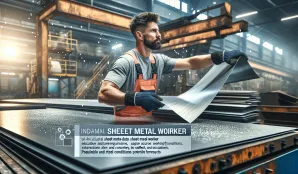
Industrial sheet metal workers, heavy sheet metal workers salary
Latest available salary statistics are for 2025. Compare average pay, salary range and related job listings.
39 100 - 39 700 SEK / month
Industriell tillverkning
Related tools
Salary progression Industrial sheet metal workers, heavy sheet metal workers
What does an industrial sheet metal worker in heavy sheet metal do? – Tasks and work environment
An industrial sheet metal worker in heavy sheet metal primarily works with processing, shaping, and assembling large sheet metal and steel structures for industry. Tasks can include manufacturing and installing sheet metal components, performing welding and bending work on tanks, bridges, or industrial buildings. The work often takes place in a workshop but also on construction sites or industrial facilities, where collaboration with other trades is common. The work environment can be physically demanding, involving heavy lifting and sometimes working at heights, requiring precision, safety awareness, and technical understanding.
Wage development over time
Over the past three years, industrial sheet metal workers in heavy sheet metal have experienced steady wage increases. In 2022, the average salary was 32,800 SEK per month, which increased to 36 500 SEK in 2023. In 2024, the average salary is 39 700 SEK, representing an approximate 11.3% increase over the three-year period. This positive trend can be explained by increased demand for skilled labor in the industry, ongoing investments in infrastructure and manufacturing sectors, as well as union negotiations and industry-specific agreements that have strengthened wage levels. The market for heavy sheet metal workers is also influenced by technological development and skill requirements, making experienced professionals particularly attractive.
Heavy sheet metal worker salaries – complete overview
- Average salary: 39 700 SEK/month
- Lowest/Highest salary: Data unavailable, but the average provides a good indication of the market situation
- Hourly wage: 219 SEK (based on 166 hours/month)
- Gender differences: Men earn 39 800 SEK, data for women is unavailable
- Regional differences: No detailed statistics, but wages can vary depending on industry location and demand
Education and qualifications
To work as an industrial sheet metal worker in heavy sheet metal, a high school education in industrial technology or construction and civil engineering programs is usually required, often with specialization in sheet metal work or welding. Practical experience and a trade certificate are highly meritorious, especially at larger workplaces with high safety and quality standards. Further training, certifications, and approved apprenticeships can improve employability and increase earning potential.
- High school education: Industrial technology program, 3 years
- Trade certificate: After completing education and apprenticeship
- Certifications: Welding and safety certificates may be required
- Practical training: Apprenticeship periods at companies are common
- Prerequisites: Good physical condition and technical interest
Many heavy sheet metal workers specialize in uncommon materials or advanced techniques, which can open doors to international projects and larger construction jobs. Flexibility and willingness to learn new skills are highly valued in the industry.
Common benefits and compensations
In addition to monthly salary, heavy sheet metal workers often receive benefits such as overtime pay for evening and night shifts, per diems for work at other locations, and wellness allowances. Other common compensations include work clothing, tool allowances, and sometimes bonuses for large projects or overtime. Collective agreements regulate many conditions and often provide security regarding pensions and insurance.
Competition and challenges
The competition for jobs as a heavy sheet metal worker varies depending on region and economic conditions. During periods of high industrial production and infrastructure investments, demand increases, while recessions can lead to fewer assignments. The shortage of qualified workers means employers sometimes struggle to find the right skills, especially for specialized tasks or advanced materials. At the same time, the physically demanding work and safety risks require a high level of safety awareness and endurance. Technological changes and new certification requirements can also challenge those seeking to develop or change specialization within the profession.
Tips for aspiring heavy sheet metal workers
To succeed as an industrial sheet metal worker in heavy sheet metal, it is beneficial to have analytical skills and a technical interest, which facilitate problem-solving and handling advanced machinery. Attention to detail is crucial to work safely and meet the high quality standards for structures. Physical endurance and good health are important, as the work is often heavy and performed in varying environments. Being flexible and eager to learn new techniques increases opportunities to take on different projects and workplaces. Teamwork skills are also important, as work is often done in teams with other trades. Finally, obtaining relevant certifications and staying updated on industry developments can strengthen your position in the job market.
Key facts about heavy sheet metal workers
- Educational level: High school education with trade certificate
- Work environment: Workshops, construction sites, industry
- Typical employment: Full-time, often covered by collective agreement
- Demand: 1,437 job openings in spring 2024
- Special skills: Welding, reading drawings, safety work
Career paths and future prospects
After three to five years in the profession, heavy sheet metal workers can advance to roles such as supervisor, project manager, or specialist in welding and assembly. Continued education and certifications in areas like crane handling or advanced welding can further broaden career opportunities. According to the Swedish Public Employment Service, it is difficult to provide an exact future forecast due to limited data, but there is a clear demand for professionals in the field with 1,437 job openings in spring 2024. Generally, those with broad skills and experience are favored, making development and variation opportunities good for committed individuals willing to further educate themselves.
Common questions about heavy sheet metal workers
- What does an industrial sheet metal worker in heavy sheet metal earn?
- The average salary is 39 700 SEK per month, with some variation depending on experience and region. - What education is required to become an industrial sheet metal worker in heavy sheet metal?
- High school education in industrial technology or construction, often supplemented with practical training and a trade certificate. - Are there many job openings in this profession?
- Yes, in spring 2024, there were 1,437 available jobs within the profession. - What is the work environment like for an industrial sheet metal worker in heavy sheet metal?
- The work is physically demanding and often takes place in workshops or at construction sites, sometimes at great heights. - What personal qualities are important in this profession?
- Attention to detail, technical interest, teamwork skills, and good physical condition are especially important. - What influences the salary of an industrial sheet metal worker in heavy sheet metal?
- Experience, certifications, work location, and specialized skills have a significant impact on the salary level. - Can one further education within the profession?
- Yes, further training and certifications in areas such as welding or project management are common and enhance career opportunities.

Salary distributed by age and sector
| Age | Base salary | Monthly salary | |
|---|---|---|---|
| Snitt | 39100 kr | 39700 kr |
| Age | Base salary | Monthly salary | |
|---|---|---|---|
| Snitt | 39100 kr | 39700 kr |
| Age | Base salary | Monthly salary | |
|---|---|---|---|
| Snitt | 39100 kr | 39700 kr |
| Age | Base salary | Monthly salary | |
|---|---|---|---|
| Snitt | 39200 kr | 39800 kr |
| Age | Base salary | Monthly salary | |
|---|---|---|---|
| Snitt | 39200 kr | 39800 kr |
| Age | Base salary | Monthly salary | |
|---|---|---|---|
| Snitt | 39200 kr | 39800 kr |

About the data
All information displayed on this page is based on data from the Swedish Central Bureau of Statistics (SCB), the Swedish Tax Agency and the Swedish employment agency. Learn more about our data and data sources here.
All figures are gross salaries, meaning salaries before tax. The average salary, or mean salary, is calculated by adding up the total salary for all individuals within the profession and dividing it by the number of individuals. For specific job categories, we have also considered various criteria such as experience and education.
Profession Industrial sheet metal workers, heavy sheet metal workers has the SSYK code 7215, which we use to match against the SCB database to obtain the latest salary statistics.
-

Travel Erector for Steel Halls – Precision, Teamwork, and Travel
Steel construction assemblers and heavy plate workers
Mon, 13 Jul 2026 - 20:33 -

Foreman for Steel Department – Oresund DryDocks
Steel construction assemblers and heavy plate workers
Mon, 13 Jul 2026 - 09:06 -
Steel Structure Erector – Finland and Sweden
Steel construction assemblers and heavy plate workers
Wed, 8 Jul 2026 - 21:48 -

Installation Supervisor for Temporary Bridges – Swedish Transport Administration
Steel construction assemblers and heavy plate workers
Wed, 8 Jul 2026 - 01:13 -
Project Manager for Sweden's Largest Ship Repair Yard in Landskrona
Steel construction assemblers and heavy plate workers
Wed, 8 Jul 2026 - 00:21
Compare salary, work tasks and job outlook in adjacent occupations to find roles with similar skills or pay levels.
-
Wallpaper roller engravers salary
Average salary: 35 300 SEK/month • Industriell tillverkning
Prepress technicians
Compare with Industrial sheet metal workers, heavy sheet metal workers
Tue, 14 Jul 2026 - 00:09 -

Average salary: 33 700 SEK/month • Industriell tillverkning
Other machine operators, food industry etc.
Compare with Industrial sheet metal workers, heavy sheet metal workers
Sun, 12 Jul 2026 - 22:00 -

Machine operator, stone balls salary
Average salary: 37 800 SEK/month • Industriell tillverkning
Machine operators, cement, stone and concrete products
Compare with Industrial sheet metal workers, heavy sheet metal workers
Mon, 13 Jul 2026 - 07:39 -

Average salary: 35 300 SEK/month • Industriell tillverkning
Prepress technicians
Compare with Industrial sheet metal workers, heavy sheet metal workers
Tue, 14 Jul 2026 - 05:12 -

Average salary: 36 800 SEK/month • Industriell tillverkning
Welders and gas cutters
Compare with Industrial sheet metal workers, heavy sheet metal workers
Tue, 14 Jul 2026 - 02:59 -

Average salary: 32 200 SEK/month • Industriell tillverkning
Other machine operators, textile, leather and leather industry
Compare with Industrial sheet metal workers, heavy sheet metal workers
Mon, 13 Jul 2026 - 01:44


