- Salary statistics
- Handlers salary
Handlers salary
Latest available salary statistics are for 2025. Compare average pay, salary range and related job listings.
33 800 - 34 000 SEK / month
Hantverksyrken
Related tools
Salary progression Handlers
What does a Hänklare do? – Tasks and work environment
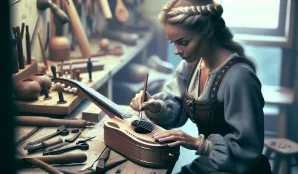
A Hänklare primarily works with the manufacturing, repair, and maintenance of musical instruments or other craft products where precision, craftsmanship, and material knowledge are central. Tasks can include shaping and assembling wood or metal components, as well as detailed work involving decoration and finishing. The work environment varies depending on the workplace and can range from small workshops and studios to larger companies or specialized instrument-making workshops. The profession often requires working in a seated position with good lighting and access to specialized tools, demanding high accuracy and patience.
Salary development over time
Over the past three years, the average salary for Hänklare has undergone a noticeable change. In 2022, the average was 34,382 kronor per month, slightly increasing to 30 900 kronor in 2023. Subsequently, a clear decline has been observed to 34 000 kronor in 2024, representing a decrease of approximately 11% from the previous year. This decline may be linked to changing demand within the craft sector and possibly increased competition from related professions. The industry’s salary levels are also influenced by economic conditions and consumers’ willingness to invest in custom or handmade products. Overall, the trend shows relatively high salary volatility, making it especially important for those considering the profession to monitor developments.
Hänklare salary – complete overview
- Average salary: 34 000 kr/month
- Lowest/Highest salary: Data unavailable
- Hourly wage: 186 kr/hour (average, for hourly workers)
- Gender differences: Data unavailable
- Regional differences: No available data
Education and qualifications
The path to becoming a Hänklare often involves a combination of formal education in craftsmanship and extensive practical experience. Many choose craft education at high schools or folk high schools, followed by specialization in musical instrument making or related fields. Internships and mentorships with experienced instrument makers are an important part of the training, and sometimes specific certifications are required depending on the employer or focus area. Success also requires dedication and an interest in details.
- Formal education: Vocational craft training at high school, sometimes higher vocational education (2–3 years)
- Specialized courses: Focused on instrument making or craftwork
- Internships: Apprenticeship or trainee period with established Hänklare or instrument maker
- Prerequisites: Good fine motor skills and interest in craftsmanship
- Self-study: Possible through online courses and personal projects
Many Hänklare combine their craft with musical interests or artistic activities, which often attracts people passionate about both technique and aesthetics. It is not uncommon for Hänklare to also participate in exhibitions or collaborations with musicians and cultural institutions, creating unique career opportunities outside the traditional workshop environment.
Common benefits and compensations
In addition to base salary, benefits such as flexible working hours, opportunities for further training, and sometimes bonuses for larger projects or custom orders are often offered. In some cases, tools, work clothes, and material discounts are provided. For those employed by larger workshops, insurance and wellness allowances may be included.
Competition and challenges
The job market for Hänklare is characterized by relatively few positions and a high degree of specialization, which means competition for permanent employment can be intense. Many work as self-employed or on a contract basis, which requires entrepreneurship and networking skills. Challenges also include staying updated on new materials and techniques, as well as meeting changing customer and market demands. Salary levels are affected by economic conditions and demand for handmade products, and it is common to supplement income during periods of low order volume.
Tips for aspiring Hänklare
To succeed as a Hänklare, patience combined with a strong attention to detail is essential, as the work is often time-consuming and requires precision. Curiosity and creativity facilitate problem-solving and the development of new techniques, especially when working with unusual materials or custom orders. Good communication skills are also valuable for understanding customer wishes and collaborating with colleagues or other professionals. A certain business acumen is important for those wanting to work independently, as it often involves finding clients and managing finances. Building a network within the industry, for example through fairs or collaborations with musicians, can open more opportunities. Finally, continuous education and staying updated on new tools and trends strengthen competitiveness in the job market.
Key facts about Hänklare
- Education level: Vocational or higher craft education
- Work environment: Workshop or studio, often small teams
- Work form: Self-employed or employed in a specialized workshop
- Demand: 341 available jobs according to the latest survey
Career paths and future prospects
After a few years of experience, a Hänklare can advance to more specialized roles, such as lead instrument maker or supervisor in larger workshops. Opportunities also exist to start their own business or work in training new craftsmen. According to the Employment Service, demand within the profession is stable, with 341 job openings reported in the latest period. However, future prospects are influenced by economic conditions and demand for handmade products, but the increasing appreciation for genuine craftsmanship provides some long-term security for the profession.
Frequently asked questions about Hänklare
- What does a Hänklare earn?
- A Hänklare has an average monthly salary of 34 000 kronor according to current statistics. - How to become a Hänklare?
- Most commonly, this involves completing a craft education at a high school or folk high school, followed by internships and specialized courses. - What work environments are most common for Hänklare?
- Most work in small workshops or studios focusing on craftwork and musical instruments. - Are there many job openings for Hänklare?
- The latest measurement shows 341 available jobs within the profession. - What is required to succeed as a Hänklare?
- Meticulousness, patience, and a genuine interest in craftsmanship are important qualities. - What are the career opportunities?
- After a few years, one can advance to supervisory roles, start their own business, or teach within the profession. - Are there regional salary differences?
- No detailed statistics are available regarding regional salary differences for Hänklare.

Salary distributed by age and sector
| Age | Base salary | Monthly salary | |
|---|---|---|---|
| Snitt | 33800 kr | 34000 kr |
| Age | Base salary | Monthly salary | |
|---|---|---|---|
| Snitt | 33800 kr | 34000 kr |
| Age | Base salary | Monthly salary | |
|---|---|---|---|
| Snitt | 33800 kr | 34000 kr |

About the data
All information displayed on this page is based on data from the Swedish Central Bureau of Statistics (SCB), the Swedish Tax Agency and the Swedish employment agency. Learn more about our data and data sources here.
All figures are gross salaries, meaning salaries before tax. The average salary, or mean salary, is calculated by adding up the total salary for all individuals within the profession and dividing it by the number of individuals. For specific job categories, we have also considered various criteria such as experience and education.
Profession Handlers has the SSYK code 7319, which we use to match against the SCB database to obtain the latest salary statistics.
-

Production Staff Wanted at Svebab – Svenska Brandslangsfabriken AB
Musical instrument makers and other artisans
Fri, 10 Jul 2026 - 21:23 -

Engraver and Customer Receptionist at Vasaboden – Full-Time Temporary Position
Musical instrument makers and other artisans
Tue, 7 Jul 2026 - 09:01 -

Screen Printer for Sign Production in Tumba
Musical instrument makers and other artisans
Mon, 29 Jun 2026 - 23:45 -

Machine Operator for Glass Manufacturing in Limmared
Musical instrument makers and other artisans
Thu, 25 Jun 2026 - 22:17 -

Teacher in Wood and Metal Craft at Vasaskolan in Hedemora
Musical instrument makers and other artisans
Thu, 25 Jun 2026 - 21:44
Compare salary, work tasks and job outlook in adjacent occupations to find roles with similar skills or pay levels.
-

Average salary: 34 000 SEK/month • Hantverksyrken
Musical instrument makers and other artisans
Compare with Handlers
Tue, 14 Jul 2026 - 10:55 -

Average salary: 34 000 SEK/month • Hantverksyrken
Musical instrument makers and other artisans
Compare with Handlers
Fri, 10 Jul 2026 - 13:12 -

Average salary: 34 000 SEK/month • Hantverksyrken
Musical instrument makers and other artisans
Compare with Handlers
Tue, 14 Jul 2026 - 11:56 -

Average salary: 40 900 SEK/month • Hantverksyrken
Precision mechanics
Compare with Handlers
Tue, 14 Jul 2026 - 13:55 -

Upholstered furniture worker salary
Average salary: 32 200 SEK/month • Hantverksyrken
Upholsterers
Compare with Handlers
Tue, 14 Jul 2026 - 15:02 -

Average salary: 34 000 SEK/month • Hantverksyrken
Musical instrument makers and other artisans
Compare with Handlers
Tue, 14 Jul 2026 - 11:57


