- Salary statistics
- Optician, instrument salary
Optician, instrument salary
Latest available salary statistics are for 2025. Compare average pay, salary range and related job listings.
32 000 - 44 900 SEK / month
Women earn 82% of what men do.
Hantverksyrken
Related tools
Salary progression Optician, instrument
What does an instrument optician do – tasks and work environment
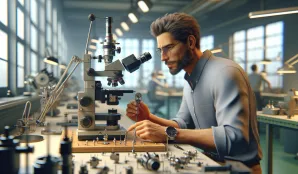
An instrument optician primarily works with adjusting, repairing, and maintaining optical instruments such as microscopes, binoculars, cameras, and other precision devices. Tasks also include troubleshooting, calibration, and quality control to ensure instruments meet high standards of accuracy and functionality. Work often takes place in specialized workshops or laboratory environments where precision and patience are essential. Collaboration with engineers, researchers, or medical personnel may occur, especially during the installation of advanced systems. The work environment is characterized by technical equipment, sedentary work, and high demands on concentration.
Salary development over time
The salary for instrument opticians has shown steady growth in recent years. In 2022, the average salary was 31,900 SEK per month, increasing to 34 800 SEK in 2023. In 2024, the average salary has risen further to 40 900 SEK, representing a total increase of about 9% over three years. This positive salary trend reflects a steady demand for specialized skills in fine mechanics and optics, while technological advances and increased precision requirements have contributed to raising the profession's value in the job market. Although the profession is relatively niche, technological development and the need for qualified labor have caused wages to rise in line with increased competence and responsibility.
Instrument optician salary – comprehensive overview
- Average salary: 40 900 SEK/month
- Lowest salary: 28,300 SEK/month
- Highest salary: 40,900 SEK/month
- Hourly wage: 209 SEK
- Women: 28,300 SEK/month
- Men: 41 600 SEK/month
- Women earn: 82% of what men do
- Regional differences: No specific data available
Education and qualifications
To work as an instrument optician, a technical education focusing on fine mechanics, optics, or electronics is usually required. Many employers prefer post-secondary education, but in-house training and specialist courses also exist. Practical experience in fine mechanical work and an interest in optical systems are advantageous.
- Post-secondary education: Technical education in fine mechanics or optics (2–3 years)
- Certifications: Specialized courses in optical measurement technology or instrument technology
- Internship: Internships or trainee periods are often included
- Prerequisites: High school education with a technical or scientific focus
- Tips for choosing: An interest in detailed and precise work facilitates studies and internships
Many instrument opticians have the opportunity to work with advanced technology and contribute to the development of new research tools. Collaborating with researchers or engineers on exciting projects is common, making the profession both varied and intellectually stimulating.
Common benefits and compensations
The profession often offers benefits such as wellness allowances, flexible working hours, and opportunities for skills development through courses and training. Some employers also provide compensation for work clothing, subsidized lunches, and extra vacation days depending on collective agreements and employment type.
Competition and challenges
Competition for positions as an instrument optician is relatively low, but challenges include high specialization and technical skill requirements. Since the profession is niche, candidates often need both theoretical and practical experience to be attractive in the job market. Technological innovations and rapid development in optics mean that skills must be kept up-to-date, and employers value problem-solving abilities and precision. There are also gender salary differences, reflecting traditional industry structures. For those wishing to advance, further education or specialization in related fields is often necessary.
Tips for aspiring instrument opticians
To succeed as an instrument optician, it’s good to combine technical interest with precision and analytical skills. Being solution-oriented helps with troubleshooting and repairing advanced instruments, while patience and perseverance facilitate work with small details and slow processes. It’s also important to be communicative, especially when collaborating with colleagues or external specialists. Practical experience in workshops or laboratories provides valuable insight into the profession’s daily life, and a willingness to continuously develop helps stay updated with technological advances. Flexibility and adaptability to new working methods are also strengths in this field.
Key facts about Instrument Opticians
- Education level: Post-secondary technical education (2–3 years)
- Work environment: Workshop or laboratory with advanced equipment
- Typical employment: Full-time, but part-time work also occurs
- Demand: 341 available jobs within the profession of fine mechanics
- Gender differences: Women earn 82% of what men do
Career paths and future prospects
After 3–5 years, there are opportunities to take on more advanced tasks, such as quality management, training new employees, or specializing in a particular instrument area. Some choose to deepen their knowledge in developing new optical systems or transition to technical sales and support. According to the Swedish Public Employment Service’s forecast, no specific assessment is made for the profession due to limited data, but the overall demand for fine mechanics remains stable with 341 available jobs. Technological progress and digitalization may create new career opportunities, especially for those willing to further their education in related fields.
Common questions about Instrument Opticians
- What does an instrument optician earn?
- The average salary is 40 900 SEK per month, with variations depending on experience, gender, and employment type. - What do gender salary differences look like?
- Men earn an average of 41 600 SEK and women 28,300 SEK, meaning women earn 82% of men's salaries. - What education is required to become an instrument optician?
- Post-secondary technical education in fine mechanics or optics is usually required. - What is the job market like?
- There were 341 available jobs within the profession of fine mechanics according to the latest data. - Are there regional salary differences?
- No specific data on regional differences is available for this profession. - What career paths are available?
- After a few years, you can specialize, take responsibility for quality control, or move into technical sales and development.

Salary distributed by age and sector
| Age | Base salary | Monthly salary | |
|---|---|---|---|
| 18-24 | 29800 kr | 31500 kr | |
| 25-34 | 36700 kr | 39900 kr | |
| 35-44 | 37500 kr | 41400 kr | |
| 45-54 | 39200 kr | 41600 kr | |
| 55-64 | 39700 kr | 44500 kr | |
| Snitt | 82% | 37500 kr | 40900 kr |
| Age | Base salary | Monthly salary | |
|---|---|---|---|
| 18-24 | 89% | 30500 kr | 31700 kr |
| 25-34 | 92% | 35500 kr | 38200 kr |
| 35-44 | 83% | 36500 kr | 38900 kr |
| 45-54 | 94% | 37400 kr | 38100 kr |
| 55-64 | 99% | 37500 kr | 38600 kr |
| 65-68 | 37500 kr | 37500 kr | |
| Snitt | 88% | 35800 kr | 37500 kr |
| Age | Base salary | Monthly salary | |
|---|---|---|---|
| 18-24 | 89% | 30500 kr | 31700 kr |
| 25-34 | 92% | 35500 kr | 38200 kr |
| 35-44 | 83% | 36500 kr | 38900 kr |
| 45-54 | 94% | 37400 kr | 38100 kr |
| 55-64 | 99% | 37500 kr | 38600 kr |
| 65-68 | 37500 kr | 37500 kr | |
| Snitt | 88% | 35800 kr | 37500 kr |
| Age | Base salary | Monthly salary | |
|---|---|---|---|
| 25-34 | 37000 kr | 40400 kr | |
| 35-44 | 37700 kr | 41800 kr | |
| 45-54 | 39600 kr | 42400 kr | |
| 55-64 | 40300 kr | 45900 kr | |
| Snitt | 37900 kr | 41700 kr |
| Age | Base salary | Monthly salary | |
|---|---|---|---|
| 25-34 | 37000 kr | 40400 kr | |
| 35-44 | 37700 kr | 41800 kr | |
| 45-54 | 39600 kr | 42400 kr | |
| 55-64 | 40300 kr | 45900 kr | |
| Snitt | 37900 kr | 41700 kr |
| Age | Base salary | Monthly salary | |
|---|---|---|---|
| 25-34 | 37100 kr | 40500 kr | |
| 35-44 | 37900 kr | 42100 kr | |
| 45-54 | 39500 kr | 42100 kr | |
| 55-64 | 40200 kr | 45200 kr | |
| Snitt | 82% | 38000 kr | 41600 kr |
| Age | Base salary | Monthly salary | |
|---|---|---|---|
| 18-24 | 89% | 31600 kr | 33300 kr |
| 25-34 | 92% | 36400 kr | 39000 kr |
| 35-44 | 83% | 37000 kr | 39400 kr |
| 45-54 | 94% | 37600 kr | 38400 kr |
| 55-64 | 99% | 37600 kr | 38700 kr |
| 65-68 | 37500 kr | 37500 kr | |
| Snitt | 88% | 36600 kr | 38300 kr |
| Age | Base salary | Monthly salary | |
|---|---|---|---|
| 18-24 | 89% | 31600 kr | 33300 kr |
| 25-34 | 92% | 36400 kr | 39000 kr |
| 35-44 | 83% | 37000 kr | 39400 kr |
| 45-54 | 94% | 37600 kr | 38400 kr |
| 55-64 | 99% | 37600 kr | 38700 kr |
| 65-68 | 37500 kr | 37500 kr | |
| Snitt | 88% | 36600 kr | 38300 kr |
| Age | Base salary | Monthly salary | |
|---|---|---|---|
| 25-34 | 37300 kr | 40800 kr | |
| 35-44 | 38100 kr | 42600 kr | |
| 45-54 | 39900 kr | 42900 kr | |
| 55-64 | 40800 kr | 46800 kr | |
| Snitt | 38300 kr | 42400 kr |
| Age | Base salary | Monthly salary | |
|---|---|---|---|
| 25-34 | 37300 kr | 40800 kr | |
| 35-44 | 38100 kr | 42600 kr | |
| 45-54 | 39900 kr | 42900 kr | |
| 55-64 | 40800 kr | 46800 kr | |
| Snitt | 38300 kr | 42400 kr |
| Age | Base salary | Monthly salary | |
|---|---|---|---|
| Snitt | 82% | 33100 kr | 34100 kr |
| Age | Base salary | Monthly salary | |
|---|---|---|---|
| 18-24 | 89% | 29100 kr | 29500 kr |
| 25-34 | 92% | 32600 kr | 35900 kr |
| 35-44 | 83% | 30600 kr | 32900 kr |
| 45-54 | 94% | 35800 kr | 36100 kr |
| 55-64 | 99% | 36200 kr | 38200 kr |
| Snitt | 88% | 32000 kr | 33700 kr |
| Age | Base salary | Monthly salary | |
|---|---|---|---|
| 18-24 | 89% | 29100 kr | 29500 kr |
| 25-34 | 92% | 32600 kr | 35900 kr |
| 35-44 | 83% | 30600 kr | 32900 kr |
| 45-54 | 94% | 35800 kr | 36100 kr |
| 55-64 | 99% | 36200 kr | 38200 kr |
| Snitt | 88% | 32000 kr | 33700 kr |

About the data
All information displayed on this page is based on data from the Swedish Central Bureau of Statistics (SCB), the Swedish Tax Agency and the Swedish employment agency. Learn more about our data and data sources here.
All figures are gross salaries, meaning salaries before tax. The average salary, or mean salary, is calculated by adding up the total salary for all individuals within the profession and dividing it by the number of individuals. For specific job categories, we have also considered various criteria such as experience and education.
Profession Optician, instrument has the SSYK code 7311, which we use to match against the SCB database to obtain the latest salary statistics.
-
Dental Technician Wanted at Katrineholms Tandtekniska AB
Precision mechanics
Fri, 3 Jul 2026 - 23:03 -

Trained Watchmaker Wanted in Skellefteå – Key Role in a Growing Company
Precision mechanics
Thu, 2 Jul 2026 - 22:39



Compare salary, work tasks and job outlook in adjacent occupations to find roles with similar skills or pay levels.
-

Average salary: 34 000 SEK/month • Hantverksyrken
Musical instrument makers and other artisans
Compare with Optician, instrument
Tue, 14 Jul 2026 - 07:16 -

Average salary: 34 000 SEK/month • Hantverksyrken
Musical instrument makers and other artisans
Compare with Optician, instrument
Mon, 13 Jul 2026 - 16:47 -

Average salary: 40 900 SEK/month • Hantverksyrken
Precision mechanics
Compare with Optician, instrument
Tue, 14 Jul 2026 - 07:12 -

Fine mechanic, assembler salary
Average salary: 40 900 SEK/month • Hantverksyrken
Precision mechanics
Compare with Optician, instrument
Tue, 14 Jul 2026 - 07:16 -

Average salary: 32 802 SEK/month • Hantverksyrken
Seamstresses
Compare with Optician, instrument
Sat, 11 Jul 2026 - 00:10 -

Average salary: 36 738 SEK/month • Hantverksyrken
Gold and silversmiths
Compare with Optician, instrument
Tue, 14 Jul 2026 - 08:00


