- Salary statistics
- Rough plate rivets salary
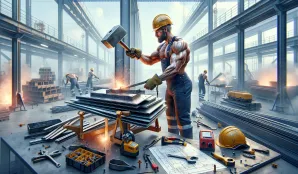
Rough plate rivets salary
Latest available salary statistics are for 2025. Compare average pay, salary range and related job listings.
39 100 - 39 700 SEK / month
Industriell tillverkning
Related tools
Salary progression Rough plate rivets
What does a heavy sheet metal worker do? – Tasks and work environment
A heavy sheet metal worker primarily works with processing, joining, and assembling large sheet metal parts and steel structures for bridges, buildings, and industrial machines. The profession involves working with heavy and often coarse materials that require precision and technical skill. Tasks include cutting, bending, welding, and assembling structural elements, often based on technical drawings and specific requirements. The work environment is varied and can include both workshop work and outdoor construction sites, where safety procedures and protective equipment are essential.
Salary development over time
The salary level for heavy sheet metal workers has developed steadily in recent years. In 2022, the average salary was 32,800 SEK per month. The following year, the salary increased to 36 500 SEK, corresponding to approximately 3.4% growth. In 2024, the average salary continued upward to 39 700 SEK, which is an increase of another 7.7% compared to the previous year. Overall, this represents a salary increase of over 11% over a three-year period. This trend reflects both ongoing demand for skilled labor in the industry and a certain shortage of specialized workers. The market's need for large infrastructure projects and industrial investments has likely contributed to the positive salary development.
Heavy sheet metal worker salary – complete overview
- Average salary: 39 700 SEK/month
- Lowest/Highest salary: Data unavailable
- Hourly wage: 219 SEK (average, based on 166 hours per month)
- Gender differences: Men earn 39 800 SEK, data on women is unavailable
- Regional differences: Data unavailable
Education and qualifications
To work as a heavy sheet metal worker, a vocational education in industrial technology or sheet metal work is usually required, typically at the upper secondary level. Practical experience and knowledge of reading technical drawings, welding, and metal processing are important parts of the skill set. Many employers also require certifications and specific courses for certain tasks or machinery.
- Formal education: Industrial technology program (3 years, upper secondary level)
- Certifications: Welding licenses and occupational safety training
- Practical training: Apprenticeship or internship during education
- Prerequisites: Basic mathematics and technical understanding
- Tips for choosing: Interest in technology and problem-solving facilitates entry
Experienced heavy sheet metal workers can often take on additional responsibilities such as work management or specialized assembly, especially if they demonstrate good ability to read advanced drawings and handle complex lifting tasks. Those who are meticulous and solution-oriented have good opportunities to develop and advance within the profession.
Common benefits and compensations
Heavy sheet metal workers are often covered by collective agreements that include occupational pensions, insurance, and overtime pay. Other common benefits include wellness allowances, work clothing, and sometimes bonuses linked to production targets or safety initiatives. Some workplaces also offer further training and skills development as part of employment.
Competition and challenges
The labor market for heavy sheet metal workers is characterized by some competition, but the shortage of experienced tradespeople has kept demand stable. Challenges in the profession often involve staying updated with technological changes and new safety requirements. Physically demanding tasks, outdoor work, and working at heights also require good physical condition and attention to detail. Since the profession encompasses various specializations, such as welding or assembly, expertise in these areas can provide a competitive edge. Limited access to new workers sometimes forces employers to recruit from adjacent trades.
Tips for those who want to become a heavy sheet metal worker
To succeed as a heavy sheet metal worker, it is beneficial to have a combination of technical interest, good physical condition, and precision. Focusing on deepening skills in welding or reading drawings during education can provide advantages when applying for jobs. Flexibility and teamwork skills are important, as work is often performed in teams and at different sites. Being solution-oriented and able to handle stress facilitates dealing with unexpected challenges on the job. Practical experience from internships or summer jobs is valuable and can often lead to employment after completing education. An interest in safety and a willingness to continually develop skills in new techniques are appreciated by employers. Building a network during training can be crucial for future career opportunities.
Key facts about heavy sheet metal workers
- Education level: Upper secondary education in industrial technology
- Work environment: Workshops and construction sites, often outdoors
- Demand: 1,437 available jobs within the profession
- Special skills: Welding, reading drawings, and assembly
Career paths and future prospects
After a few years of experience, a heavy sheet metal worker can take on more advanced assignments, such as supervisor, assembly specialist, or welding manager. There are also opportunities for further education in project management or specialized assembly, which can lead to roles in construction management or technical consulting. According to the Swedish Public Employment Service, no precise forecast exists for the profession due to limited data, but the number of job openings indicates continued demand. Specialization and certification in areas like welding or safety work can further improve career prospects.
Common questions about heavy sheet metal workers
- What does a heavy sheet metal worker earn?
- The average salary is 39 700 SEK per month according to current statistics. - What education is required to become a heavy sheet metal worker?
- Most commonly, the industrial technology program at the upper secondary level with a focus on sheet metal work or welding. - Are there many job opportunities for heavy sheet metal workers?
- Yes, there are 1437 available jobs within the profession according to the latest figures. - What is the work environment like?
- Work often takes place in workshops or at construction sites and can be physically demanding. - What specialized skills are in demand?
- Welding, reading technical drawings, and experience with assembly are particularly sought after. - Are there regional salary differences?
- Specific information about regional differences is currently unavailable. - What are the future prospects for heavy sheet metal workers?
- Prognoses are unavailable, but the large number of job openings indicates stable demand.

Salary distributed by age and sector
| Age | Base salary | Monthly salary | |
|---|---|---|---|
| Snitt | 39100 kr | 39700 kr |
| Age | Base salary | Monthly salary | |
|---|---|---|---|
| Snitt | 39100 kr | 39700 kr |
| Age | Base salary | Monthly salary | |
|---|---|---|---|
| Snitt | 39100 kr | 39700 kr |
| Age | Base salary | Monthly salary | |
|---|---|---|---|
| Snitt | 39200 kr | 39800 kr |
| Age | Base salary | Monthly salary | |
|---|---|---|---|
| Snitt | 39200 kr | 39800 kr |
| Age | Base salary | Monthly salary | |
|---|---|---|---|
| Snitt | 39200 kr | 39800 kr |

About the data
All information displayed on this page is based on data from the Swedish Central Bureau of Statistics (SCB), the Swedish Tax Agency and the Swedish employment agency. Learn more about our data and data sources here.
All figures are gross salaries, meaning salaries before tax. The average salary, or mean salary, is calculated by adding up the total salary for all individuals within the profession and dividing it by the number of individuals. For specific job categories, we have also considered various criteria such as experience and education.
Profession Rough plate rivets has the SSYK code 7215, which we use to match against the SCB database to obtain the latest salary statistics.
-

Travel Erector for Steel Halls – Precision, Teamwork, and Travel
Steel construction assemblers and heavy plate workers
Mon, 13 Jul 2026 - 20:33 -

Foreman for Steel Department – Oresund DryDocks
Steel construction assemblers and heavy plate workers
Mon, 13 Jul 2026 - 09:06 -
Steel Structure Erector – Finland and Sweden
Steel construction assemblers and heavy plate workers
Wed, 8 Jul 2026 - 21:48 -

Installation Supervisor for Temporary Bridges – Swedish Transport Administration
Steel construction assemblers and heavy plate workers
Wed, 8 Jul 2026 - 01:13 -
Project Manager for Sweden's Largest Ship Repair Yard in Landskrona
Steel construction assemblers and heavy plate workers
Wed, 8 Jul 2026 - 00:21
Compare salary, work tasks and job outlook in adjacent occupations to find roles with similar skills or pay levels.
-

Average salary: 31 900 SEK/month • Industriell tillverkning
Hand packers and other factory workers
Compare with Rough plate rivets
Tue, 14 Jul 2026 - 09:18 -

Vehicle paint, manufacturing salary
Average salary: 36 400 SEK/month • Industriell tillverkning
Painters and industrial painters
Compare with Rough plate rivets
Tue, 14 Jul 2026 - 10:59 -

Average salary: 38 300 SEK/month • Industriell tillverkning
Operators in sawmills, planing mills and plywood etc.
Compare with Rough plate rivets
Tue, 14 Jul 2026 - 10:58 -

Average salary: 35 200 SEK/month • Industriell tillverkning
Machine operators, mill, bakery and confectionery industry
Compare with Rough plate rivets
Tue, 14 Jul 2026 - 16:13 -

Sheet metal worker, heavy plate salary
Average salary: 39 700 SEK/month • Industriell tillverkning
Steel construction assemblers and heavy plate workers
Compare with Rough plate rivets
Tue, 14 Jul 2026 - 16:18 -

Average salary: 33 000 SEK/month • Industriell tillverkning
Machine operators, meat and fish processing industry
Compare with Rough plate rivets
Tue, 14 Jul 2026 - 17:25


