- Salary statistics
- Glass polisher salary
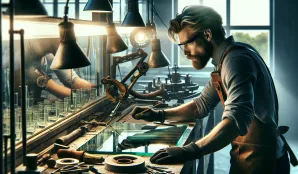
Glass polisher salary
Latest available salary statistics are for 2025. Compare average pay, salary range and related job listings.
33 800 - 34 000 SEK / month
Hantverksyrken
Related tools
Salary progression Glass polisher
What does a glass polisher do? – Tasks and work environment
A glass polisher works with grinding, polishing, and restoring glass surfaces on various objects, ranging from windows and mirrors to art glass and interior details. Tasks may include both machine and manual processing of glass to remove scratches, stains, or other damage. The work is often performed on-site at customer locations, but can also take place in a workshop environment. Glass polishers use specialized tools and abrasives, requiring high precision and sensitivity to material properties. The work environment demands accuracy, patience, and good physical condition, as it can involve heavy lifting and working in awkward positions.
Salary development over time
The salary development for glass polishers has shown some variation over the past three years. In 2022, the average salary was 34,382 SEK per month, which increased slightly to 30 900 SEK in 2023. In 2024, however, the average salary has decreased to 34 000 SEK, representing a reduction of approximately 11% compared to the previous year. This decline may partly be due to changing demand within the industry, as well as the hiring of more less-experienced workers, affecting the average. The market for glass polishers is relatively small and specialized, and salary levels can be quickly influenced by economic fluctuations and regional differences. Overall, the profession has maintained a stable salary structure over time, with variations often reflecting project volume and investments in construction and renovation.
Glass polisher salary – comprehensive overview
- Average salary: 34 000 SEK/month
- Lowest/Highest salary: Data unavailable
- Hourly wage: 186 SEK/hour (based on 166 working hours/month)
- Gender differences: No specific data available
- Regional differences: No detailed statistics available
Education and qualifications
The path to becoming a glass polisher often involves practical training in crafts, glass processing, or apprenticeships with experienced practitioners. Formal educational requirements are uncommon, but some employers may require high school education in craft or industry fields. Practical experience and a good sense of detail often weigh more heavily than theoretical knowledge.
- High school education: Craft programs with specialization in glass or industry (3 years)
- Work-based training: Apprenticeship or practical placement with a glass polisher or glazier
- Courses: Specialized courses in glass processing or polishing
- Prerequisites: Precision, patience, and some physical strength
- Tips: Combine education with practical experience for better job prospects
Glass polishers often need to collaborate closely with other professionals, such as glaziers, builders, and artists. Communication and flexibility are therefore key qualities for success in the profession, especially when working on-site or on larger projects.
Common benefits and compensations
Glass polishers are often provided with benefits such as work clothing, travel allowances, and sometimes wellness subsidies. Some employment may also include tool allowances, additional insurance, and opportunities for skill development through courses or training. The work is often during daytime hours, but some flexibility may be required depending on the project.
Competition and challenges
The job market for glass polishers is relatively small and niche, making competition for permanent positions at larger companies noticeable. Many work as self-employed or on contracts, which requires self-marketing and networking. Challenges include rapid changes in demand, especially related to the construction and renovation sector. Technological advances and new materials may also require continuous further training. The work environment can be physically demanding and requires great precision to avoid damage to expensive or irreplaceable objects.
Tips for those wishing to become a glass polisher
To succeed as a glass polisher, it’s good to have an eye for detail and a strong sense of precision, as even small mistakes can affect the final result. Patience is crucial, as many steps require slow and careful processing. Flexibility and teamwork skills are also important, especially when working in teams or on-site with customers. The ability to quickly solve problems and adapt to different work environments is a significant advantage. Practical experience is highly valued, so take every opportunity for internships or extra jobs in glass or crafts. Continuing education, such as courses in new techniques, can improve your job prospects. Finally, good communication skills are essential, as the profession often involves direct contact with clients and partners.
Key facts about glass polishers
- Education level: High school education or apprenticeship
- Work environment: Workshop, customer site, or construction site
- Typical employment: Permanent employment or self-employed
- Demand: Approximately 341 job openings within the profession
- Special skills: Material knowledge and polishing techniques
Career paths and future prospects
After three to five years in the profession, a glass polisher can advance to more specialized roles, such as supervisor in glass processing, trainer, or art glass specialist. Some choose to start their own business focusing on advanced restoration projects or artistic glass polishing. Future prospects are influenced by the economic cycle in construction, renovation, and interior design, but with about 341 job openings, demand is expected to remain stable (source: Arbetsförmedlingen). Specialization and continuous skills development increase opportunities for career advancement and higher salaries.
Common questions about glass polishers
- What does a glass polisher earn?
- A glass polisher has an average salary of 34 000 SEK per month. - How do you become a glass polisher?
- The most common path is through vocational education in craft or practical training/apprenticeship with an experienced glass polisher. - Is certification required to work as a glass polisher?
- No, formal certifications are rarely required, but specialized courses and practical experience are advantageous. - What is the work environment like for a glass polisher?
- The work can take place both in a workshop and on-site with customers, often involving physical work and precision requirements. - Are there good job opportunities?
- Demand is stable with approximately 341 job openings within the profession according to current statistics. - What personal qualities are important?
- Attention to detail, patience, problem-solving skills, and good communication are especially important. - Can I work as a self-employed individual?
- Yes, many glass polishers choose to start their own business and work on assignments or within niche areas.

Salary distributed by age and sector
| Age | Base salary | Monthly salary | |
|---|---|---|---|
| Snitt | 33800 kr | 34000 kr |
| Age | Base salary | Monthly salary | |
|---|---|---|---|
| Snitt | 33800 kr | 34000 kr |
| Age | Base salary | Monthly salary | |
|---|---|---|---|
| Snitt | 33800 kr | 34000 kr |

About the data
All information displayed on this page is based on data from the Swedish Central Bureau of Statistics (SCB), the Swedish Tax Agency and the Swedish employment agency. Learn more about our data and data sources here.
All figures are gross salaries, meaning salaries before tax. The average salary, or mean salary, is calculated by adding up the total salary for all individuals within the profession and dividing it by the number of individuals. For specific job categories, we have also considered various criteria such as experience and education.
Profession Glass polisher has the SSYK code 7319, which we use to match against the SCB database to obtain the latest salary statistics.
-

Production Staff Wanted at Svebab – Svenska Brandslangsfabriken AB
Musical instrument makers and other artisans
Fri, 10 Jul 2026 - 21:23 -

Engraver and Customer Receptionist at Vasaboden – Full-Time Temporary Position
Musical instrument makers and other artisans
Tue, 7 Jul 2026 - 09:01 -

Screen Printer for Sign Production in Tumba
Musical instrument makers and other artisans
Mon, 29 Jun 2026 - 23:45 -

Machine Operator for Glass Manufacturing in Limmared
Musical instrument makers and other artisans
Thu, 25 Jun 2026 - 22:17 -

Teacher in Wood and Metal Craft at Vasaskolan in Hedemora
Musical instrument makers and other artisans
Thu, 25 Jun 2026 - 21:44
Compare salary, work tasks and job outlook in adjacent occupations to find roles with similar skills or pay levels.
-

Average salary: 34 000 SEK/month • Hantverksyrken
Musical instrument makers and other artisans
Compare with Glass polisher
Tue, 14 Jul 2026 - 10:55 -

Average salary: 34 000 SEK/month • Hantverksyrken
Musical instrument makers and other artisans
Compare with Glass polisher
Fri, 10 Jul 2026 - 13:12 -

Average salary: 34 000 SEK/month • Hantverksyrken
Musical instrument makers and other artisans
Compare with Glass polisher
Tue, 14 Jul 2026 - 11:56 -

Average salary: 40 900 SEK/month • Hantverksyrken
Precision mechanics
Compare with Glass polisher
Tue, 14 Jul 2026 - 13:55 -

Upholstered furniture worker salary
Average salary: 32 200 SEK/month • Hantverksyrken
Upholsterers
Compare with Glass polisher
Tue, 14 Jul 2026 - 15:02 -

Average salary: 34 000 SEK/month • Hantverksyrken
Musical instrument makers and other artisans
Compare with Glass polisher
Tue, 14 Jul 2026 - 11:57


