- Salary statistics
- Fiberglass workers, manufacturing salary
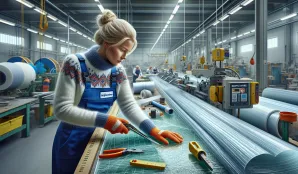
Fiberglass workers, manufacturing salary
Latest available salary statistics are for 2025. Compare average pay, salary range and related job listings.
35 200 - 37 600 SEK / month
Women earn 95% of what men do.
Industriell tillverkning
Related tools
Salary progression Fiberglass workers, manufacturing
What does a fiberglass worker in manufacturing do? – Tasks and work environment
A fiberglass worker in manufacturing primarily works with processing, shaping, and assembling fiberglass products for sectors including construction, industry, and transportation. Tasks include preparing materials, working with molds, monitoring curing processes, and performing quality checks. The work environment often involves production facilities with machinery, where there can be exposure to dust, chemicals, and noise. Precision, patience, and good physical condition are important qualities for success in this profession, as well as understanding safety procedures and quality assurance.
Salary development over time
The salary for a fiberglass worker in manufacturing has changed notably over the past three years. In 2022, the average was 34,400 SEK per month. In 2023, it increased to 37 100 SEK, representing a temporary decrease of about -2%. Between 2023 and 2024, there was a significant increase to 36 900 SEK, corresponding to a rise of just over 10%. This development can partly be explained by increased demand for skilled labor in the industry and general wage adjustments following inflation and collective bargaining negotiations. Salary differences between genders have persisted during this period, with men earning more on average than women in the profession.
Fiberglass worker in manufacturing salary – complete overview
- Average salary: 36 900 SEK/month
- Lowest salary: 35,400 SEK/month (female, vocational education)
- Highest salary: 39,000 SEK/month (male, post-secondary education & private sector employee)
- Hourly wage: 223 SEK/hour (average, hourly worker)
- Women earn: 35,700 SEK/month (95% of men's salary)
- Men earn: 37 300 SEK/month
- Regional differences: Data varies, but differences may exist depending on industrial presence
Education and qualifications
The path to becoming a fiberglass worker in manufacturing usually involves a vocational education in industrial technology or similar fields. Practical experience and the ability to handle various tools and machinery are highly valued, and many employers offer internal induction programs. For some positions, shorter post-secondary courses or certifications may be advantageous, especially in safety and quality control.
- Vocational education: Industrial technology or production-oriented program (3 years)
- Practical training: Work-based learning (WBL) during education
- Certifications: Safety training and possibly forklift license
- Prerequisites: Approved grades in core subjects, technical interest
- Courses: Short additional courses in materials science or production technology
Fiberglass workers in manufacturing often work in teams where cooperation and communication are crucial for smooth production. For those curious about technology and who enjoy seeing tangible results from their work, the profession can be especially rewarding.
Common benefits and compensations
The most common benefits for fiberglass workers in manufacturing include collective agreement-based insurances, wellness allowances, work clothing, and sometimes subsidized lunches. Some employers also offer bonus systems and opportunities for skill development through internal or external courses.
Competition and challenges
The job market for fiberglass workers in manufacturing is relatively stable, but competition can vary by region and economic cycle. The profession requires both technical skills and good physical endurance, meaning new recruits often undergo orientation and supervision. Challenges include managing occupational hazards, maintaining consistent production pace, and adapting to changing production requirements. A shortage of experienced workers can sometimes lead to higher workloads for existing staff, while technological developments demand ongoing skills upgrading.
Tips for aspiring fiberglass workers in manufacturing
To succeed as a fiberglass worker in manufacturing, attention to detail and accuracy are essential, as small mistakes can affect the final product. Strong teamwork skills facilitate working in groups and contribute to a better work environment. Showing initiative and willingness to learn new tasks can make a big difference, especially as production techniques and materials continually evolve. Physical endurance is needed to handle sometimes monotonous and heavy work. Flexibility and the ability to adapt quickly to changes are also important traits. Lastly, being communicative and clear benefits both safety and results for yourself and your team.
Key facts about Fiberglass Workers, manufacturing
- Education level: Vocational education, often industrial technology program
- Work environment: Production, often in industrial hall with some chemical exposure
- Work form: Shift work and teamwork common
- Demand: 1,437 job openings in the profession at the latest count
- Special skills: Materials science and safety procedures
Career paths and future prospects
After three to five years in the profession, a fiberglass worker in manufacturing can advance to supervisor, production technician, or quality coordinator. There are also opportunities to specialize in specific manufacturing methods or material handling. The employment agency's forecasts for the "process and machine operators within glass and ceramics" group do not provide an exact assessment for this profession due to limited data, but the number of job openings indicates continued demand. Technological development and increased requirements for quality control and environmental safety may create new career opportunities in the field.
Frequently asked questions about Fiberglass Workers, manufacturing
- What does a fiberglass worker in manufacturing earn?
- The average salary is 36 900 SEK per month, with variations depending on experience, education, and employer. - How does one become a fiberglass worker in manufacturing?
- Most commonly, a vocational education in industrial technology and practical training, sometimes supplemented with internal courses. - Are there large salary differences between men and women?
- Yes, women earn approximately 95% of men's salaries in the profession. - What occupational hazards are present?
- Exposure to chemicals, dust, and noise occurs, making protective equipment important. - What is the job market like?
- Currently, there are 1437 job openings in the profession, but no specific forecast for the occupation. - What career opportunities are available after a few years?
- Opportunities to advance to supervisor, technician, or specialize in material handling. - What personal qualities are valued?
- Accuracy, teamwork skills, and technical interest are particularly valuable.

Salary distributed by age and sector
| Age | Base salary | Monthly salary | |
|---|---|---|---|
| 18-24 | 30300 kr | 35200 kr | |
| 25-34 | 32000 kr | 36100 kr | |
| 35-44 | 33100 kr | 37300 kr | |
| 45-54 | 33600 kr | 37400 kr | |
| 55-64 | 34300 kr | 38100 kr | |
| Snitt | 95% | 32900 kr | 36900 kr |
| Age | Base salary | Monthly salary | |
|---|---|---|---|
| 18-24 | 30300 kr | 35200 kr | |
| 25-34 | 32000 kr | 36100 kr | |
| 35-44 | 33100 kr | 37300 kr | |
| 45-54 | 33600 kr | 37400 kr | |
| 55-64 | 34300 kr | 38100 kr | |
| Snitt | 95% | 32900 kr | 36900 kr |
| Age | Base salary | Monthly salary | |
|---|---|---|---|
| 18-24 | 30300 kr | 35200 kr | |
| 25-34 | 32000 kr | 36100 kr | |
| 35-44 | 33100 kr | 37300 kr | |
| 45-54 | 33600 kr | 37400 kr | |
| 55-64 | 34300 kr | 38100 kr | |
| Snitt | 95% | 32900 kr | 36900 kr |
| Age | Base salary | Monthly salary | |
|---|---|---|---|
| 18-24 | 30400 kr | 35700 kr | |
| 25-34 | 31900 kr | 36200 kr | |
| 35-44 | 33400 kr | 38000 kr | |
| 45-54 | 33800 kr | 37800 kr | |
| 55-64 | 34500 kr | 38300 kr | |
| Snitt | 95% | 33000 kr | 37300 kr |
| Age | Base salary | Monthly salary | |
|---|---|---|---|
| 18-24 | 30400 kr | 35700 kr | |
| 25-34 | 31900 kr | 36200 kr | |
| 35-44 | 33400 kr | 38000 kr | |
| 45-54 | 33800 kr | 37800 kr | |
| 55-64 | 34500 kr | 38300 kr | |
| Snitt | 95% | 33000 kr | 37300 kr |
| Age | Base salary | Monthly salary | |
|---|---|---|---|
| 18-24 | 30400 kr | 35700 kr | |
| 25-34 | 31900 kr | 36200 kr | |
| 35-44 | 33400 kr | 38000 kr | |
| 45-54 | 33800 kr | 37800 kr | |
| 55-64 | 34500 kr | 38300 kr | |
| Snitt | 95% | 33000 kr | 37300 kr |
| Age | Base salary | Monthly salary | |
|---|---|---|---|
| Snitt | 95% | 32400 kr | 35600 kr |
| Age | Base salary | Monthly salary | |
|---|---|---|---|
| Snitt | 95% | 32400 kr | 35600 kr |
| Age | Base salary | Monthly salary | |
|---|---|---|---|
| Snitt | 95% | 32400 kr | 35600 kr |

About the data
All information displayed on this page is based on data from the Swedish Central Bureau of Statistics (SCB), the Swedish Tax Agency and the Swedish employment agency. Learn more about our data and data sources here.
All figures are gross salaries, meaning salaries before tax. The average salary, or mean salary, is calculated by adding up the total salary for all individuals within the profession and dividing it by the number of individuals. For specific job categories, we have also considered various criteria such as experience and education.
Profession Fiberglass workers, manufacturing has the SSYK code 8189, which we use to match against the SCB database to obtain the latest salary statistics.
-

Operator in Storfors – Starting in August
Other process and machine operators
Fri, 10 Jul 2026 - 21:19 -

Machine Operator for Grinding Disc Production in Västervik
Other process and machine operators
Thu, 9 Jul 2026 - 21:15 -

Production Staff for EB Glas & Fasad AB in Halmstad
Other process and machine operators
Fri, 3 Jul 2026 - 21:31 -

Machine Operator in Skurup – Fixed-term with potential for permanent role
Other process and machine operators
Mon, 15 Jun 2026 - 20:58 -
Machine Operator for Grinding Disc Production in Västervik
Other process and machine operators
Fri, 22 May 2026 - 22:05
Compare salary, work tasks and job outlook in adjacent occupations to find roles with similar skills or pay levels.
-
Average salary: 33 700 SEK/month • Industriell tillverkning
Other machine operators, food industry etc.
Compare with Fiberglass workers, manufacturing
Tue, 14 Jul 2026 - 11:56 -

Average salary: 37 800 SEK/month • Industriell tillverkning
Machine operators, cement, stone and concrete products
Compare with Fiberglass workers, manufacturing
Mon, 13 Jul 2026 - 10:26 -

Average salary: 42 500 SEK/month • Industriell tillverkning
Process operators, paper
Compare with Fiberglass workers, manufacturing
Tue, 14 Jul 2026 - 08:16 -
Wallpaper roller engravers salary
Average salary: 35 300 SEK/month • Industriell tillverkning
Prepress technicians
Compare with Fiberglass workers, manufacturing
Tue, 14 Jul 2026 - 11:05 -

Average salary: 36 900 SEK/month • Industriell tillverkning
Other process and machine operators
Compare with Fiberglass workers, manufacturing
Tue, 14 Jul 2026 - 13:04 -

Hasplare, textile industry salary
Average salary: 32 200 SEK/month • Industriell tillverkning
Other machine operators, textile, leather and leather industry
Compare with Fiberglass workers, manufacturing
Tue, 14 Jul 2026 - 11:54


