- Salary statistics
- Nickel pliers salary
Nickel pliers salary
Latest available salary statistics are for 2025. Compare average pay, salary range and related job listings.
33 300 - 37 200 SEK / month
Women earn 91% of what men do.
Industriell tillverkning
Related tools
Salary progression Nickel pliers
What does a nickelplater do? – Tasks and work environment
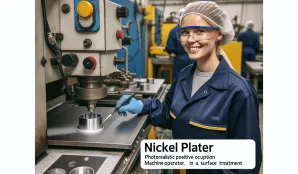
A nickelplater works on surface treating metals by applying a nickel layer, which protects the material against corrosion and provides a shiny, durable surface. The work often takes place in industrial environments where various chemical baths and electrolytic processes are used to attach the nickel layer to parts made of steel or copper, for example. The nickelplater monitors machinery and processes, checks the quality of the surface treatment, and performs maintenance on equipment. The work environment can be humid and requires careful attention to safety and chemical handling, with protective equipment being an essential part of daily life.
Salary development over time
Nickelplaters have experienced a stable and positive salary increase over the past three years. In 2022, the average salary was 31,100 SEK per month, which increased to 35 200 SEK in 2023. In 2024, the average salary continued upward to 35,200 SEK, corresponding to a salary increase of approximately 13% over the period. This development reflects an increased demand for skilled nickelplaters, where technological advances and the need for high-quality surface treatments in industry drive wages upward. At the same time, industry-specific factors and the availability of trained labor influence this positive trend.
Nickelplater salary – comprehensive overview
- Average salary: 35,200 SEK/month
- Lowest salary: 32,400 SEK/month
- Highest salary: 36,200 SEK/month
- Hourly wage (average): 212 SEK
- Men (average): 36 600
- Women (average): 32,400 SEK
- Women’s share of men’s salary: 91 %
- Regional differences: Highest salaries are found within regional sectors
Education and qualifications
To work as a nickelplater, a high school education in industrial technology or a similar technical program is usually required. Practical experience in industrial surface treatment is highly meritorious, and many employers offer introductory or internal training. Additional courses in chemical work environment and safety procedures are valuable for those wishing to specialize. Basic knowledge of chemistry and mechanical engineering can facilitate both education and entry into the profession.
- High school education: Industrial technology program, 3 years
- Certifications: Courses in chemical handling and work environment
- Internship: Often undertaken within the industry
- Prerequisites: Basic chemistry and technology are advantageous
- Further education: Possible via employers or YH courses
Nickel plating is a process that has been used in industry for over a hundred years and remains crucial for both aesthetics and durability on everything from machine parts to consumer products. It is a profession where tradition meets modern technology, and where precision at every step is vital for the final result.
Common benefits and compensations
Nickelplaters often have access to benefits such as collectively agreed insurances, wellness contributions, work clothing, and occupational health services. Some employers also offer extra compensation for shift work, as well as access to occupational health and training. It is common for workplaces to provide protective equipment and sometimes subsidized lunches or employee discounts.
Challenges and competition
The job market for nickelplaters is influenced by the economic cycle within manufacturing and technological developments in surface treatment. Since the profession requires specialized knowledge of chemical processes and safety, there can be competition for positions where employers seek experienced operators. Another challenge is staying updated on new environmental regulations and process improvements. Digitalization and automation increase demands for technical understanding and adaptability.
Tips for aspiring nickelplaters
To succeed as a nickelplater, it’s good to develop an eye for detail, as precision is crucial in every step of surface treatment. An interest in technology and chemistry facilitates understanding of processes and safety routines. Being responsible and following instructions is important, as the work often involves handling chemicals and advanced equipment. Flexibility and teamwork skills ease shift work and production environments. Finally, patience and perseverance help with quality control and troubleshooting in the process.
Key facts about nickelplaters
- Education level: High school vocational education (industrial technology)
- Work environment: Industrial, often shift- and process-based
- Typical employment: Full-time, sometimes shift work
- Demand: 1,437 job openings in the occupational group of machine operators, surface treatment
- Special skills: Chemical handling and machine monitoring
Career paths and future outlook
After three to five years as a nickelplater, there are opportunities to advance to leadership roles such as supervisor, process manager, or technical specialist in surface treatment. With further education, roles within quality control, production technology, or maintenance can also become relevant. According to the broader forecast from the Swedish Public Employment Service for machine operators in surface treatment, no specific assessment is made for nickelplaters due to limited data, but the large number of job openings indicates continued demand. Technological development and increased environmental requirements are expected to make modern surface treatment skills valuable in the future.
Frequently asked questions about nickelplaters
- What is the average salary of a nickelplater?
- A nickelplater has an average salary of 35,200 SEK per month. - What are the gender differences in salary for nickelplaters?
- Men earn an average of 36 600 SEK, while women earn 32,400 SEK, which means women earn 91 % of men's salary. - What education is required to become a nickelplater?
- Typically, a high school education in industrial technology and practical experience in surface treatment are required. - Are there many job openings for nickelplaters?
- Within the occupational group of machine operators, surface treatment, there are 1,437 job openings. - What are the future prospects for nickelplaters?
- The outlook is uncertain, but demand for skilled nickelplaters remains stable. - What is the highest and lowest salary for a nickelplater?
- The highest salary is 36,200 SEK and the lowest is 32,400 SEK. - What benefits are common for nickelplaters?
- Collectively agreed insurances, wellness contributions, work clothing, and occupational health services are common.

Salary distributed by age and sector
| Age | Base salary | Monthly salary | |
|---|---|---|---|
| 18-24 | 29900 kr | 33900 kr | |
| 25-34 | 31700 kr | 35400 kr | |
| 35-44 | 32500 kr | 35900 kr | |
| 45-54 | 34100 kr | 37000 kr | |
| 55-64 | 33800 kr | 36500 kr | |
| Snitt | 91% | 32700 kr | 36000 kr |
| Age | Base salary | Monthly salary | |
|---|---|---|---|
| 18-24 | 29900 kr | 33900 kr | |
| 25-34 | 31700 kr | 35400 kr | |
| 35-44 | 32500 kr | 35900 kr | |
| 45-54 | 34100 kr | 37000 kr | |
| 55-64 | 33800 kr | 36500 kr | |
| Snitt | 91% | 32700 kr | 36000 kr |
| Age | Base salary | Monthly salary | |
|---|---|---|---|
| 18-24 | 29900 kr | 33900 kr | |
| 25-34 | 31700 kr | 35400 kr | |
| 35-44 | 32500 kr | 35900 kr | |
| 45-54 | 34100 kr | 37000 kr | |
| 55-64 | 33800 kr | 36500 kr | |
| Snitt | 91% | 32700 kr | 36000 kr |
| Age | Base salary | Monthly salary | |
|---|---|---|---|
| 25-34 | 31900 kr | 35700 kr | |
| 35-44 | 33000 kr | 36500 kr | |
| 45-54 | 34700 kr | 37800 kr | |
| 55-64 | 34500 kr | 37300 kr | |
| Snitt | 91% | 33200 kr | 36600 kr |
| Age | Base salary | Monthly salary | |
|---|---|---|---|
| 25-34 | 31900 kr | 35700 kr | |
| 35-44 | 33000 kr | 36500 kr | |
| 45-54 | 34700 kr | 37800 kr | |
| 55-64 | 34500 kr | 37300 kr | |
| Snitt | 91% | 33200 kr | 36600 kr |
| Age | Base salary | Monthly salary | |
|---|---|---|---|
| 25-34 | 31900 kr | 35700 kr | |
| 35-44 | 33000 kr | 36500 kr | |
| 45-54 | 34700 kr | 37800 kr | |
| 55-64 | 34500 kr | 37300 kr | |
| Snitt | 91% | 33200 kr | 36600 kr |
| Age | Base salary | Monthly salary | |
|---|---|---|---|
| Snitt | 91% | 30700 kr | 33300 kr |
| Age | Base salary | Monthly salary | |
|---|---|---|---|
| Snitt | 91% | 30700 kr | 33300 kr |
| Age | Base salary | Monthly salary | |
|---|---|---|---|
| Snitt | 91% | 30700 kr | 33300 kr |

About the data
All information displayed on this page is based on data from the Swedish Central Bureau of Statistics (SCB), the Swedish Tax Agency and the Swedish employment agency. Learn more about our data and data sources here.
All figures are gross salaries, meaning salaries before tax. The average salary, or mean salary, is calculated by adding up the total salary for all individuals within the profession and dividing it by the number of individuals. For specific job categories, we have also considered various criteria such as experience and education.
Profession Nickel pliers has the SSYK code 8121, which we use to match against the SCB database to obtain the latest salary statistics.
-

Part-time Job in Industry and Warehousing in Falkenberg
Machine operators, surface treatment
Thu, 9 Jul 2026 - 01:16 -
Machine Operator for Paint Factory in Arlöv
Machine operators, surface treatment
Mon, 6 Jul 2026 - 23:28 -

Operator for Production Operations – Day Shift
Machine operators, surface treatment
Mon, 6 Jul 2026 - 22:02 -

Machine Operator for Precision Industry in Northern Stockholm
Machine operators, surface treatment
Sat, 4 Jul 2026 - 01:43 -
We are hiring new employees at Press Kogyo Sweden – Oskarshamn
Machine operators, surface treatment
Fri, 3 Jul 2026 - 22:37
Compare salary, work tasks and job outlook in adjacent occupations to find roles with similar skills or pay levels.
-

Inspectors, plastic products salary
Average salary: 34 200 SEK/month • Industriell tillverkning
Machine operators, plastics industry
Compare with Nickel pliers
Tue, 14 Jul 2026 - 10:59 -

Average salary: 36 000 SEK/month • Industriell tillverkning
Machine operators, surface treatment
Compare with Nickel pliers
Tue, 14 Jul 2026 - 17:54 -

Average salary: 42 600 SEK/month • Industriell tillverkning
Machine operators, chemical technology and photographic products
Compare with Nickel pliers
Tue, 14 Jul 2026 - 16:23 -

Average salary: 34 800 SEK/month • Industriell tillverkning
Machine operators, filling, packing and labeling
Compare with Nickel pliers
Tue, 14 Jul 2026 - 18:16 -

Awning fitter, assembly, repair salary
Average salary: 33 500 SEK/month • Industriell tillverkning
Assemblers, metal, rubber and plastic products
Compare with Nickel pliers
Tue, 14 Jul 2026 - 07:12 -

Machine operator, food industry, fruit and vegetables salary
Average salary: 33 700 SEK/month • Industriell tillverkning
Other machine operators, food industry etc.
Compare with Nickel pliers
Tue, 14 Jul 2026 - 13:07


