- Salary statistics
- Vegetable growers salary
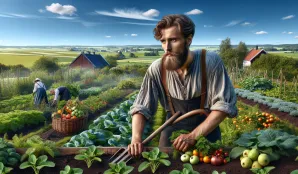
Vegetable growers salary
Latest available salary statistics are for 2025. Compare average pay, salary range and related job listings.
32 408 - 31 752 SEK / month
Naturbruk
Related tools
Salary progression Vegetable growers
What does a vegetable grower do? – Tasks and work environment
A vegetable grower is responsible for cultivating, tending, and harvesting vegetables in open fields, greenhouses, or other cultivation environments. Tasks include soil preparation, sowing, planting, watering, fertilizing, weed control, and monitoring plant protection. Harvesting is often done by hand, and the work can be physically demanding and seasonal, tied to the changing seasons. The work environment varies between outdoor work in fields and indoor work in greenhouses, where temperature and humidity can differ significantly. Vegetable growers often work in smaller family businesses, but larger commercial farms are also common.
Salary development over time
The average monthly salary for a vegetable grower has shown a slight upward trend over the past three years. In 2022, the average was 29,716 kronor, followed by 30 083 kronor in 2023 and 31 752 kronor in 2024. This represents a total increase of just over 1.2 % during the period. The modest salary growth can be explained by a relatively stable demand for labor, combined with the seasonal nature of the profession and market conditions in agriculture. Salary increases mainly follow general collective agreement changes rather than individual skills development or increased demand. Despite the slow pace, the statistics indicate a steady and secure employment situation for vegetable growers.
Vegetable grower salary – complete overview
- Average salary: 31 752 kr/month
- Lowest/Highest salary: Data unavailable
- Hourly wage: 181 kr
- Gender differences: Data unavailable
- Regional differences: Data unavailable
Education and qualifications
For those interested in working as a vegetable grower, there are several pathways into the profession. Many choose to pursue vocational training in natural resources at high school, but it is also possible to acquire necessary skills through adult education, folk high schools, or practical experience. Formal educational requirements are rarely strict, but a combination of theoretical and practical knowledge is highly valued by employers.
- High school vocational training in natural resources: 3 years
- Adult education/training in gardening or agriculture: 1–2 years
- Practical experience on farms or in greenhouses: Often required or highly advantageous
- Courses in crop production, ecology, and machinery use: Recommended
- Experience in seasonal work: Great advantage when applying for jobs
Many vegetable growers combine their cultivation with direct sales at markets or farm shops, which provides closer contact with consumers and variety in the workday.
Common benefits and compensations
Among the most common benefits for vegetable growers are work clothing, some wellness allowances, and sometimes employee discounts on their own products. Seasonal employees may also receive per diems or accommodation during the work period, especially at larger farms. Collective agreements often provide access to occupational pensions and insurances.
Competition and challenges
The labor market for vegetable growers is characterized by seasonal variation, with demand for labor increasing significantly during planting and harvest seasons. Competition for permanent positions can be high, especially in regions dominated by larger farms. Challenges include physically demanding work, weather dependence, and sometimes irregular working hours. Technological developments in cultivation may require ongoing further training, especially for those working with modern greenhouses or organic farming. Salary levels are also affected by international competition and vegetable imports.
Tips for aspiring vegetable growers
To succeed as a vegetable grower, it is beneficial to have a strong work ethic and tolerate physically demanding tasks, especially during busy seasons. Good organizational skills facilitate managing many tasks simultaneously and planning harvests efficiently. Flexibility is an important trait, as weather and market conditions can change rapidly. Showing interest in new technology and sustainable cultivation methods can increase employment opportunities, particularly on larger and more modern farms. Communication skills are also valuable, especially if work involves sales or customer contact. Continuing education through courses or internships provides a solid foundation and makes career advancement easier.
Key facts about vegetable growers
- Education level: High school or adult education in natural resources
- Work environment: Greenhouses, open fields, or farm settings
- Type of employment: Seasonal and full-time employment available
- Job openings: Approximately 360 in the profession in 2024
- Special skills: Crop production, machinery handling, plant protection
Career paths and future prospects
After three to five years in the profession, vegetable growers can advance to supervisory roles, operations managers, or start their own cultivation. Specialization in organic farming, greenhouse production, or sales is common development paths. According to the Swedish Public Employment Service's forecasts for the occupation of cultivation of agricultural crops, fruit, and berries, there is no clear assessment due to limited statistical data. Nonetheless, there is a steady number of approximately 360 job openings in 2024, indicating continued demand, especially during peak seasons. The market is influenced by weather, imports, and changing consumer habits, making flexibility and skills development particularly important.
Frequently asked questions about vegetable growers
- What does a vegetable grower earn per month?
- A vegetable grower has an average salary of 31 752 kronor per month. - What is the hourly wage for a vegetable grower?
- The hourly wage averages 181 kronor. - What education is required to become a vegetable grower?
- High school education in natural resources or equivalent adult education is most common, but practical experience is also valuable. - Are there jobs available as a vegetable grower?
- Yes, there are approximately 360 job openings in Sweden. - What are the future prospects?
- Forecasts are lacking due to limited data, but seasonal demand for labor remains stable. - Does a vegetable grower work mostly outdoors or indoors?
- Both outdoors in open fields and indoors in greenhouses, depending on the season and cultivation method.

Salary distributed by age and sector

About the data
All information displayed on this page is based on data from the Swedish Central Bureau of Statistics (SCB), the Swedish Tax Agency and the Swedish employment agency. Learn more about our data and data sources here.
All figures are gross salaries, meaning salaries before tax. The average salary, or mean salary, is calculated by adding up the total salary for all individuals within the profession and dividing it by the number of individuals. For specific job categories, we have also considered various criteria such as experience and education.
Profession Vegetable growers has the SSYK code 6111, which we use to match against the SCB database to obtain the latest salary statistics.
-

Farm Laborer 2026/27 – Recruitment Skåne & Kronoberg
Growers of agricultural crops, fruit and berries
Wed, 8 Jul 2026 - 00:18 -

Agricultural Relief Hand at Växa – Reserve Position
Growers of agricultural crops, fruit and berries
Wed, 10 Jun 2026 - 23:16 -

Staff Wanted for Berry and Vegetable Farm
Growers of agricultural crops, fruit and berries
Wed, 20 May 2026 - 21:34 -
Head Grower at ECA Operator Frövi AB
Growers of agricultural crops, fruit and berries
Tue, 19 May 2026 - 23:20 -
Supervisor, Greenhouse / Packing Hall – Leadership and Practical Work in Sustainable Food Production
Growers of agricultural crops, fruit and berries
Tue, 19 May 2026 - 22:52
Compare salary, work tasks and job outlook in adjacent occupations to find roles with similar skills or pay levels.
-
Plant growers, mixed plant species salary
Average salary: 31 752 SEK/month • Naturbruk
Growers of agricultural crops, fruit and berries
Compare with Vegetable growers
Tue, 14 Jul 2026 - 15:02 -

Homeowners, plant cultivation salary
Average salary: 31 752 SEK/month • Naturbruk
Growers of agricultural crops, fruit and berries
Compare with Vegetable growers
Tue, 14 Jul 2026 - 13:06 -
Average salary: 44 800 SEK/month • Naturbruk
Specialists and advisors in forestry
Compare with Vegetable growers
Tue, 14 Jul 2026 - 18:50 -

Agricultural consultant salary
Average salary: 44 900 SEK/month • Naturbruk
Specialists and advisors in agriculture etc.
Compare with Vegetable growers
Tue, 14 Jul 2026 - 17:13 -

Average salary: 44 900 SEK/month • Naturbruk
Specialists and advisors in agriculture etc.
Compare with Vegetable growers
Tue, 14 Jul 2026 - 08:18 -

Processing worker, garden salary
Average salary: 30 200 SEK/month • Naturbruk
Horticulturists
Compare with Vegetable growers
Tue, 14 Jul 2026 - 11:56


