- Salary statistics
- Movie sound engineer salary
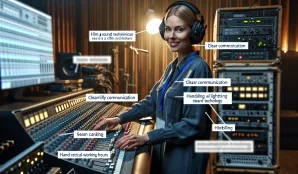
Movie sound engineer salary
Latest available salary statistics are for 2025. Compare average pay, salary range and related job listings.
37 700 - 43 000 SEK / month
Women earn 94% of what men do.
Kultur, media, design
Related tools
Salary progression Movie sound engineer
What does a Film Sound Technician do? – tasks and work environment
A Film Sound Technician is responsible for planning, recording, processing, and mixing sound for film productions and other moving media. Tasks include everything from rigging microphones and sound equipment on location to creating the right soundscape and atmosphere in post-production. Common work environments are film studios, outdoor locations, and sometimes cramped or noisy recording sites that require high technical skills and flexibility. The profession demands close collaboration, as the Film Sound Technician often works closely with directors, cinematographers, and other film crew members to ensure the sound supports the story in the best way.
Salary development over time
Over the past three years, salaries for Film Sound Technicians have developed positively. In 2022, the average salary was 35,100 SEK per month, increasing to 38 600 SEK in 2023. The largest increase occurred between 2023 and 2024, when the average salary rose to 39 700 SEK – a growth of over 8.7% in two years. This trend reflects an increased need for technical expertise in film production, as well as a higher demand for specialized sound technicians in the industry. Salary increases can also be linked to technological advances and digitalization, where new equipment and higher quality demands have made the profession more valuable. Despite some variation between employers and regions, the salary development is generally stable and positive for Film Sound Technicians.
Film Sound Technician salary – complete overview
- Average salary: 39 700 SEK/month
- Lowest salary: 33,600 SEK/month (women), 36,100 SEK/month (men)
- Highest salary: 40,300 SEK/month (women), 43,700 SEK/month (men)
- Hourly wage: 232 SEK
- Gender differences: Women earn 94% of what men do (women 37 800 SEK, men 40 000 SEK)
- Regional differences: Salary variation depends on production companies and location, but detailed statistics are lacking
Education and qualifications
The path to becoming a Film Sound Technician usually involves post-secondary education in sound engineering, film production, or media technology. Practical experience is highly valued, and many combine studies with internships or traineeships at production companies. The industry emphasizes creativity, technical skills, and the ability to work independently and in teams.
- Post-secondary education: YH training or university-level education in sound engineering (1–3 years)
- Courses and certifications: Specialized courses in sound production and film sound
- Internships/traineeships: Internships during studies are common and often crucial for employment
- Prerequisites: Basic technical interest and some experience with sound equipment
- Self-study: Opportunities to deepen knowledge via online courses and personal projects in film
Many Film Sound Technicians have backgrounds as musicians or sound designers, which gives a unique sense of how sound can enhance storytelling. Good listening skills and creative problem-solving are often crucial for success in the profession.
Common benefits and compensations
Film Sound Technicians are often offered benefits such as overtime pay for evening and weekend work, access to modern sound equipment, as well as opportunities for further training and skill development. Other common benefits include wellness allowances, flexible working hours, and sometimes remote work options during post-production.
Competition and challenges
Competition for positions as a Film Sound Technician can be fierce, especially for larger film productions or established production companies. Since there are limited permanent positions, technical expertise and a well-developed network are essential to secure the most attractive assignments. Flexibility and availability are highly valued, as filming often occurs at inconvenient times and locations. Additionally, rapid technological changes require Film Sound Technicians to continuously update their skills. The industry is project-based, which can create uncertainty regarding employment and income between jobs.
Tips for aspiring Film Sound Technicians
To succeed as a Film Sound Technician, it’s important to have a strong technical curiosity and a desire to stay updated on the latest sound technology. Being precise and patient is vital, as the work often involves fine adjustments for perfect sound quality. Collaboration and communication skills are crucial since the role involves close work with many different roles on set. Flexibility and the ability to work under time pressure are also central, as schedules can change quickly. Building a broad network through internships and personal projects, and practicing both technical and creative skills regularly, is highly recommended. An interest in storytelling and atmosphere can help the Film Sound Technician contribute unique elements to film productions.
Key facts about Film Sound Technicians
- Education level: Post-secondary education (1–3 years)
- Work format: Project-based and freelance
- Work environment: Varies, often on location or in studio
- Demand: 620 job openings in the field of lighting, sound, and stage technicians
- Gender distribution: Women earn 94% of what men do
Career paths and future prospects
After three to five years in the profession, a Film Sound Technician can advance to leading roles such as sound supervisor, sound editor, or sound designer on larger productions. Many also choose to specialize in areas like foley, ADR, or sound restoration. According to the Swedish Public Employment Service’s forecasts, it is difficult to give an exact assessment for Film Sound Technicians, as the profession is part of a broader group of lighting, sound, and stage technicians. However, within this group, there are 620 job openings, indicating relatively good demand despite high competition for the most desirable roles. The industry is influenced by investments in film and TV production and technological innovations, which can create new career opportunities for those who stay updated and develop their skills.
Common questions about Film Sound Technicians
- What does a Film Sound Technician earn?
- The average salary for a Film Sound Technician is 39 700 SEK per month. - What are the salary differences between genders?
- Women earn 94% of what men do in the profession. - What education is required to become a Film Sound Technician?
- Post-secondary education in sound engineering or film production, often 1–3 years. - Are there regional salary differences for Film Sound Technicians?
- Salary variation depends on production companies and locations, but detailed statistics are lacking. - What is the job market outlook for Film Sound Technicians?
- There are 620 available jobs, and demand is considered relatively good. - What personal qualities are important for a Film Sound Technician?
- Precision, teamwork skills, technical interest, and flexibility are essential. - What are the highest and lowest salaries for Film Sound Technicians?
- The highest salary is 43,700 SEK/month (men), 40,300 SEK/month (women); the lowest is 36,100 SEK/month (men), 33,600 SEK/month (women).

Salary distributed by age and sector
| Age | Base salary | Monthly salary | |
|---|---|---|---|
| 25-34 | 34800 kr | 35500 kr | |
| 35-44 | 37300 kr | 38100 kr | |
| 45-54 | 44000 kr | 45100 kr | |
| 55-64 | 43500 kr | 43900 kr | |
| Snitt | 94% | 38900 kr | 39700 kr |
| Age | Base salary | Monthly salary | |
|---|---|---|---|
| 25-34 | 36800 kr | 36800 kr | |
| 35-44 | 100% | 38800 kr | 39000 kr |
| 45-54 | 94% | 40000 kr | 40500 kr |
| 55-64 | 112% | 39800 kr | 40000 kr |
| Snitt | 100% | 39400 kr | 39700 kr |
| Age | Base salary | Monthly salary | |
|---|---|---|---|
| 25-34 | 36800 kr | 36800 kr | |
| 35-44 | 100% | 38800 kr | 39000 kr |
| 45-54 | 94% | 40000 kr | 40500 kr |
| 55-64 | 112% | 39800 kr | 40000 kr |
| Snitt | 100% | 39400 kr | 39700 kr |
| Age | Base salary | Monthly salary | |
|---|---|---|---|
| 25-34 | 34700 kr | 35400 kr | |
| 35-44 | 37300 kr | 38100 kr | |
| 45-54 | 44100 kr | 45300 kr | |
| 55-64 | 43700 kr | 44100 kr | |
| Snitt | 94% | 38900 kr | 39700 kr |
| Age | Base salary | Monthly salary | |
|---|---|---|---|
| 25-34 | 34700 kr | 35400 kr | |
| 35-44 | 37300 kr | 38100 kr | |
| 45-54 | 44100 kr | 45300 kr | |
| 55-64 | 43700 kr | 44100 kr | |
| Snitt | 94% | 38900 kr | 39700 kr |
| Age | Base salary | Monthly salary | |
|---|---|---|---|
| 25-34 | 34600 kr | 35300 kr | |
| 35-44 | 37100 kr | 37800 kr | |
| 45-54 | 44500 kr | 45700 kr | |
| 55-64 | 43500 kr | 43900 kr | |
| Snitt | 94% | 39200 kr | 40000 kr |
| Age | Base salary | Monthly salary | |
|---|---|---|---|
| 35-44 | 100% | 38800 kr | 39000 kr |
| 45-54 | 94% | 40200 kr | 40800 kr |
| 55-64 | 112% | 39300 kr | 39500 kr |
| Snitt | 100% | 39400 kr | 39800 kr |
| Age | Base salary | Monthly salary | |
|---|---|---|---|
| 35-44 | 100% | 38800 kr | 39000 kr |
| 45-54 | 94% | 40200 kr | 40800 kr |
| 55-64 | 112% | 39300 kr | 39500 kr |
| Snitt | 100% | 39400 kr | 39800 kr |
| Age | Base salary | Monthly salary | |
|---|---|---|---|
| 25-34 | 34600 kr | 35300 kr | |
| 35-44 | 37000 kr | 37800 kr | |
| 45-54 | 44700 kr | 45900 kr | |
| 55-64 | 43700 kr | 44200 kr | |
| Snitt | 94% | 39200 kr | 40000 kr |
| Age | Base salary | Monthly salary | |
|---|---|---|---|
| 25-34 | 34600 kr | 35300 kr | |
| 35-44 | 37000 kr | 37800 kr | |
| 45-54 | 44700 kr | 45900 kr | |
| 55-64 | 43700 kr | 44200 kr | |
| Snitt | 94% | 39200 kr | 40000 kr |
| Age | Base salary | Monthly salary | |
|---|---|---|---|
| Snitt | 94% | 37000 kr | 37800 kr |
| Age | Base salary | Monthly salary | |
|---|---|---|---|
| 25-34 | 36900 kr | 36900 kr | |
| 35-44 | 100% | 39000 kr | 39000 kr |
| 45-54 | 94% | 38400 kr | 38400 kr |
| 55-64 | 112% | 44400 kr | 44400 kr |
| Snitt | 100% | 39600 kr | 39600 kr |
| Age | Base salary | Monthly salary | |
|---|---|---|---|
| 25-34 | 36900 kr | 36900 kr | |
| 35-44 | 100% | 39000 kr | 39000 kr |
| 45-54 | 94% | 38400 kr | 38400 kr |
| 55-64 | 112% | 44400 kr | 44400 kr |
| Snitt | 100% | 39600 kr | 39600 kr |
| Age | Base salary | Monthly salary | |
|---|---|---|---|
| Snitt | 94% | 36900 kr | 37700 kr |
| Age | Base salary | Monthly salary | |
|---|---|---|---|
| Snitt | 94% | 36900 kr | 37700 kr |

About the data
All information displayed on this page is based on data from the Swedish Central Bureau of Statistics (SCB), the Swedish Tax Agency and the Swedish employment agency. Learn more about our data and data sources here.
All figures are gross salaries, meaning salaries before tax. The average salary, or mean salary, is calculated by adding up the total salary for all individuals within the profession and dividing it by the number of individuals. For specific job categories, we have also considered various criteria such as experience and education.
Profession Movie sound engineer has the SSYK code 3522, which we use to match against the SCB database to obtain the latest salary statistics.
-

Computing Technician - Audiovisual (AV) & Conference Infrastructure
Lighting, sound and stage technicians
Fri, 10 Jul 2026 - 22:27 -
AV Technician Wanted at Svensk Kulturfilm Konferensteknik
Lighting, sound and stage technicians
Thu, 9 Jul 2026 - 02:08 -

Technician for Audio & Video Team in Linköping
Lighting, sound and stage technicians
Thu, 9 Jul 2026 - 01:54 -

Exhibition Technician at Östergötland Museum
Lighting, sound and stage technicians
Fri, 3 Jul 2026 - 22:35 -

Stage Technician at Astrid Lindgren's World
Lighting, sound and stage technicians
Fri, 3 Jul 2026 - 01:52
Compare salary, work tasks and job outlook in adjacent occupations to find roles with similar skills or pay levels.
-

Average salary: 55 500 SEK/month • Kultur, media, design
Industrial designers
Compare with Movie sound engineer
Tue, 14 Jul 2026 - 13:58 -
Average salary: 42 300 SEK/month • Kultur, media, design
Image and broadcast technicians
Compare with Movie sound engineer
Tue, 14 Jul 2026 - 15:02 -

Average salary: 41 400 SEK/month • Kultur, media, design
Museum curators etc.
Compare with Movie sound engineer
Tue, 14 Jul 2026 - 13:59 -

Average salary: 47 400 SEK/month • Kultur, media, design
Musicians, singers and composers
Compare with Movie sound engineer
Tue, 14 Jul 2026 - 15:23 -

Average salary: 38 500 SEK/month • Kultur, media, design
Photographers
Compare with Movie sound engineer
Mon, 13 Jul 2026 - 02:11 -

Average salary: 55 500 SEK/month • Kultur, media, design
Industrial designers
Compare with Movie sound engineer
Tue, 14 Jul 2026 - 15:57


