- Salary statistics
- Sheep breeders salary
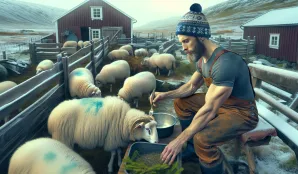
Sheep breeders salary
Latest available salary statistics are for 2025. Compare average pay, salary range and related job listings.
29 000 - 33 900 SEK / month
Women earn 100% of what men do.
Naturbruk
Related tools
Salary progression Sheep breeders
What does a sheep breeder do? – Tasks and work environment
A sheep breeder is responsible for breeding, caring for, and managing sheep flocks, focusing on both meat and wool production, and sometimes milk as well. Tasks include daily animal supervision, feeding, health checks, lambing, wool shearing, and pasture management. The profession involves outdoor work in varying weather conditions and often during early mornings or late evenings, especially during lambing season. Machinery and vehicles are regularly used, and some tasks require good physical condition and a keen eye for animal health to quickly detect illness or stress.
Salary development over time
The salary development for sheep breeders has been relatively stable over the past three years. In 2022, the average salary was 27,200 SEK per month. In 2023, the average salary increased to 29 400 SEK and has remained at that level in 2024. This represents an increase of approximately 4.4% between 2022 and 2023, with a subsequent plateau. This trend reflects an increased demand for labor in agriculture, but also challenges in raising wages further due to price pressures and market competition. The wage increase can be linked to a general labor shortage in the profession and increased requirements for skills in animal health and sustainable production.
Sheep breeder salary – comprehensive overview
- Average salary: 29 400 SEK/month
- Lowest salary: 27,000 SEK/month (female, private sector, high school education 3 years)
- Highest salary: 32,500 SEK/month (female, public sector, high school education up to 2 years)
- Hourly wage: 171 SEK
- Women earn: 29 300 SEK/month
- Men earn: 29,700 SEK/month
- Women earn: 100% of what men do
Education and qualifications
To work as a sheep breeder, no formal higher education is usually required, but high school education in natural resource management or agriculture is common and provides a solid foundation. Practical experience is highly valuable and often essential for success in the profession. Further training in animal husbandry, health care, and machinery operation can be advantageous, especially for those wishing to run their own business or specialize.
- High school education: Natural resource management program, specialization in agriculture (3 years)
- Courses/certificates: Animal husbandry, animal health, machinery operator certification
- Internship: Work-based learning is common during education
- Prerequisites: Good physical ability and interest in animals
- Additional training: Online courses or short courses in sheep care and entrepreneurship
Many sheep breeders combine their activities with other areas within agriculture, such as cattle or crop production. This provides increased flexibility and reduces vulnerability to price fluctuations in individual sectors.
Common benefits and compensations
Common benefits for sheep breeders may include company housing or housing allowances, per diems for travel, work clothes, and sometimes subsidized meals. For self-employed individuals, the ability to deduct for machinery and investments is a significant financial advantage. In some cases, insurance and professional development in animal health and safety are also offered.
Competition and challenges
The sheep breeding profession is characterized by high workload during certain periods and a large responsibility for animal welfare year-round. Competition for the market is relatively low nationally, but price pressures on sheep products can affect profitability. Recruitment difficulties are common, partly because many choose to work part-time or combine with other professions. At the same time, the profession increasingly demands knowledge about sustainability, animal health, and efficient production, raising the bar for skills development. Regionally, the availability of job opportunities varies, but nationally there is a stable demand for new sheep breeders.
Tips for those wanting to become a sheep breeder
To succeed as a sheep breeder, perseverance and a strong sense of responsibility are important, as the work requires daily care of animals regardless of weather or season. A strong interest in animals and nature makes workdays more rewarding and helps to quickly notice changes in animal behavior. Being practical and solution-oriented is crucial for handling unexpected challenges, such as disease outbreaks or technical problems with equipment. Careful planning of feed, breeding, and documentation facilitates work, while flexibility makes it easier to combine sheep breeding with other activities or adapt to market fluctuations. Social skills are also valuable, especially for those wishing to collaborate with other producers or sell products directly to customers.
Key facts about Sheep Breeders
- Education level: High school education in natural resource management is most common
- Work environment: Outdoors and physically demanding, often in rural areas
- Work form: Commonly self-employment or combined roles
- Demand: Great opportunities for employment nationwide
- Special skills: Animal health, machinery handling, and breeding
Career paths and future prospects
After three to five years in the profession, many sheep breeders have built their own flock or taken over a family farm. It is common to broaden skills through further education in animal health, breeding, or business management to develop the enterprise. Some choose to specialize in organic production or niche products like sheep milk or artisanal wool. The Employment Service forecasts that job opportunities are plentiful and that demand will remain stable over the next five years. However, the profession faces a paradoxical recruitment situation, with a shortage of full-time workers and a large number of part-time workers. Currently, there are 360 job openings in the field, indicating a stable job market for new and experienced sheep breeders.
Frequently asked questions about Sheep Breeders
- What does a Sheep Breeder earn?
- The average salary is 29 400 SEK per month, but it can vary between 27,000 SEK and 32,500 SEK depending on experience, employer, and education. - Are there differences between men's and women's salaries?
- Yes, men earn an average of 29,700 SEK and women 29 300 SEK, which means women earn 100% of what men do within the profession. - What education is required to become a sheep breeder?
- High school education in natural resource management is most common, but practical experience and further training in animal husbandry are also valuable. - What are the future prospects for sheep breeders?
- The Employment Service assesses that job opportunities are plentiful and that demand is expected to remain unchanged over the next five years. - What are the duties of a sheep breeder?
- Tasks include animal care, feeding, lambing, wool shearing, and pasture management. - What are the biggest challenges in the profession?
- High workload during certain periods, significant responsibility for animal health, and market profitability pressure are common challenges. - How many job openings are there for sheep breeders?
- Currently, there are 360 job openings in the occupation group 'breeders and caretakers of farm animals'.

Salary distributed by age and sector
| Age | Base salary | Monthly salary | |
|---|---|---|---|
| 18-24 | 25200 kr | 26300 kr | |
| 25-34 | 28700 kr | 29300 kr | |
| 35-44 | 29700 kr | 30600 kr | |
| 45-54 | 30900 kr | 31400 kr | |
| 55-64 | 29900 kr | 30300 kr | |
| Snitt | 100% | 28700 kr | 29400 kr |
| Age | Base salary | Monthly salary | |
|---|---|---|---|
| 18-24 | 28400 kr | 30800 kr | |
| 25-34 | 99% | 29200 kr | 30800 kr |
| 35-44 | 115% | 31500 kr | 32600 kr |
| 45-54 | 32100 kr | 33400 kr | |
| 55-64 | 98% | 31000 kr | 32400 kr |
| Snitt | 99% | 30300 kr | 31800 kr |
| Age | Base salary | Monthly salary | |
|---|---|---|---|
| 18-24 | 28400 kr | 30800 kr | |
| 25-34 | 99% | 29200 kr | 30800 kr |
| 35-44 | 115% | 31500 kr | 32600 kr |
| 45-54 | 32100 kr | 33400 kr | |
| 55-64 | 98% | 31000 kr | 32400 kr |
| Snitt | 99% | 30300 kr | 31800 kr |
| Age | Base salary | Monthly salary | |
|---|---|---|---|
| 18-24 | 25200 kr | 26200 kr | |
| 25-34 | 28700 kr | 29300 kr | |
| Snitt | 99% | 28600 kr | 29300 kr |
| Age | Base salary | Monthly salary | |
|---|---|---|---|
| 18-24 | 25200 kr | 26200 kr | |
| 25-34 | 28700 kr | 29300 kr | |
| Snitt | 99% | 28600 kr | 29300 kr |
| Age | Base salary | Monthly salary | |
|---|---|---|---|
| Snitt | 100% | 29100 kr | 29500 kr |
| Age | Base salary | Monthly salary | |
|---|---|---|---|
| 25-34 | 99% | 29900 kr | 31000 kr |
| 35-44 | 115% | 28100 kr | 28800 kr |
| 55-64 | 98% | 30300 kr | 32900 kr |
| Snitt | 99% | 29600 kr | 32000 kr |
| Age | Base salary | Monthly salary | |
|---|---|---|---|
| 25-34 | 99% | 29900 kr | 31000 kr |
| 35-44 | 115% | 28100 kr | 28800 kr |
| 55-64 | 98% | 30300 kr | 32900 kr |
| Snitt | 99% | 29600 kr | 32000 kr |
| Age | Base salary | Monthly salary | |
|---|---|---|---|
| Snitt | 99% | 29100 kr | 29500 kr |
| Age | Base salary | Monthly salary | |
|---|---|---|---|
| Snitt | 99% | 29100 kr | 29500 kr |
| Age | Base salary | Monthly salary | |
|---|---|---|---|
| 18-24 | 24200 kr | 25700 kr | |
| 25-34 | 29400 kr | 30000 kr | |
| Snitt | 100% | 28300 kr | 29300 kr |
| Age | Base salary | Monthly salary | |
|---|---|---|---|
| 18-24 | 28300 kr | 30400 kr | |
| 25-34 | 99% | 29100 kr | 30700 kr |
| 35-44 | 115% | 32000 kr | 33100 kr |
| 45-54 | 32300 kr | 33200 kr | |
| 55-64 | 98% | 31100 kr | 32400 kr |
| Snitt | 99% | 30400 kr | 31800 kr |
| Age | Base salary | Monthly salary | |
|---|---|---|---|
| 18-24 | 28300 kr | 30400 kr | |
| 25-34 | 99% | 29100 kr | 30700 kr |
| 35-44 | 115% | 32000 kr | 33100 kr |
| 45-54 | 32300 kr | 33200 kr | |
| 55-64 | 98% | 31100 kr | 32400 kr |
| Snitt | 99% | 30400 kr | 31800 kr |
| Age | Base salary | Monthly salary | |
|---|---|---|---|
| 25-34 | 29400 kr | 30000 kr | |
| Snitt | 99% | 28300 kr | 29300 kr |
| Age | Base salary | Monthly salary | |
|---|---|---|---|
| 25-34 | 29400 kr | 30000 kr | |
| Snitt | 99% | 28300 kr | 29300 kr |

About the data
All information displayed on this page is based on data from the Swedish Central Bureau of Statistics (SCB), the Swedish Tax Agency and the Swedish employment agency. Learn more about our data and data sources here.
All figures are gross salaries, meaning salaries before tax. The average salary, or mean salary, is calculated by adding up the total salary for all individuals within the profession and dividing it by the number of individuals. For specific job categories, we have also considered various criteria such as experience and education.
Profession Sheep breeders has the SSYK code 6121, which we use to match against the SCB database to obtain the latest salary statistics.
-

Stable Assistant Needed for Weekday Mornings – Östra Torns Equestrian Club
Breeders and caretakers of farm animals
Sat, 11 Jul 2026 - 20:33 -

Animal Caretaker for Pig Production – Full Time in Rural Setting
Breeders and caretakers of farm animals
Fri, 10 Jul 2026 - 21:33 -
Stable Technician at Lövsta Agricultural Research, Uppsala
Breeders and caretakers of farm animals
Thu, 9 Jul 2026 - 01:54 -

Employee Wanted for Dairy Farm (600 Cows)
Breeders and caretakers of farm animals
Mon, 6 Jul 2026 - 23:46 -

Animal Caretaker / Farm Manager at Aviagen SweChick AB
Breeders and caretakers of farm animals
Mon, 6 Jul 2026 - 17:44
Compare salary, work tasks and job outlook in adjacent occupations to find roles with similar skills or pay levels.
-
Plant growers, mixed plant species salary
Average salary: 31 752 SEK/month • Naturbruk
Growers of agricultural crops, fruit and berries
Compare with Sheep breeders
Tue, 14 Jul 2026 - 15:02 -

Homeowners, plant cultivation salary
Average salary: 31 752 SEK/month • Naturbruk
Growers of agricultural crops, fruit and berries
Compare with Sheep breeders
Tue, 14 Jul 2026 - 13:06 -
Average salary: 44 800 SEK/month • Naturbruk
Specialists and advisors in forestry
Compare with Sheep breeders
Tue, 14 Jul 2026 - 18:51 -

Agricultural consultant salary
Average salary: 44 900 SEK/month • Naturbruk
Specialists and advisors in agriculture etc.
Compare with Sheep breeders
Tue, 14 Jul 2026 - 17:13 -

Average salary: 44 900 SEK/month • Naturbruk
Specialists and advisors in agriculture etc.
Compare with Sheep breeders
Tue, 14 Jul 2026 - 08:18 -

Processing worker, garden salary
Average salary: 30 200 SEK/month • Naturbruk
Horticulturists
Compare with Sheep breeders
Tue, 14 Jul 2026 - 11:56


