- Salary statistics
- Bus fitter salary
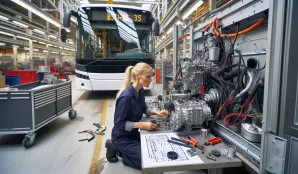
Bus fitter salary
Latest available salary statistics are for 2025. Compare average pay, salary range and related job listings.
32 900 - 39 200 SEK / month
Women earn 95% of what men do.
Industriell tillverkning
Related tools
Salary progression Bus fitter
What does a Bus Assembler do? – Tasks and work environment
A Bus Assembler works on assembling, installing, and finishing buses in an industrial setting. Tasks often include assembling the chassis, engine, interior, electrical systems, and other components necessary to complete a bus for delivery. Precision, technical understanding, and the ability to work independently and in teams are central qualities in the profession. The work environment is usually in larger factories or workshops where heavy lifting and shift work may occur, depending on the size of the workplace and production pace.
Salary development over time
Over the past three years, the salary for a Bus Assembler has steadily increased. In 2022, the average salary was 31,100 SEK per month, rising to 33 800 SEK in 2023. For 2024, the average salary has increased further to 35 700 SEK, representing a total increase of approximately 8.7% over the period. This growth reflects both an increased demand for skilled workers in vehicle manufacturing and general industry wage trends. The demand for experienced assemblers has also contributed to higher wages, especially as many leave the profession and skills shortages grow.
Bus Assembler salary – comprehensive overview
- Average salary: 35 700 SEK/month
- Lowest salary: 32,800 SEK/month (women), 33,100 SEK/month (men)
- Highest salary: 33,000 SEK/month (women), 35,400 SEK/month (men)
- Hourly wage (average): 203 SEK
- Gender pay gap: Women earn 95% of what men do (women 32,800 SEK, men 35 800 SEK)
- Regional differences: Salaries may vary depending on region and employer, but clear national differences are not documented
Education and qualifications
The path to becoming a Bus Assembler typically involves completing a vocational program in vehicle and transport at high school, but there are also adult education courses and internal trainee programs at larger employers. Practical experience is highly valued, and many employers prefer candidates who have completed relevant internships or have previous experience in similar assembly work. Some employers also offer opportunities for further training in specific technical areas, such as electronics or hydraulics.
- Formal education: Vehicle and transport program at high school (3 years)
- Certifications: Internal training and certificates may be required by some employers
- Internship: Work-based learning during education is common
- Prerequisites: Technical interest and basic knowledge of mechanics/electrical systems
- Tips: Early internships or holiday work in vehicle manufacturing increase employability
Experience working in teams and the ability to quickly adapt to new technical solutions are highly valued in bus assembly. Since vehicle technology develops rapidly, it is important to stay curious and willing to learn new things. Many employers provide internal training to keep their assemblers updated on the latest innovations.
Common benefits and compensations
Bus Assemblers are often offered collectively negotiated benefits such as occupational pension, insurance, and wellness contributions. Shift work may provide additional pay, and some employers offer subsidized lunches, work clothing, and opportunities for skill development. Overtime pay and shift allowances are common, especially in larger industrial companies.
Competition and challenges
The competition for jobs in bus assembly is relatively low, especially since demand for qualified vehicle assemblers remains high. At the same time, challenges include technological development and requirements for broader technical skills, as modern buses contain advanced electronic and digital systems. Another challenge is physical strain, as the work can be monotonous and involve heavy lifting. Recruitment difficulties occur because many leave the profession, prompting employers to often seek new employees. The profession also requires good teamwork skills and the ability to handle periods of high workload.
Tips for those wanting to become a Bus Assembler
To succeed as a Bus Assembler, it is good to have a genuine technical interest and curiosity about vehicle technology development. Precision is crucial, especially when following assembly instructions and safety routines. Flexibility and teamwork skills facilitate daily work, as tasks often involve working in teams and can vary between projects. Being resilient under pressure is an advantage during periods of high production, while problem-solving skills help you quickly handle technical challenges. Practical experience, such as summer jobs or internships, increases employment chances and provides insight into the profession's demands. Showing engagement and taking initiatives for further training or certifications can also improve your future prospects.
Key facts about the Bus Assembler
- Educational level: High school (vehicle and transport program)
- Work environment: Factory/workshop, often shift work
- Demand: Great opportunities nationwide (1437 job openings in the profession)
- Gender distribution: Men dominate the profession, but women are increasing in number
- Special skills: Electronics, hydraulics, and mechanics are advantageous
Career paths and future prospects
After three to five years as a Bus Assembler, there are opportunities to advance to leadership roles such as team leader, supervisor, or specialized assembler in areas like electrical or hybrid systems. Some choose to further their education to become technicians or production technologists responsible for quality control or production planning. The Employment Service's forecast shows that opportunities for employment as a vehicle assembler are large and expected to remain stable over the next five years. Recruitment difficulties occur, which means employers are often open to training new employees internally. For those wishing to change careers, experience in bus assembly is also valuable in other parts of the automotive industry and manufacturing sector.
Frequently asked questions about Bus Assembler
- What does a Bus Assembler earn?
- An average Bus Assembler has a monthly salary of 35 700 SEK. - Are there gender differences in salary?
- Yes, women earn on average 95% of what men do in the profession. - What education is required to become a Bus Assembler?
- High school vocational programs in vehicle and transport or equivalent adult education are most common. - What is the job market like for Bus Assemblers?
- Demand is high and job opportunities are good across the country. - What tasks does a Bus Assembler perform?
- Tasks include assembling the bus chassis, engine, interior, and electrical systems. - What benefits are common for Bus Assemblers?
- Collectively negotiated benefits such as occupational pension, insurance, and wellness contributions are common. - Are there opportunities for further education?
- Yes, many employers offer internal training and certifications in technical fields.

Salary distributed by age and sector
| Age | Base salary | Monthly salary | |
|---|---|---|---|
| 18-24 | 31300 kr | 31800 kr | |
| 25-34 | 33900 kr | 34800 kr | |
| 35-44 | 35400 kr | 36000 kr | |
| 45-54 | 37800 kr | 38200 kr | |
| 55-64 | 35400 kr | 35700 kr | |
| Snitt | 95% | 35100 kr | 35700 kr |
| Age | Base salary | Monthly salary | |
|---|---|---|---|
| 18-24 | 31300 kr | 31800 kr | |
| 25-34 | 33900 kr | 34800 kr | |
| 35-44 | 35400 kr | 36000 kr | |
| 45-54 | 37800 kr | 38200 kr | |
| 55-64 | 35400 kr | 35700 kr | |
| Snitt | 95% | 35100 kr | 35700 kr |
| Age | Base salary | Monthly salary | |
|---|---|---|---|
| 18-24 | 31300 kr | 31800 kr | |
| 25-34 | 33900 kr | 34800 kr | |
| 35-44 | 35400 kr | 36000 kr | |
| 45-54 | 37800 kr | 38200 kr | |
| 55-64 | 35400 kr | 35700 kr | |
| Snitt | 95% | 35100 kr | 35700 kr |
| Age | Base salary | Monthly salary | |
|---|---|---|---|
| 18-24 | 31200 kr | 31500 kr | |
| 25-34 | 34100 kr | 34900 kr | |
| 35-44 | 35600 kr | 36200 kr | |
| 45-54 | 37900 kr | 38300 kr | |
| 55-64 | 35600 kr | 35800 kr | |
| Snitt | 95% | 35300 kr | 35800 kr |
| Age | Base salary | Monthly salary | |
|---|---|---|---|
| 18-24 | 31200 kr | 31500 kr | |
| 25-34 | 34100 kr | 34900 kr | |
| 35-44 | 35600 kr | 36200 kr | |
| 45-54 | 37900 kr | 38300 kr | |
| 55-64 | 35600 kr | 35800 kr | |
| Snitt | 95% | 35300 kr | 35800 kr |
| Age | Base salary | Monthly salary | |
|---|---|---|---|
| 18-24 | 31200 kr | 31500 kr | |
| 25-34 | 34100 kr | 34900 kr | |
| 35-44 | 35600 kr | 36200 kr | |
| 45-54 | 37900 kr | 38300 kr | |
| 55-64 | 35600 kr | 35800 kr | |
| Snitt | 95% | 35300 kr | 35800 kr |
| Age | Base salary | Monthly salary | |
|---|---|---|---|
| Snitt | 95% | 33100 kr | 33900 kr |
| Age | Base salary | Monthly salary | |
|---|---|---|---|
| Snitt | 95% | 33100 kr | 33900 kr |
| Age | Base salary | Monthly salary | |
|---|---|---|---|
| Snitt | 95% | 33100 kr | 33900 kr |

About the data
All information displayed on this page is based on data from the Swedish Central Bureau of Statistics (SCB), the Swedish Tax Agency and the Swedish employment agency. Learn more about our data and data sources here.
All figures are gross salaries, meaning salaries before tax. The average salary, or mean salary, is calculated by adding up the total salary for all individuals within the profession and dividing it by the number of individuals. For specific job categories, we have also considered various criteria such as experience and education.
Profession Bus fitter has the SSYK code 8211, which we use to match against the SCB database to obtain the latest salary statistics.
-

Assembler at Volvo CE in Braås – Fixed-term with extension opportunities
Vehicle assemblers
Mon, 13 Jul 2026 - 09:06 -

Vehicle Technician / Installer for StjärnaFyrkant Uppsala
Vehicle assemblers
Sun, 12 Jul 2026 - 20:34 -
Vehicle Technician / Fitter for StjärnaFyrkant Stockholm North
Vehicle assemblers
Sun, 12 Jul 2026 - 20:33


Compare salary, work tasks and job outlook in adjacent occupations to find roles with similar skills or pay levels.
-

Window fitter, manufacturing salary
Average salary: 34 400 SEK/month • Industriell tillverkning
Assemblers, wood products
Compare with Bus fitter
Mon, 13 Jul 2026 - 20:16 -

Average salary: 39 900 SEK/month • Industriell tillverkning
Machine operators, pharmaceutical products
Compare with Bus fitter
Mon, 13 Jul 2026 - 13:46 -

Average salary: 40 300 SEK/month • Industriell tillverkning
Machine operators, paper goods industry
Compare with Bus fitter
Sat, 11 Jul 2026 - 17:51 -

Machine operator, food industry, tea, coffee, cocoa salary
Average salary: 33 700 SEK/month • Industriell tillverkning
Other machine operators, food industry etc.
Compare with Bus fitter
Tue, 14 Jul 2026 - 04:42 -

Average salary: 32 200 SEK/month • Industriell tillverkning
Other machine operators, textile, leather and leather industry
Compare with Bus fitter
Mon, 6 Jul 2026 - 15:34 -

Average salary: 34 700 SEK/month • Industriell tillverkning
Machine carpenters and machine operators, wood industry
Compare with Bus fitter
Tue, 14 Jul 2026 - 01:43


