News and articles
- Home
- Articles






Latest posts

A Gymnastikkonsulent primarily works on developing, planning, and leading gymnastics activities within associations, schools, or specialized organizations. Responsibilities include training and supervising leaders, coordinating training programs, organizing competitions, and ensuring compliance with current guidelines and safety standards. Administrative tasks such as budgeting and project management are often included. The environment can vary between gymnasiums, offices, and sometimes travel to visit different facilities or participate in training and conferences.
Read more ->
A fitness instructor leads training sessions and helps participants develop their physical abilities through various forms of group training and individual coaching. The work often involves planning, implementing, and evaluating training programs tailored to different ages and conditions. The instructor is responsible for inspiring and motivating participants, with safety always in focus. The work environment varies; it can include gyms, wellness centers, schools, or sports clubs, with both day and evening shifts. The profession requires good physical condition, pedagogical skills, and a genuine interest in working with people.
Read more ->-

Opinion Polls: Kantar-Sifo shows increased support for S, decline for SD and C
Fri, 13 Feb 2026 - 01:35 -

Policy rate remains at 1.75% – Riksbank signals stability
Thu, 29 Jan 2026 - 14:02


A gymnastics director primarily works within high schools, leading, planning, and developing physical education and health instruction. Tasks include teaching, individual guidance, designing curricula, and organizing physical activities for students. The role often involves coordinating the school's health-promoting efforts and collaborating with other educators to create a holistic environment that supports students' physical and mental well-being. The work environment is varied and can include classrooms, sports halls, and outdoor settings, requiring flexibility and good organizational skills.
Read more ->
A high school teacher specializing in artistic and practical subjects is responsible for teaching in areas such as visual arts, music, dance, theater, crafts, or other creative and practical disciplines. The work involves planning, conducting, and following up on lessons where both theoretical and practical elements are combined. The teacher adapts the instruction to students' needs and often works on projects, emphasizing collaboration and creative problem-solving. The work environment can vary between classrooms, studios, workshops, and stage areas, requiring close cooperation with colleagues and students in a dynamic and sometimes intense school setting.
Read more ->
A high school teacher in general subjects is responsible for teaching in areas such as Swedish, English, Mathematics, Social Studies, and Natural Science at the upper secondary school. Tasks include planning, conducting, and following up on lessons, assessing students’ performance, and mentoring and supporting students’ personal development. Contact with colleagues and guardians is an important part, as is development work within the school's pedagogy and work environment. The work usually takes place within the school's premises, often in classrooms, but also during study days, conferences, and digital learning platforms. The pace can be high, especially during exam periods and grading, and the work environment is characterized by collaboration and constant changes in curricula and student composition.
Read more ->
A jester works professionally to entertain audiences through a combination of humor, magic, juggling, acrobatics, and musical acts. The profession is strongly associated with live performances at festivals, historical markets, events, and sometimes in theaters or within the entertainment industry. The work environment is often dynamic and varied, with many jesters working outdoors or on temporary stages, adapting their acts to the audience and location. Flexibility and improvisation skills are central, as the workday rarely looks the same and the pace can change quickly depending on the event and audience response.
Read more ->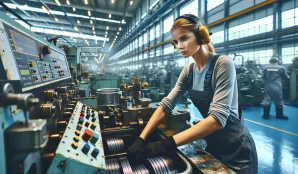
Gummivaruarbetare primarily work with manufacturing, processing, and quality control of rubber products within the industry. Tasks may include monitoring and operating machinery, inspecting the quality of finished products, performing minor repairs, and ensuring production follows given instructions and safety routines. The work is often carried out in factory or workshop environments where noise, dust, and temperature variations can occur. Shifts are common, meaning varying working hours, and tasks can be monotonous and physically demanding.
Read more ->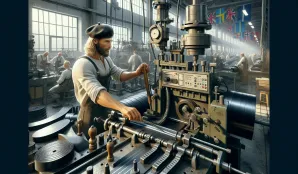
A Gummivalsare mainly works within the industry and is responsible for handling, monitoring, and maintaining machines that process and shape rubber products. The tasks often include setting up machines for various production steps, supervising the manufacturing process, performing quality checks, and fixing minor machine faults. The work environment requires precision and speed, and safety regulations are an integral part of daily routines. Gummivalsare are typically employed in manufacturing industries, often in shifts, where the environment can be noisy and require protective equipment.
Read more ->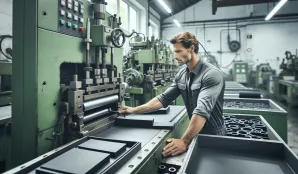
A Gummipressare primarily works with monitoring, controlling, and maintaining machines that shape and press rubber materials into various industrial products. Tasks include loading machines with raw materials, adjusting settings to ensure high quality, and conducting ongoing quality checks. The role also involves troubleshooting and performing simple repairs on equipment when needed. Gummipressare often work in production environments where safety routines are essential, and the work environment can be noisy and require protective gear, especially when working near heavy machinery and hot rubber.
Read more ->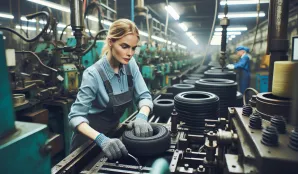
A Gummioperatör primarily works with monitoring, controlling, and maintaining machines used in the production of rubber products, such as tires, hoses, and seals. The role often involves setting up machines, refilling materials, quality assurance of products, and fixing minor faults and deviations during manufacturing. The work environment is usually industrial, often in factories where noise and temperature fluctuations are present. Protective equipment is regularly used to prevent accidents and injuries, and the work can be physically demanding and repetitive. Collaboration with other operators and technicians is a natural part of daily tasks, especially on larger production lines or during shift work.
Read more ->