- Salary statistics
- Xylographer salary
Xylographer salary
Latest available salary statistics are for 2025. Compare average pay, salary range and related job listings.
43 692 - 41 986 SEK / month
Kultur, media, design
Related tools
Salary progression Xylographer
What does a xylographer do? – Tasks and work environment
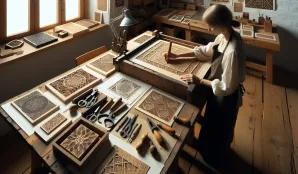
The xylographer is a specialist in visual art and graphic techniques with a focus on woodcut and engraving. The work involves designing, carving, and printing images by cutting motifs into woodblocks, which are then used to create artworks or illustrations. The process requires great precision, patience, and artistic sensibility. Xylographers can work independently in studios, at museums, or in collaboration with publishers, art institutions, and educational activities. The work environment is often characterized by sitting still, concentration, and handling tools and materials that require fine motor skills and safety awareness.
Salary development over time
Over the past three years, the average salary of a xylographer has increased from 36200 kronor per month in 2022 to 39 779 kronor in 2023, and further to 41 986 kronor in 2024. This corresponds to a total salary increase of approximately 10% during the period. The trend shows a steady rise, which can be explained by increased demand for skilled visual artists and craftspersons within the cultural sector. At the same time, factors such as digitalization and reduced access to traditionally trained xylographers positively influence salary levels. However, the market is limited, and since the profession is narrow and specialized, variations may occur between different regions and employers. The salary development also reflects the broader trend in the art industry towards higher valuation of craftsmanship and artistic skills.
Xylographer salary – a comprehensive overview
- Average salary: 41 986 kr/month
- Lowest/highest salary: Data unavailable
- Hourly wage: 239 kr
- Gender differences: Data unavailable
- Regional differences: Data unavailable
Education and qualifications
The path to becoming a xylographer usually involves artistic higher education, such as visual arts or graphic design, often with specialization in graphic techniques. Practical experience, through supervised internships and independent work, is crucial. There are also opportunities to deepen skills through courses, workshops, and self-study within xylography and related artistic disciplines.
- Formal education: Artistic higher education (3–5 years)
- Courses and certificates: Graphic techniques, xylography, and woodcut printing
- Internships: Studio internships or trainee programs in art and graphics
- Prerequisites: Basic artistic skills and portfolio
- Self-study: Possible via online courses and artistic networks
Xylography is one of the oldest printing techniques and has been used to illustrate books and newspapers long before digital printing took over. Despite modern technology, craftsmanship is still appreciated in the art world, where originality and traditional skill are highly valued.
Common benefits and compensations
Employers within the arts and culture sector often offer benefits such as flexible working hours, opportunities for own studio space, and access to materials and tools. Travel grants for exhibitions, professional development support, and artist stipends are also common, along with opportunities to participate in exchanges and collaborations internationally.
Competition and challenges
The competition for commissions and employment is significant, especially since the number of positions for xylographers is limited in Sweden. The profession requires continuous skill development and networking to secure assignments, as many work as freelancers or on a project basis. Digitalization and automation have reduced demand for traditional printing techniques, but at the same time, interest in unique, handcrafted artworks has increased. New xylographers often need to combine their artistry with teaching, other graphic production, or employment within art institutions to achieve stable income. The lack of specific salary statistics and limited information about the job market means that uncertainty about future opportunities is greater than in many other professions.
Tips for aspiring xylographers
To succeed as a xylographer, it is good to combine artistic curiosity with patience and precision. Building a strong portfolio by experimenting with different graphic techniques and participating in exhibitions to gain visibility is important. Self-discipline and perseverance are required, especially since assignments are often project-based and self-driven. Cultivating a broad network, both within the art world and with potential clients, increases chances of securing commissions. Creative problem-solving skills are valuable when technical challenges arise in the workshop. Finally, it is crucial to be open to further education and to constantly develop your craft to meet changing demands and trends.
Key facts about Xylographers
- Occupational group: Visual artists, etc.
- Average salary: 41 986 kr/month
- Work form: Often freelance or project-based employment
- Educational level: Artistic higher education recommended
- Available jobs in the group: 620 (May 2024)
Career paths and future prospects
After three to five years as a xylographer, the role can develop towards larger artistic commissions, gallery exhibitions, or teaching graphic techniques. Some choose to start their own business, while others take employment at museums or within the cultural sector. According to the Employment Service's forecasts, there is no specific assessment for xylographers, but within the visual arts group, the job market is limited and competition for assignments is high. Nevertheless, there are opportunities for skilled and niche artists, especially those who combine traditional craftsmanship with modern expressions or teaching. Future prospects are also influenced by cultural policies and the general demand for artistic services.
Frequently asked questions about Xylographers
- What is the average salary of a Xylographer?
- A xylographer has an average monthly salary of 41 986. - How does one become a xylographer?
- The path often involves artistic higher education with a focus on graphic techniques and woodcut printing. - Are there many job opportunities for xylographers?
- In the visual arts occupational group, there were 620 available jobs in May 2024, but competition is high. - Which workplaces hire xylographers?
- Common workplaces include own studios, museums, art galleries, and educational institutions. - What qualities are important for a xylographer?
- Artistic ability, precision, patience, and creativity are central qualities. - What are the future prospects?
- The Employment Service makes no specific forecast for xylographers, but demand is generally limited. - What does the work entail practically?
- The work involves carving motifs into woodblocks for graphic printing, often in calm and focused conditions.

Salary distributed by age and sector

About the data
All information displayed on this page is based on data from the Swedish Central Bureau of Statistics (SCB), the Swedish Tax Agency and the Swedish employment agency. Learn more about our data and data sources here.
All figures are gross salaries, meaning salaries before tax. The average salary, or mean salary, is calculated by adding up the total salary for all individuals within the profession and dividing it by the number of individuals. For specific job categories, we have also considered various criteria such as experience and education.
Profession Xylographer has the SSYK code 2651, which we use to match against the SCB database to obtain the latest salary statistics.

Compare salary, work tasks and job outlook in adjacent occupations to find roles with similar skills or pay levels.
-

Film technicians, film and TV salary
Average salary: 42 300 SEK/month • Kultur, media, design
Image and broadcast technicians
Compare with Xylographer
Tue, 14 Jul 2026 - 11:01 -

Average salary: 40 600 SEK/month • Kultur, media, design
Translators, interpreters and linguists etc.
Compare with Xylographer
Tue, 14 Jul 2026 - 09:18 -

Average salary: 38 500 SEK/month • Kultur, media, design
Photographers
Compare with Xylographer
Mon, 13 Jul 2026 - 23:35 -

Average salary: 42 300 SEK/month • Kultur, media, design
Image and broadcast technicians
Compare with Xylographer
Tue, 14 Jul 2026 - 10:51 -

Average salary: 38 900 SEK/month • Kultur, media, design
Librarians and archivists
Compare with Xylographer
Tue, 14 Jul 2026 - 08:15 -

Composer, popular music salary
Average salary: 47 400 SEK/month • Kultur, media, design
Musicians, singers and composers
Compare with Xylographer
Tue, 14 Jul 2026 - 13:06


