- Salary statistics
- Wiper, paper salary
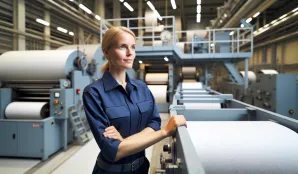
Wiper, paper salary
Latest available salary statistics are for 2025. Compare average pay, salary range and related job listings.
39 400 - 43 900 SEK / month
Women earn 94% of what men do.
Industriell tillverkning
Related tools
Salary progression Wiper, paper
What does a paper dryer do? – Tasks and work environment
A paper dryer works in the process industry and is responsible for monitoring, controlling, and optimizing the drying process during paper manufacturing. The tasks mainly involve ensuring that the pulp is dried to the correct moisture content and quality, which is achieved with advanced machines and control systems. Safety and precision are central to the work, as the machines are often large and the process can be sensitive to deviations. The work environment is characterized by shift work, noise, and sometimes high temperatures, requiring both physical endurance and technical knowledge.
Salary development over time
The salary level for a paper dryer has shown a stable and positive trend over the past three years. In 2022, the average salary was 38,400 SEK per month. In 2023, the average salary increased to 41 000 SEK, corresponding to an increase of about 4.7%. In 2024, the average salary has further strengthened to 42 500 SEK per month, which is a 2% increase from the previous year. This salary development reflects a certain demand for the occupational group, as well as the industry's investment in technological development and skill enhancement. Despite some uncertainty about future automation and digitalization, the need for experienced process operators in paper remains stable.
Paper dryer salary – comprehensive overview
- Average salary: 42 500 SEK/month
- Lowest salary: 37,600 SEK/month
- Highest salary: 42,200 SEK/month
- Hourly wage (average): 246 SEK
- Women: 40 400 SEK/month (94% of men's salary)
- Men: 43 000 SEK/month
- Regional differences: Highest salary in regional sector, variations occur between locations
Education and qualifications
To work as a paper dryer, a high school education with a focus on process or industrial technology is usually required. Many employers prefer candidates with experience from similar industrial work or who have completed internal training. Practical experience is highly valued, and there are opportunities to build on your skills through courses and certifications tailored for the process industry.
- High school education: Industrial technology program, 3 years
- Certifications: Safety courses and machine operator certificates
- Internship: Often internship or trainee positions during education
- Prerequisites: Technical interest and good physical condition
- Tips: Vocational higher education in process and paper industry provides competitive advantages
Working as a paper dryer often involves close collaboration with other roles in production. The ability to communicate clearly and solve problems together with colleagues is therefore a great asset in the workplace.
Common benefits and compensations
Paper dryers are often covered by collective agreements that entitle them to overtime pay for shift work, extra compensation for inconvenient working hours, and access to wellness allowances. It is common to have occupational pensions, insurance, and sometimes bonuses based on production results. Some employers also offer training support and subsidized lunches.
Competition and challenges
The profession of a paper dryer is characterized by some competition, especially in regions where paper mills are dominant employers. Automation and digitalization of production processes may mean fewer new positions are created, while higher demands are placed on technical competence and adaptability. Physically demanding tasks and shift work can also pose challenges for many. Nevertheless, good opportunities still exist for those with the right education and willingness to continue learning as the industry develops. Women are underrepresented in the profession, and salary differences between genders exist, making gender equality issues still relevant.
Tips for those who want to become a paper dryer
To succeed as a paper dryer, it is good to have a strong sense of accuracy and safety, as the work often takes place in environments where mistakes can have serious consequences. An interest in technology is helpful, especially since the machines are advanced and require understanding of both mechanics and control systems. Collaboration skills are important because the work is done in teams where communication must function smoothly. Flexibility is also an asset, as shift work and changes in production are common. Initiative and willingness to learn new things are appreciated by employers, especially when new technical solutions are introduced. Good physical endurance is needed to handle long shifts, and a positive attitude towards working in an industrial environment improves the chances of thriving and developing.
Key facts about paper dryers
- Average salary: 42 500 SEK/month
- Lowest/highest salary: 37,600–42,200 SEK/month
- Gender distribution: Women earn 94% of men's salary
- Education level: High school education, preferably with an industrial focus
- Job openings: Approximately 1,437 positions within the occupational group
Career paths and future prospects
After 3–5 years as a paper dryer, there are opportunities to advance to more responsible roles such as process manager, supervisor, or operations technician. For those who further their education, options include production technology, maintenance, or quality management. According to the Swedish Public Employment Service's forecasts, it is not possible to give an exact assessment of future prospects for this specific role, as data is limited. However, statistics show that there are a total of 1,437 job openings within the process operator group in paper, indicating continued demand. Ongoing technological development and generational change are also expected to create new opportunities for those willing to develop along with the industry.
Frequently asked questions about paper dryers
- What does a paper dryer earn?
- The average salary is 42 500 SEK per month, with a range between 37,600 and 42,200 SEK. - What is the difference between men's and women's salaries?
- Men earn an average of 43 000 SEK, women 40 400 SEK, which means women earn approximately 94% of men's salaries. - What education is required to become a paper dryer?
- High school education with a focus on industry or process, often supplemented with internships and internal courses. - What is the work environment like for a paper dryer?
- The work environment is industrial with shift work, noise, and sometimes high temperatures. - How many job openings are there in the profession?
- There are approximately 1,437 job openings within the process operator group in paper. - What are the most common benefits?
- Overtime pay, occupational pension, wellness allowance, and sometimes bonuses or training support. - What are the future prospects for the profession?
- No exact forecast exists, but demand remains stable within the occupational group.

Salary distributed by age and sector
| Age | Base salary | Monthly salary | |
|---|---|---|---|
| 18-24 | 100% | 31600 kr | 39200 kr |
| 25-34 | 96% | 33700 kr | 41400 kr |
| 35-44 | 99% | 35500 kr | 43400 kr |
| 45-54 | 92% | 35900 kr | 43700 kr |
| 55-64 | 90% | 35300 kr | 43100 kr |
| Snitt | 94% | 34700 kr | 42500 kr |
| Age | Base salary | Monthly salary | |
|---|---|---|---|
| 18-24 | 100% | 31600 kr | 39200 kr |
| 25-34 | 96% | 33700 kr | 41400 kr |
| 35-44 | 99% | 35500 kr | 43400 kr |
| 45-54 | 92% | 35900 kr | 43700 kr |
| 55-64 | 90% | 35300 kr | 43100 kr |
| Snitt | 94% | 34700 kr | 42500 kr |
| Age | Base salary | Monthly salary | |
|---|---|---|---|
| 18-24 | 100% | 31600 kr | 39200 kr |
| 25-34 | 96% | 33700 kr | 41400 kr |
| 35-44 | 99% | 35500 kr | 43400 kr |
| 45-54 | 92% | 35900 kr | 43700 kr |
| 55-64 | 90% | 35300 kr | 43100 kr |
| Snitt | 94% | 34700 kr | 42500 kr |
| Age | Base salary | Monthly salary | |
|---|---|---|---|
| 18-24 | 100% | 31800 kr | 39200 kr |
| 25-34 | 96% | 33900 kr | 41900 kr |
| 35-44 | 99% | 35700 kr | 43500 kr |
| 45-54 | 92% | 36400 kr | 44200 kr |
| 55-64 | 90% | 35800 kr | 43800 kr |
| Snitt | 94% | 35100 kr | 43000 kr |
| Age | Base salary | Monthly salary | |
|---|---|---|---|
| 18-24 | 100% | 31800 kr | 39200 kr |
| 25-34 | 96% | 33900 kr | 41900 kr |
| 35-44 | 99% | 35700 kr | 43500 kr |
| 45-54 | 92% | 36400 kr | 44200 kr |
| 55-64 | 90% | 35800 kr | 43800 kr |
| Snitt | 94% | 35100 kr | 43000 kr |
| Age | Base salary | Monthly salary | |
|---|---|---|---|
| 18-24 | 100% | 31800 kr | 39200 kr |
| 25-34 | 96% | 33900 kr | 41900 kr |
| 35-44 | 99% | 35700 kr | 43500 kr |
| 45-54 | 92% | 36400 kr | 44200 kr |
| 55-64 | 90% | 35800 kr | 43800 kr |
| Snitt | 94% | 35100 kr | 43000 kr |
| Age | Base salary | Monthly salary | |
|---|---|---|---|
| 18-24 | 100% | 31100 kr | 39100 kr |
| 25-34 | 96% | 33000 kr | 40100 kr |
| 35-44 | 99% | 34700 kr | 42900 kr |
| 45-54 | 92% | 33500 kr | 40800 kr |
| 55-64 | 90% | 32700 kr | 39300 kr |
| Snitt | 94% | 33000 kr | 40400 kr |
| Age | Base salary | Monthly salary | |
|---|---|---|---|
| 18-24 | 100% | 31100 kr | 39100 kr |
| 25-34 | 96% | 33000 kr | 40100 kr |
| 35-44 | 99% | 34700 kr | 42900 kr |
| 45-54 | 92% | 33500 kr | 40800 kr |
| 55-64 | 90% | 32700 kr | 39300 kr |
| Snitt | 94% | 33000 kr | 40400 kr |
| Age | Base salary | Monthly salary | |
|---|---|---|---|
| 18-24 | 100% | 31100 kr | 39100 kr |
| 25-34 | 96% | 33000 kr | 40100 kr |
| 35-44 | 99% | 34700 kr | 42900 kr |
| 45-54 | 92% | 33500 kr | 40800 kr |
| 55-64 | 90% | 32700 kr | 39300 kr |
| Snitt | 94% | 33000 kr | 40400 kr |

About the data
All information displayed on this page is based on data from the Swedish Central Bureau of Statistics (SCB), the Swedish Tax Agency and the Swedish employment agency. Learn more about our data and data sources here.
All figures are gross salaries, meaning salaries before tax. The average salary, or mean salary, is calculated by adding up the total salary for all individuals within the profession and dividing it by the number of individuals. For specific job categories, we have also considered various criteria such as experience and education.
Profession Wiper, paper has the SSYK code 8172, which we use to match against the SCB database to obtain the latest salary statistics.
-

Process Operator – Consultancy Assignment (Shift Work)
Process operators, paper
Wed, 24 Jun 2026 - 21:29 -

Machine Operator for Rewinding Machine – Forklift License Required
Process operators, paper
Sat, 30 May 2026 - 00:24 -

Paper Machine Operator – Temporary Position with Opportunity for Permanent Employment
Process operators, paper
Fri, 15 May 2026 - 21:20


Compare salary, work tasks and job outlook in adjacent occupations to find roles with similar skills or pay levels.
-
Tool technician, tool maker salary
Average salary: 37 900 SEK/month • Industriell tillverkning
Toolmakers
Compare with Wiper, paper
Tue, 14 Jul 2026 - 10:09 -

Machine operator, glass wool salary
Average salary: 36 900 SEK/month • Industriell tillverkning
Other process and machine operators
Compare with Wiper, paper
Tue, 14 Jul 2026 - 10:05 -

Average salary: 34 200 SEK/month • Industriell tillverkning
Machine operators, plastics industry
Compare with Wiper, paper
Tue, 14 Jul 2026 - 07:11 -

Average salary: 36 900 SEK/month • Industriell tillverkning
Other process and machine operators
Compare with Wiper, paper
Tue, 14 Jul 2026 - 07:12 -

Average salary: 36 300 SEK/month • Industriell tillverkning
Machine setters and machine operators, metal work
Compare with Wiper, paper
Tue, 14 Jul 2026 - 03:57 -

Stencil manufacturer, screen printing salary
Average salary: 34 600 SEK/month • Industriell tillverkning
Printers
Compare with Wiper, paper
Tue, 14 Jul 2026 - 08:18


