- Salary statistics
- Welder, robot salary
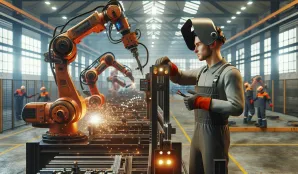
Welder, robot salary
Latest available salary statistics are for 2025. Compare average pay, salary range and related job listings.
33 600 - 37 300 SEK / month
Women earn 97% of what men do.
Industriell tillverkning
Related tools
Salary progression Welder, robot
What does a welder within robot technology do? – Tasks and work environment
A welder within robot technology is responsible for monitoring, programming, and maintaining welding robots in industrial production. Tasks often include setting up robots, checking the quality of welds, and troubleshooting issues in the process. In many cases, manual welding is also involved, especially for prototypes or custom orders. The work environment is characterized by industrial facilities with high safety standards, where protective equipment and strict routines are standard. Tight deadlines and quality requirements are common, demanding both technical expertise and precision.
Salary development over time
The salary for welders within robot technology has steadily increased over the past three years. In 2022, the average salary was 33,000 SEK per month, followed by an increase to 35 200 SEK in 2023. In 2024, the average salary has risen to 36 300 SEK, representing a total increase of approximately 6.6% over the period. The salary development reflects a continued strong demand for the profession, especially within the industrial sector where automation and robotics are becoming increasingly central. The increasing complexity of tasks and the need for technical skills have contributed to higher salary levels, although some leveling off may be expected in the future as technology advances and more trained workers enter the job market.
Welder, robot salary – comprehensive overview
- Average salary: 36 300 SEK/month
- Lowest salary: 31,400 SEK/month (female, private sector employee, pre-secondary education)
- Highest salary: 36,100 SEK/month (male, various sectors, post-secondary education shorter than 3 years)
- Hourly wage: 212 SEK/hour (based on 166 hours/month)
- Gender differences: Men 36 500 SEK, women 35 300 SEK (women earn 97% of men's salary)
- Regional differences: Varying, depending on industrial presence and demand
Education and qualifications
To work as a welder within robot technology, a high school education in industrial technology with a focus on welding is generally required, often supplemented with courses in automation and robotics. Many employers also require certifications in welding and experience working with CNC machines or industrial robots. Practical experience is highly valued, and training is often combined with apprenticeships or on-the-job training.
- High school education: Industrial technology program with welding specialization (3 years)
- Certifications: Welding license according to SS-EN ISO 9706 or equivalent
- Courses: Automation, robotics, CNC control
- Practical training: Apprenticeship or internship at industrial companies
- Prerequisites: Technical interest, precision, basic mathematics
Robotized welding often involves close collaboration with engineers and programmers to optimize production. Those curious about technology and problem-solving can develop their roles towards more advanced programming or process development within the industry.
Common benefits and compensations
Welders within robot technology are often covered by collective agreements that provide access to occupational pensions, insurance, and generous overtime allowances. Many employers also offer wellness contributions, work clothes, and opportunities for skill development through internal or external training. In some cases, bonuses or production-based compensations may also occur, especially in larger industries.
Competitions and challenges
The competition for jobs as a welder within robot technology is currently relatively low, with a supply of 1,437 job openings nationwide. At the same time, the recruitment situation is characterized by a shortage, which provides good opportunities for employment for those with the right skills. In the longer term, demand is expected to decrease somewhat due to increased automation and technological development. Those who want to remain competitive on the job market need to continuously update their skills and be prepared to adapt to new technologies and working methods.
Tips for aspiring welders within robot technology
To succeed as a welder within robot technology, it’s good to be both precise and technically interested – accuracy in work is crucial for weld quality and robot programming. Being solution-oriented makes it easier to handle unexpected problems in production and quickly fix issues. Good teamwork skills are important, as the work often takes place in teams with engineers and operators. Taking advantage of internship opportunities during training is wise, as practical experience is highly sought after by employers. Continuously updating your knowledge with new techniques and certifications increases your chances of employment and salary development. Finally, patience is key, as some tasks require time and repeated adjustments to achieve the best results.
Key facts about welders, robot
- Average salary: 36 300 SEK/month
- Education level: High school + certification
- Work environment: Industrial, often shift work
- Demand: Great opportunities for employment, but decreasing in the long term
- Job openings: 1,437 nationwide
Career paths and future prospects
After three to five years in the profession, a welder within robot technology can advance to roles such as process operator, supervisor, or technical specialist in automation. There are also opportunities for further education in programming industrial robots or transitioning to quality control and training new employees. According to the Swedish Public Employment Service, the demand for machine setters and operators in metalwork remains strong nationwide, although demand is expected to decline over the next five years due to automation. Those who continuously develop their technical skills and certifications have the best chances of meeting future requirements.
Frequently asked questions about welders, robot
- What does a welder, robot earn?
- The average salary for a welder within robot technology is 36 300 SEK per month. - How does the gender pay gap look?
- Men earn on average 36 500 SEK and women 35 300 SEK, which means women earn 97% of men's salaries. - What education is required to become a welder within robot technology?
- High school education in industrial technology with a focus on welding and certification in welding. - What are the future prospects for the profession?
- Job opportunities are great today, but demand is expected to decrease somewhat over five years due to automation. - What is the highest and lowest salary for welders, robot?
- The highest salary is 36,100 SEK and the lowest 31,400 SEK, depending on gender, education, and sector. - Are there regional differences in salaries?
- Yes, salaries can vary depending on industrial presence and demand in different regions. - What benefits are common in the profession?
- Collective agreements, occupational pension, wellness allowances, and opportunities for skill development are common benefits.

Salary distributed by age and sector
| Age | Base salary | Monthly salary | |
|---|---|---|---|
| 18-24 | 100% | 31900 kr | 34300 kr |
| 25-34 | 98% | 34200 kr | 36400 kr |
| 35-44 | 96% | 34400 kr | 36400 kr |
| 45-54 | 96% | 35100 kr | 36900 kr |
| 55-64 | 95% | 35100 kr | 36700 kr |
| 65-68 | 33500 kr | 34800 kr | |
| Snitt | 97% | 34300 kr | 36300 kr |
| Age | Base salary | Monthly salary | |
|---|---|---|---|
| 25-34 | 32900 kr | 35600 kr | |
| 35-44 | 35600 kr | 36700 kr | |
| 45-54 | 32700 kr | 32700 kr | |
| 55-64 | 33300 kr | 34300 kr | |
| Snitt | 33300 kr | 34300 kr |
| Age | Base salary | Monthly salary | |
|---|---|---|---|
| 25-34 | 32900 kr | 35600 kr | |
| 35-44 | 35600 kr | 36700 kr | |
| 45-54 | 32700 kr | 32700 kr | |
| 55-64 | 33300 kr | 34300 kr | |
| Snitt | 33300 kr | 34300 kr |
| Age | Base salary | Monthly salary | |
|---|---|---|---|
| 18-24 | 100% | 31900 kr | 34300 kr |
| 25-34 | 98% | 34200 kr | 36400 kr |
| 35-44 | 96% | 34400 kr | 36400 kr |
| 45-54 | 96% | 35100 kr | 37000 kr |
| 55-64 | 95% | 35100 kr | 36700 kr |
| 65-68 | 33500 kr | 34800 kr | |
| Snitt | 97% | 34300 kr | 36300 kr |
| Age | Base salary | Monthly salary | |
|---|---|---|---|
| 18-24 | 100% | 31900 kr | 34300 kr |
| 25-34 | 98% | 34200 kr | 36400 kr |
| 35-44 | 96% | 34400 kr | 36400 kr |
| 45-54 | 96% | 35100 kr | 37000 kr |
| 55-64 | 95% | 35100 kr | 36700 kr |
| 65-68 | 33500 kr | 34800 kr | |
| Snitt | 97% | 34300 kr | 36300 kr |
| Age | Base salary | Monthly salary | |
|---|---|---|---|
| 18-24 | 100% | 32000 kr | 34300 kr |
| 25-34 | 98% | 34200 kr | 36500 kr |
| 35-44 | 96% | 34600 kr | 36700 kr |
| 45-54 | 96% | 35300 kr | 37200 kr |
| 55-64 | 95% | 35300 kr | 37000 kr |
| 65-68 | 33600 kr | 34800 kr | |
| Snitt | 97% | 34500 kr | 36500 kr |
| Age | Base salary | Monthly salary | |
|---|---|---|---|
| 25-34 | 32800 kr | 36400 kr | |
| 35-44 | 35600 kr | 36700 kr | |
| 45-54 | 32700 kr | 32700 kr | |
| 55-64 | 33300 kr | 34300 kr | |
| Snitt | 33300 kr | 34300 kr |
| Age | Base salary | Monthly salary | |
|---|---|---|---|
| 25-34 | 32800 kr | 36400 kr | |
| 35-44 | 35600 kr | 36700 kr | |
| 45-54 | 32700 kr | 32700 kr | |
| 55-64 | 33300 kr | 34300 kr | |
| Snitt | 33300 kr | 34300 kr |
| Age | Base salary | Monthly salary | |
|---|---|---|---|
| 18-24 | 100% | 32000 kr | 34300 kr |
| 25-34 | 98% | 34200 kr | 36500 kr |
| 35-44 | 96% | 34600 kr | 36700 kr |
| 45-54 | 96% | 35300 kr | 37200 kr |
| 55-64 | 95% | 35300 kr | 37000 kr |
| 65-68 | 33600 kr | 34800 kr | |
| Snitt | 97% | 34500 kr | 36500 kr |
| Age | Base salary | Monthly salary | |
|---|---|---|---|
| 18-24 | 100% | 32000 kr | 34300 kr |
| 25-34 | 98% | 34200 kr | 36500 kr |
| 35-44 | 96% | 34600 kr | 36700 kr |
| 45-54 | 96% | 35300 kr | 37200 kr |
| 55-64 | 95% | 35300 kr | 37000 kr |
| 65-68 | 33600 kr | 34800 kr | |
| Snitt | 97% | 34500 kr | 36500 kr |
| Age | Base salary | Monthly salary | |
|---|---|---|---|
| 18-24 | 100% | 31900 kr | 34300 kr |
| 25-34 | 98% | 34100 kr | 35900 kr |
| 35-44 | 96% | 33400 kr | 35300 kr |
| 45-54 | 96% | 33800 kr | 35700 kr |
| 55-64 | 95% | 33500 kr | 35200 kr |
| Snitt | 97% | 33400 kr | 35300 kr |
| Age | Base salary | Monthly salary | |
|---|---|---|---|
| 18-24 | 100% | 31900 kr | 34300 kr |
| 25-34 | 98% | 34100 kr | 35900 kr |
| 35-44 | 96% | 33400 kr | 35300 kr |
| 45-54 | 96% | 33800 kr | 35700 kr |
| 55-64 | 95% | 33500 kr | 35200 kr |
| Snitt | 97% | 33400 kr | 35300 kr |
| Age | Base salary | Monthly salary | |
|---|---|---|---|
| 18-24 | 100% | 31900 kr | 34300 kr |
| 25-34 | 98% | 34100 kr | 35900 kr |
| 35-44 | 96% | 33400 kr | 35300 kr |
| 45-54 | 96% | 33800 kr | 35700 kr |
| 55-64 | 95% | 33500 kr | 35200 kr |
| Snitt | 97% | 33400 kr | 35300 kr |

About the data
All information displayed on this page is based on data from the Swedish Central Bureau of Statistics (SCB), the Swedish Tax Agency and the Swedish employment agency. Learn more about our data and data sources here.
All figures are gross salaries, meaning salaries before tax. The average salary, or mean salary, is calculated by adding up the total salary for all individuals within the profession and dividing it by the number of individuals. For specific job categories, we have also considered various criteria such as experience and education.
Profession Welder, robot has the SSYK code 7223, which we use to match against the SCB database to obtain the latest salary statistics.
-

Industrial Mechanic for Compressors at Kompressorteknik in Norrköping
Machine setters and machine operators, metal work
Tue, 14 Jul 2026 - 09:01 -

Machine Operator for Precision Industry in Northern Stockholm
Machine setters and machine operators, metal work
Mon, 13 Jul 2026 - 21:55 -

Bending Press Operator Wanted at Plåtteknik i Kumla AB
Machine setters and machine operators, metal work
Mon, 13 Jul 2026 - 21:36 -

Machine Operator for Established Operation in Västerås
Machine setters and machine operators, metal work
Mon, 13 Jul 2026 - 21:30 -

Machine setters and machine operators, metal work
Mon, 13 Jul 2026 - 21:27
Compare salary, work tasks and job outlook in adjacent occupations to find roles with similar skills or pay levels.
-
Average salary: 33 700 SEK/month • Industriell tillverkning
Other machine operators, food industry etc.
Compare with Welder, robot
Tue, 14 Jul 2026 - 11:56 -

Average salary: 37 800 SEK/month • Industriell tillverkning
Machine operators, cement, stone and concrete products
Compare with Welder, robot
Mon, 13 Jul 2026 - 10:26 -

Average salary: 42 500 SEK/month • Industriell tillverkning
Process operators, paper
Compare with Welder, robot
Tue, 14 Jul 2026 - 08:16 -
Wallpaper roller engravers salary
Average salary: 35 300 SEK/month • Industriell tillverkning
Prepress technicians
Compare with Welder, robot
Tue, 14 Jul 2026 - 11:05 -

Average salary: 36 900 SEK/month • Industriell tillverkning
Other process and machine operators
Compare with Welder, robot
Tue, 14 Jul 2026 - 13:04 -

Hasplare, textile industry salary
Average salary: 32 200 SEK/month • Industriell tillverkning
Other machine operators, textile, leather and leather industry
Compare with Welder, robot
Tue, 14 Jul 2026 - 11:54


