- Salary statistics
- Stamp workers, rubber stamps salary
Stamp workers, rubber stamps salary
Latest available salary statistics are for 2025. Compare average pay, salary range and related job listings.
31 500 - 35 400 SEK / month
Women earn 96% of what men do.
Industriell tillverkning
Related tools
Salary progression Stamp workers, rubber stamps
What does a rubber stamp worker do? – Tasks and work environment
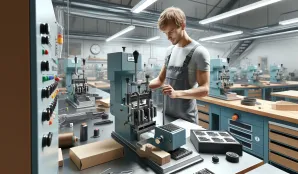
A rubber stamp worker primarily works with the manufacturing, processing, and inspection of rubber stamps for various industrial and commercial purposes. Tasks include handling machinery and equipment to shape, cut, and assemble rubber stamps according to customer specifications. Quality control is an important part of the job, requiring precision and accuracy to ensure the final product meets the requirements. The work environment is often production-oriented and can involve both independent work and teamwork in smaller groups. There may be monotony involved, but also variation depending on orders and production pace.
Salary development over time
The salary for a rubber stamp worker has developed steadily in recent years. In 2022, the average salary was 30,200 SEK per month, which increased to 32 600 SEK in 2023 and now reaches 33 900 SEK in 2024. The total increase over three years amounts to approximately 8%, which can be seen as a moderate but steady salary improvement. Salaries have been influenced by factors such as inflation, increased demand for specialized production, and general adjustments within the industry sector. Despite some gender salary gap, the difference has decreased slightly over time, and the profession is also affected by regional differences depending on where production is located. The industry has not experienced drastic salary shifts, but the consistent development indicates a stable job market for the occupational group.
Rubber stamp worker salaries – complete overview
- Average salary: 33 900 SEK/month
- Lowest salary: 31,200 SEK/month (female, high school education, 3 years)
- Highest salary: 33,100 SEK/month (male, private sector, high school education up to 2 years)
- Hourly wage: 196 SEK
- Gender gap: Women earn 96% of what men do (men 34 400 SEK, women 32,000 SEK)
- Regional differences: Salary levels may vary depending on location and employer size
Education and qualifications
To work as a rubber stamp worker, a high school education with a focus on industry, technology, or production is usually required. Practical experience from similar manufacturing environments is advantageous, and many employers also offer internal training to ensure the right skills. Some workplaces may require specific certificates for machine safety or quality control.
- High school education: Industry or technology programs, 2–3 years
- Certifications: Machine safety and occupational health may be required
- Internship: Practical experience in industrial work is highly valued
- Prerequisites: Precision, technical interest, and some machine familiarity
- Tips for choosing: Combine education with summer jobs or internships in production
Many rubber stamp workers develop a unique sense for materials and precision, making them especially valuable for custom orders and prototypes. The ability to quickly switch between different products and tasks is a sought-after trait in the industry.
Common benefits and compensations
Common benefits for rubber stamp workers include occupational pension, wellness allowance, work clothing, and sometimes bonuses for high production levels. Working hours are often scheduled and may include shifts, which can be compensated with overtime pay. Some employers also offer further training and opportunities for development within the company.
Competition and challenges
The competition within the profession of rubber stamp workers is generally moderate but can vary between regions and depending on industry demand. One of the biggest challenges is staying updated on new machinery and manufacturing methods, as technological development progresses rapidly. Precision and endurance are required, especially during monotonous tasks and high production speeds. The profession's status is also affected by automation and digitalization, which may reduce the number of simpler tasks but increase the need for specialized skills. The shortage of younger applicants and retirements may pose recruitment challenges for employers over time.
Tips for those who want to become rubber stamp workers
To succeed as a rubber stamp worker, it’s important to be precise and have an eye for detail, as the quality of each stamp depends on small margins. Showing engagement and willingness to learn new machines or tasks makes it easier to develop within the profession. Good teamwork skills are essential, as many tasks are performed in teams and often require communication with other departments. Flexibility is helpful when production quickly shifts between different orders or materials. Finally, patience and endurance are crucial, especially during periods of high work tempo or monotonous tasks, as these qualities contribute to maintaining consistent high quality in the work.
Key facts about rubber stamp workers
- Salary range: 31,200–33,100 SEK/month
- Education level: High school (2–3 years)
- Hourly wage: 196 SEK
- Work environment: Industrial production, often shift work
- Job openings in the profession: 1,437 positions
Career paths and future prospects
After three to five years as a rubber stamp worker, there are opportunities to advance to roles such as supervisor, machine responsible, or quality technician within production. Some choose to further their education in production technology or maintenance, which can open doors to more specialized roles. According to the Swedish Public Employment Service’s forecast for machine operators in the rubber industry, no specific assessment is made for this profession due to limited data, but the broader occupational group has shown stable demand and many job openings. Automation and digitalization may change the nature of the work over time, but the need for skilled operators is expected to remain important within Swedish industry.
Common questions about rubber stamp workers
- What does a rubber stamp worker earn?
- The average salary is 33 900 SEK per month, with a range between 31,200 SEK and 33,100 SEK. - What education is required to become a rubber stamp worker?
- High school education in industry, technology, or production is most common. Practical experience is highly valued. - Are there salary differences between men and women?
- Yes, women earn on average 96% of what men do within the profession. - What is the job market like for rubber stamp workers?
- There are 1,437 job openings in the occupational group of machine operators, rubber industry. - What personal qualities are important in this profession?
- Accuracy, patience, teamwork skills, and technical interest are especially valuable. - Can you advance within the profession?
- Yes, there are opportunities for roles such as supervisor, machine responsible, or further education in production technology. - How does the salary vary depending on location?
- Salary levels can vary between regions, often depending on the size of the workplace and local wage levels.

Salary distributed by age and sector
| Age | Base salary | Monthly salary | |
|---|---|---|---|
| 25-34 | 30400 kr | 33200 kr | |
| 35-44 | 30900 kr | 33400 kr | |
| 45-54 | 34200 kr | 36100 kr | |
| 55-64 | 31200 kr | 33600 kr | |
| Snitt | 96% | 31500 kr | 33900 kr |
| Age | Base salary | Monthly salary | |
|---|---|---|---|
| 25-34 | 30400 kr | 33200 kr | |
| 35-44 | 30900 kr | 33400 kr | |
| 45-54 | 34200 kr | 36100 kr | |
| 55-64 | 31200 kr | 33600 kr | |
| Snitt | 96% | 31500 kr | 33900 kr |
| Age | Base salary | Monthly salary | |
|---|---|---|---|
| 25-34 | 30400 kr | 33200 kr | |
| 35-44 | 30900 kr | 33400 kr | |
| 45-54 | 34200 kr | 36100 kr | |
| 55-64 | 31200 kr | 33600 kr | |
| Snitt | 96% | 31500 kr | 33900 kr |
| Age | Base salary | Monthly salary | |
|---|---|---|---|
| 25-34 | 30900 kr | 34200 kr | |
| 35-44 | 31100 kr | 33700 kr | |
| 55-64 | 31700 kr | 34200 kr | |
| Snitt | 96% | 31900 kr | 34400 kr |
| Age | Base salary | Monthly salary | |
|---|---|---|---|
| 25-34 | 30900 kr | 34200 kr | |
| 35-44 | 31100 kr | 33700 kr | |
| 55-64 | 31700 kr | 34200 kr | |
| Snitt | 96% | 31900 kr | 34400 kr |
| Age | Base salary | Monthly salary | |
|---|---|---|---|
| 25-34 | 30900 kr | 34200 kr | |
| 35-44 | 31100 kr | 33700 kr | |
| 55-64 | 31700 kr | 34200 kr | |
| Snitt | 96% | 31900 kr | 34400 kr |
| Age | Base salary | Monthly salary | |
|---|---|---|---|
| Snitt | 96% | 30800 kr | 32900 kr |
| Age | Base salary | Monthly salary | |
|---|---|---|---|
| Snitt | 96% | 30800 kr | 32900 kr |
| Age | Base salary | Monthly salary | |
|---|---|---|---|
| Snitt | 96% | 30800 kr | 32900 kr |

About the data
All information displayed on this page is based on data from the Swedish Central Bureau of Statistics (SCB), the Swedish Tax Agency and the Swedish employment agency. Learn more about our data and data sources here.
All figures are gross salaries, meaning salaries before tax. The average salary, or mean salary, is calculated by adding up the total salary for all individuals within the profession and dividing it by the number of individuals. For specific job categories, we have also considered various criteria such as experience and education.
Profession Stamp workers, rubber stamps has the SSYK code 8141, which we use to match against the SCB database to obtain the latest salary statistics.
-

Production Staff for Halmstad – Evening Shifts
Machine operators, rubber industry
Thu, 9 Jul 2026 - 21:40 -

Production Worker for Manufacturing Industry
Machine operators, rubber industry
Wed, 8 Jul 2026 - 08:59 -

Production Worker in Halmstad – Physical Team Role
Machine operators, rubber industry
Sun, 5 Jul 2026 - 06:37

Compare salary, work tasks and job outlook in adjacent occupations to find roles with similar skills or pay levels.
-

Metal construction fitter salary
Average salary: 39 700 SEK/month • Industriell tillverkning
Steel construction assemblers and heavy plate workers
Compare with Stamp workers, rubber stamps
Mon, 13 Jul 2026 - 10:41 -

Wood industry worker, wood fiber salary
Average salary: 38 300 SEK/month • Industriell tillverkning
Operators in sawmills, planing mills and plywood etc.
Compare with Stamp workers, rubber stamps
Tue, 14 Jul 2026 - 07:16 -

Average salary: 36 300 SEK/month • Industriell tillverkning
Machine setters and machine operators, metal work
Compare with Stamp workers, rubber stamps
Mon, 13 Jul 2026 - 05:38 -

Average salary: 32 200 SEK/month • Industriell tillverkning
Other machine operators, textile, leather and leather industry
Compare with Stamp workers, rubber stamps
Sun, 12 Jul 2026 - 21:48 -

Average salary: 42 500 SEK/month • Industriell tillverkning
Process operators, paper
Compare with Stamp workers, rubber stamps
Tue, 14 Jul 2026 - 07:14 -

Machine operator, food industry, fruit and vegetables salary
Average salary: 33 700 SEK/month • Industriell tillverkning
Other machine operators, food industry etc.
Compare with Stamp workers, rubber stamps
Sun, 12 Jul 2026 - 19:00


