- Salary statistics
- Steel builders salary
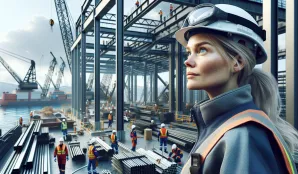
Steel builders salary
Latest available salary statistics are for 2025. Compare average pay, salary range and related job listings.
39 100 - 39 700 SEK / month
Industriell tillverkning
Related tools
Salary progression Steel builders
What does a steelworker do? – Tasks and work environment
A steelworker primarily works with assembly, installation, and maintenance of steel structures within the construction and industrial sectors. Tasks include reading and interpreting drawings, welding and bolting steel parts, and working with cranes and lifting devices to position larger components. The work environment can vary, often outdoors at construction sites or indoors in large workshops. The work requires both physical strength and precision, as safety is always a priority.
Salary development over time
Over the past three years, salary development for steelworkers has shown a clear upward trend. In 2022, the average salary was 32,800 kr per month, increasing to 36 500 kr in 2023. In 2024, the average salary has risen further to 39 700 kr, representing a total increase of approximately 11.3% over three years. This development reflects increased demand for skilled steelworkers, partly driven by major infrastructure projects and a growing construction sector. Salary increases may also be due to employers competing for experienced tradespeople and the increasing importance of certifications and technical skills within the industry.
Steelworker salary – comprehensive overview
- Average salary: 39 700 kr/month
- Lowest/Highest salary: Varies depending on experience and region
- Hourly wage: 219 kr
- Gender differences: Men earn 39 800 kr, data on women is unavailable
- Regional differences: Salaries may vary between urban and rural areas, but detailed statistics are lacking
Education and qualifications
To work as a steelworker, a high school education within the construction and civil engineering program is usually required, preferably with specialization in sheet metal work, welding, or industrial work. Many employers also value candidates who have completed specific certification courses for welding and working at heights. Practical experience through apprenticeships or internships is often crucial for employment.
- High school education: Construction and civil engineering program, 3 years
- Professional certificates: Welding license, crane operation permit, hot work permits
- Internship: Apprenticeship period under supervision
- Experience: Practical experience is prioritized during recruitment
- Further training: Opportunities for specialization through courses and certifications
Steelworkers often work at great heights and in challenging environments where teamwork and communication are crucial for safety. The ability to quickly solve problems on-site and adapt to changing conditions is highly valued within the profession.
Common benefits and compensations
Steelworkers are often covered by collective agreements that provide access to occupational pensions, insurance, and compensation for unsociable hours. Other common benefits include wellness allowances, work clothing, and sometimes opportunities for further training at the employer’s expense.
Competition and challenges
The labor market for steelworkers is characterized by relatively high demand, especially for large infrastructure projects and within industry. However, competition for jobs can vary depending on economic conditions and geographic location. Challenges in the profession often involve physically demanding environments, weather conditions, and high safety standards. Technological developments and increased certification requirements mean that continuous skills development is essential to remain attractive in the job market.
Tips for those who want to become a steelworker
To succeed as a steelworker, it’s good to have good physical fitness, as the work is often heavy and performed outdoors in varying weather. Precision is crucial when following drawings and safety routines, while flexibility helps in solving unexpected problems on-site. Being a team player facilitates collaboration with colleagues, especially during assembly of larger steel structures. It is recommended to actively seek internships during training to gain valuable experience and build contacts. Investing time in obtaining relevant certifications, such as a welding license or hot work permit, increases chances of employment. An interest in technology and construction is an advantage, as well as a willingness to continuously further your education as the industry evolves.
Key facts about steelworkers
- Education level: High school education with a vocational focus
- Work environment: Construction sites and industrial workshops, often outdoors
- Demand: 1437 job openings within the profession at the latest measurement
- Special skills: Welding, reading drawings, working at heights
Career paths and future prospects
After three to five years in the profession, a steelworker can advance to supervisory roles such as assembly supervisor or site manager for smaller projects. Further training and certifications can also open doors to specialized services within welding, quality control, or occupational health and safety. According to the Employment Service, there is no specific assessment of future prospects for steelworkers, but the large number of job openings indicates continued demand. However, the industry is influenced by economic conditions and investment levels in the construction sector, which can lead to periodic fluctuations in available jobs.
Frequently asked questions about steelworkers
- What does a steelworker earn per month?
- A steelworker has an average salary of 39 700 kr per month. - What education is required to become a steelworker?
- High school education within the construction and civil engineering program, supplemented with certificates and internships, is most common. - Are there many jobs for steelworkers?
- There are approximately 1437 job openings within the profession according to the latest statistics. - What is the work environment like for a steelworker?
- The work environment is often physical, outdoor, and requires good safety awareness. - What is a steelworker's hourly wage?
- The hourly wage for a steelworker is 219 kr. - Are there regional salary differences?
- Salaries may vary between regions, but detailed statistics are lacking. - Can I further my education within the profession?
- Yes, there are opportunities for further training and obtaining additional certifications to specialize.

Salary distributed by age and sector
| Age | Base salary | Monthly salary | |
|---|---|---|---|
| Snitt | 39100 kr | 39700 kr |
| Age | Base salary | Monthly salary | |
|---|---|---|---|
| Snitt | 39100 kr | 39700 kr |
| Age | Base salary | Monthly salary | |
|---|---|---|---|
| Snitt | 39100 kr | 39700 kr |
| Age | Base salary | Monthly salary | |
|---|---|---|---|
| Snitt | 39200 kr | 39800 kr |
| Age | Base salary | Monthly salary | |
|---|---|---|---|
| Snitt | 39200 kr | 39800 kr |
| Age | Base salary | Monthly salary | |
|---|---|---|---|
| Snitt | 39200 kr | 39800 kr |

About the data
All information displayed on this page is based on data from the Swedish Central Bureau of Statistics (SCB), the Swedish Tax Agency and the Swedish employment agency. Learn more about our data and data sources here.
All figures are gross salaries, meaning salaries before tax. The average salary, or mean salary, is calculated by adding up the total salary for all individuals within the profession and dividing it by the number of individuals. For specific job categories, we have also considered various criteria such as experience and education.
Profession Steel builders has the SSYK code 7215, which we use to match against the SCB database to obtain the latest salary statistics.
-

Travel Erector for Steel Halls – Precision, Teamwork, and Travel
Steel construction assemblers and heavy plate workers
Mon, 13 Jul 2026 - 20:33 -

Foreman for Steel Department – Oresund DryDocks
Steel construction assemblers and heavy plate workers
Mon, 13 Jul 2026 - 09:06 -
Steel Structure Erector – Finland and Sweden
Steel construction assemblers and heavy plate workers
Wed, 8 Jul 2026 - 21:48 -

Installation Supervisor for Temporary Bridges – Swedish Transport Administration
Steel construction assemblers and heavy plate workers
Wed, 8 Jul 2026 - 01:13 -
Project Manager for Sweden's Largest Ship Repair Yard in Landskrona
Steel construction assemblers and heavy plate workers
Wed, 8 Jul 2026 - 00:21
Compare salary, work tasks and job outlook in adjacent occupations to find roles with similar skills or pay levels.
-

Window fitter, manufacturing salary
Average salary: 34 400 SEK/month • Industriell tillverkning
Assemblers, wood products
Compare with Steel builders
Mon, 13 Jul 2026 - 20:16 -

Average salary: 39 900 SEK/month • Industriell tillverkning
Machine operators, pharmaceutical products
Compare with Steel builders
Mon, 13 Jul 2026 - 13:46 -

Average salary: 40 300 SEK/month • Industriell tillverkning
Machine operators, paper goods industry
Compare with Steel builders
Sat, 11 Jul 2026 - 17:51 -

Machine operator, food industry, tea, coffee, cocoa salary
Average salary: 33 700 SEK/month • Industriell tillverkning
Other machine operators, food industry etc.
Compare with Steel builders
Tue, 14 Jul 2026 - 04:42 -

Average salary: 32 200 SEK/month • Industriell tillverkning
Other machine operators, textile, leather and leather industry
Compare with Steel builders
Mon, 6 Jul 2026 - 15:34 -

Average salary: 34 700 SEK/month • Industriell tillverkning
Machine carpenters and machine operators, wood industry
Compare with Steel builders
Tue, 14 Jul 2026 - 01:43


