- Salary statistics
- Grinders, steel mills salary
Grinders, steel mills salary
Latest available salary statistics are for 2025. Compare average pay, salary range and related job listings.
33 500 - 35 700 SEK / month
Industriell tillverkning
Related tools
Salary progression Grinders, steel mills
What does a grinder at a steelworks do? – Tasks and work environment
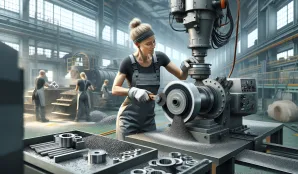
A grinder at a steelworks primarily works with processing and finishing metal components, mainly steel, to achieve the desired shape, surface quality, and dimensional accuracy. Tasks include grinding cast or rolled products, deburring, polishing, and inspecting surfaces to ensure they meet quality standards. Grinders use both handheld and stationary grinding machines, and the job requires great precision and a good understanding of material properties. The work environment is often noisy and dusty, with high demands for protective equipment and safety routines to minimize injury risks.
Salary development over time
The salary for grinders at steelworks has shown a steady increase over the past three years. In 2022, the average salary was 33,100 SEK per month, rising to 36 000 SEK in 2023. The most recent recorded average salary for 2024 is 35 700 SEK per month. The total increase over the period amounts to approximately 8.7%, which is slightly higher than the general wage growth in the industry. This trend can be partly explained by increased demand for qualified grinders and higher quality requirements in the steel industry. Additionally, a shortage of experienced workers has contributed to rising wages.
Grinder, steelworks salary – complete overview
- Average salary: 35 700 SEK/month
- Lowest/Highest salary: Data unavailable, but the average salary for men is 36 300 SEK/month
- Hourly wage: 216 SEK/hour (based on 166 hours/month)
- Gender differences: Salary data available only for men; women’s data is missing
- Regional differences: No detailed statistics available
Education and qualifications
The path to becoming a grinder at a steelworks typically involves an industrial high school education with specialization in production or metalworking. Employers often require basic knowledge of reading technical drawings, materials science, and machine handling, which can be supplemented with internal training and on-the-job practice. For some specialized roles, certifications or additional courses may be advantageous.
- High school education: Industrial technical program (3 years)
- Practical training: Workplace-based learning or trainee programs
- Courses: Reading drawings, materials knowledge, machine safety
- Prerequisites: Basic mathematics and technical interest
- Tips: Ask about internal further training opportunities when employed
A grinder at a steelworks often has the opportunity to work with very advanced equipment and specialized machines, making the profession suitable for those who appreciate technological development and high-level problem solving. Keeping up with innovations in materials and tools is an important part of the role and offers good opportunities for skill development.
Common benefits and compensations
Grinders at steelworks are often offered benefits such as shift bonuses (OB-allowance), wellness contributions, work clothing and protective gear. Other common compensations include bonuses linked to production targets, skills development through internal courses, as well as pension and insurance solutions via collective agreements.
Competition and challenges
The job market for grinders at steelworks involves some competition, but there are still a relatively large number of vacancies within the profession. Challenges mainly include staying updated with new working methods and maintaining high precision and quality despite tough work environments. The profession can be physically demanding and requires endurance and accuracy. Furthermore, automation and technological advances are affecting job tasks, making continuous skills development increasingly important. The shortage of trained grinders means employers often seek both experienced and newly educated candidates.
Tips for those aspiring to become grinders at a steelworks
To succeed as a grinder at a steelworks, it is helpful to have a strong interest in technology and machinery, as well as the ability to work precisely under pressure. Gaining practical experience early through internships or summer jobs in industry provides both technical skills and understanding of the work environment. Demonstrating commitment to safety and quality is crucial, especially in an environment where precision affects the final result. Flexibility and willingness to learn new methods facilitate adaptation to industry changes, and good teamwork skills are important since work is often team-based. Initiative and responsibility are also valued by employers and can accelerate career progression.
Key facts about grinders at steelworks
- Salary range: Approximately 35 700 SEK/month (average)
- Hourly wage: 216 SEK/hour
- Education level: High school diploma, industrial technical program
- Number of job openings: 1437 within the profession
- Work environment: Industrial, often noisy and physically demanding
Career paths and future prospects
After 3–5 years as a grinder at a steelworks, there are good opportunities to take on greater responsibility, such as supervisor, team leader, or quality inspector within production. Further education can also open paths to more specialized roles, such as CNC machine operator or technical specialist in material treatment. According to the Swedish Public Employment Service, there is limited detailed forecasting, but with 1437 job openings, there is no urgent shortage of employment opportunities. The industry’s technological development and need for specialized skills mean that grinders with the right education and experience have good future prospects, especially within larger industries and export-oriented companies.
Common questions about grinders at steelworks
- What does a grinder at a steelworks earn?
- The average salary is 35 700 SEK per month, with some variation depending on experience and workplace. - What is the work environment like for grinders?
- The work environment is industrial, often noisy and physically demanding, with requirements for protective equipment. - What education is required to become a grinder?
- A high school education in industrial technology is most common, often supplemented with practical training. - Are there salary differences between men and women?
- Statistics show only salary data for men; women’s data is missing. - What are the future prospects for the profession?
- There are many job openings within the profession and good opportunities for career development. - What personal qualities are important?
- Precision, technical interest, and teamwork skills are especially valuable. - Can I pursue further education within the profession?
- Yes, further training and specialization are possible, for example in CNC technology or leadership.

Salary distributed by age and sector
| Age | Base salary | Monthly salary | |
|---|---|---|---|
| 45-54 | 34900 kr | 37200 kr | |
| 55-64 | 37000 kr | 39200 kr | |
| Snitt | 33500 kr | 35700 kr |
| Age | Base salary | Monthly salary | |
|---|---|---|---|
| 45-54 | 34900 kr | 37200 kr | |
| 55-64 | 37000 kr | 39200 kr | |
| Snitt | 33500 kr | 35700 kr |
| Age | Base salary | Monthly salary | |
|---|---|---|---|
| 45-54 | 34900 kr | 37200 kr | |
| 55-64 | 37000 kr | 39200 kr | |
| Snitt | 33500 kr | 35700 kr |
| Age | Base salary | Monthly salary | |
|---|---|---|---|
| 45-54 | 35600 kr | 38100 kr | |
| 55-64 | 36800 kr | 38900 kr | |
| Snitt | 34000 kr | 36300 kr |
| Age | Base salary | Monthly salary | |
|---|---|---|---|
| 45-54 | 35600 kr | 38100 kr | |
| 55-64 | 36800 kr | 38900 kr | |
| Snitt | 34000 kr | 36300 kr |
| Age | Base salary | Monthly salary | |
|---|---|---|---|
| 45-54 | 35600 kr | 38100 kr | |
| 55-64 | 36800 kr | 38900 kr | |
| Snitt | 34000 kr | 36300 kr |

About the data
All information displayed on this page is based on data from the Swedish Central Bureau of Statistics (SCB), the Swedish Tax Agency and the Swedish employment agency. Learn more about our data and data sources here.
All figures are gross salaries, meaning salaries before tax. The average salary, or mean salary, is calculated by adding up the total salary for all individuals within the profession and dividing it by the number of individuals. For specific job categories, we have also considered various criteria such as experience and education.
Profession Grinders, steel mills has the SSYK code 7224, which we use to match against the SCB database to obtain the latest salary statistics.
-

HR Administrator / Workshop and Logistics Associate at Bahusia
Grinders etc.
Tue, 30 Jun 2026 - 09:02



Compare salary, work tasks and job outlook in adjacent occupations to find roles with similar skills or pay levels.
-

Window fitter, manufacturing salary
Average salary: 34 400 SEK/month • Industriell tillverkning
Assemblers, wood products
Compare with Grinders, steel mills
Mon, 13 Jul 2026 - 20:16 -

Average salary: 39 900 SEK/month • Industriell tillverkning
Machine operators, pharmaceutical products
Compare with Grinders, steel mills
Mon, 13 Jul 2026 - 13:46 -

Average salary: 40 300 SEK/month • Industriell tillverkning
Machine operators, paper goods industry
Compare with Grinders, steel mills
Sat, 11 Jul 2026 - 17:51 -

Machine operator, food industry, tea, coffee, cocoa salary
Average salary: 33 700 SEK/month • Industriell tillverkning
Other machine operators, food industry etc.
Compare with Grinders, steel mills
Tue, 14 Jul 2026 - 04:42 -

Average salary: 32 200 SEK/month • Industriell tillverkning
Other machine operators, textile, leather and leather industry
Compare with Grinders, steel mills
Mon, 6 Jul 2026 - 15:34 -

Average salary: 34 700 SEK/month • Industriell tillverkning
Machine carpenters and machine operators, wood industry
Compare with Grinders, steel mills
Tue, 14 Jul 2026 - 01:43


