- Salary statistics
- Lumberjacks, loggers salary
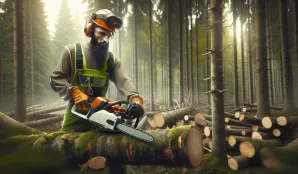
Lumberjacks, loggers salary
Latest available salary statistics are for 2025. Compare average pay, salary range and related job listings.
32 300 - 38 900 SEK / month
Women earn 99% of what men do.
Naturbruk
Related tools
Salary progression Lumberjacks, loggers
What does a forest cutter, logger do? – Tasks and work environment
A forest cutter, often called a logger, primarily works with felling trees, clearing brush, and preparing forest land for further forestry activities. Tasks include manual tree felling with chainsaws, thinning, site preparation, and sometimes planting new trees. The work is performed outdoors in varying weather conditions and requires both physical strength and good technique. Modern forestry often involves machinery, but manual work remains common, especially in sensitive environments or where machines cannot access. The work environment can be challenging with uneven terrain, noise from equipment, and the need for precision to avoid accidents.
Salary development over time
The salary development for forest cutters and loggers has been steadily positive over the past three years. In 2022, the average salary was 29,600 SEK per month, rising to 31 800 SEK in 2023 and to 33 600 SEK in 2024. This represents a total increase of approximately 7.4% over the period. The rise can be linked to increased demand for labor in forestry, while the supply of experienced workers decreases as many leave the profession. Salary increases have also been supported by generally higher wages in the green sectors and increased safety training requirements. Despite the positive trend, differences between employment types and regions are significant.
Forest cutter, logger salary – comprehensive overview
- Average salary: 33 600 SEK/month
- Lowest salary: 31,500 SEK/month (men), 32,400 SEK/month (women)
- Highest salary: 38,100 SEK/month (men), 34,900 SEK/month (women)
- Hourly wage: 191 SEK
- Gender difference: Women earn 99% of what men do (33 400 SEK vs. 33 700 SEK)
- Regional differences: Salary levels may vary across different parts of the country depending on the labor market and access to forest land
Education and qualifications
To work as a forest cutter or logger, a high school education in natural resources with a forestry specialization is usually required, but adult education or specialized courses are also available. The profession demands both formal education and practical experience to handle machinery, chainsaws, and work safely in the forest. Certifications in chainsaw handling and safety are often required by employers.
- High school education: Natural resources program – forestry specialization (3 years)
- Adult education/VET: Basic forestry training or short vocational courses
- Certificates: Safety certificates for chainsaw and brush saws
- Practical training: Workplace-based internships and apprenticeships are common
- Prerequisites: Good physical condition, interest in nature and technology
Forest cutters and loggers often work in small teams where cooperation and trust are crucial for safety. Many describe the freedom and closeness to nature as one of the greatest rewards of the profession, despite its high demands on endurance and self-discipline.
Common benefits and compensations
Common benefits for forest cutters and loggers include per diems when working away from home, work clothing, wellness allowances, and sometimes company cars or transportation to the work site. Additional insurance and further training in safety and machinery use are often offered.
Competition and challenges
The competition for jobs in forestry has decreased somewhat as many experienced workers leave the profession, although demand remains high. Challenges mainly include physically demanding work, risk of workplace accidents, and handling solo work periods. Technological advances and increased mechanization are changing job tasks, requiring adaptability and ongoing training. A paradoxical recruitment situation exists, with many job openings and a potential pool of applicants lacking the right skills. The job market is also affected by seasonal variations and the forestry sector’s economic cycles.
Tips for those wanting to become a forest cutter or logger
To succeed as a forest cutter or logger, good physical fitness and endurance are important, as the work is often heavy and performed outdoors in all weather. Precision is vital for safe handling of machines and tools, as well as following environmental guidelines. Responsible and independent individuals have an advantage, often working alone or in small teams. An interest in technology and willingness to learn new machinery are valuable, as the profession develops rapidly. Teamwork and communication skills are crucial in safety-focused work environments. Flexibility and problem-solving skills help manage unforeseen situations in the field. Finally, a genuine interest in nature and sustainable forestry is beneficial.
Key facts about forest cutters, loggers
- Average salary: 33 600 SEK/month
- Salary range: 31,500–38,100 SEK/month
- Education level: High school (natural resources/forestry) or equivalent
- Work environment: Outdoors, often in small teams, physically demanding
- Demand: Great opportunities for employment nationwide
Career paths and future outlook
After three to five years in the profession, a forest cutter or logger can advance to roles such as supervisor, machinery operator, or instructor in forestry training. There are also opportunities to specialize in conservation, forestry planning, or to start their own forestry business. According to the Swedish Public Employment Service’s forecasts, the prospects for employment within this group are strong and expected to remain stable over the next five years. Despite many leaving the profession, there remains a high demand for trained workers, especially those with certifications and experience with modern machinery. Adaptability and further training can open even better career opportunities within the natural resources sector.
Common questions about forest cutters, loggers
- What does a forest cutter, logger earn?
- The average salary is 33 600 SEK per month, with variations depending on experience, gender, and employment type. - How does one become a forest cutter or logger?
- The most common route is through the natural resources high school program, but adult education and short courses are also available. - What are the job tasks of a forest cutter?
- Felling trees, clearing, thinning, site preparation, and sometimes planting. - What is the work environment like?
- Physically demanding outdoor work, often in small teams and sometimes alone, in varying weather conditions. - Are there differences between men's and women's salaries?
- Yes, women earn on average 99% of what men do within the profession. - What are the future prospects?
- The forecast indicates significant opportunities for employment, and demand is expected to remain unchanged over the next five years. - What education is required?
- High school education with a forestry focus, or equivalent adult education and machine certification.

Salary distributed by age and sector
| Age | Base salary | Monthly salary | |
|---|---|---|---|
| 18-24 | 32300 kr | 32500 kr | |
| 25-34 | 33700 kr | 34700 kr | |
| 35-44 | 33200 kr | 33700 kr | |
| 45-54 | 32400 kr | 33100 kr | |
| 55-64 | 33600 kr | 34800 kr | |
| Snitt | 99% | 33000 kr | 33600 kr |
| Age | Base salary | Monthly salary | |
|---|---|---|---|
| 25-34 | 87% | 33300 kr | 33800 kr |
| 35-44 | 92% | 35800 kr | 36700 kr |
| 45-54 | 37100 kr | 37500 kr | |
| 55-64 | 36800 kr | 37300 kr | |
| Snitt | 89% | 36200 kr | 36900 kr |
| Age | Base salary | Monthly salary | |
|---|---|---|---|
| 25-34 | 87% | 33300 kr | 33800 kr |
| 35-44 | 92% | 35800 kr | 36700 kr |
| 45-54 | 37100 kr | 37500 kr | |
| 55-64 | 36300 kr | 36800 kr | |
| Snitt | 89% | 36000 kr | 36700 kr |
| Age | Base salary | Monthly salary | |
|---|---|---|---|
| 18-24 | 32300 kr | 32500 kr | |
| 25-34 | 33700 kr | 34700 kr | |
| 35-44 | 33100 kr | 33600 kr | |
| 45-54 | 32300 kr | 33000 kr | |
| 55-64 | 33400 kr | 34700 kr | |
| Snitt | 99% | 32900 kr | 33600 kr |
| Age | Base salary | Monthly salary | |
|---|---|---|---|
| 18-24 | 32300 kr | 32500 kr | |
| 25-34 | 33700 kr | 34700 kr | |
| 35-44 | 33100 kr | 33600 kr | |
| 45-54 | 32300 kr | 33000 kr | |
| 55-64 | 33400 kr | 34700 kr | |
| Snitt | 99% | 32900 kr | 33600 kr |
| Age | Base salary | Monthly salary | |
|---|---|---|---|
| 25-34 | 34100 kr | 34800 kr | |
| 35-44 | 33100 kr | 33500 kr | |
| 45-54 | 32400 kr | 33000 kr | |
| 55-64 | 33700 kr | 34800 kr | |
| Snitt | 99% | 33100 kr | 33700 kr |
| Age | Base salary | Monthly salary | |
|---|---|---|---|
| 25-34 | 87% | 34700 kr | 35500 kr |
| 35-44 | 92% | 36200 kr | 37500 kr |
| 45-54 | 37100 kr | 37500 kr | |
| 55-64 | 36800 kr | 37300 kr | |
| Snitt | 89% | 36600 kr | 37300 kr |
| Age | Base salary | Monthly salary | |
|---|---|---|---|
| 25-34 | 87% | 34700 kr | 35500 kr |
| 35-44 | 92% | 36200 kr | 37500 kr |
| 45-54 | 37100 kr | 37500 kr | |
| 55-64 | 36300 kr | 36800 kr | |
| Snitt | 89% | 36400 kr | 37100 kr |
| Age | Base salary | Monthly salary | |
|---|---|---|---|
| 25-34 | 34100 kr | 34800 kr | |
| 35-44 | 33100 kr | 33400 kr | |
| 45-54 | 32300 kr | 32900 kr | |
| 55-64 | 33500 kr | 34700 kr | |
| Snitt | 99% | 33000 kr | 33600 kr |
| Age | Base salary | Monthly salary | |
|---|---|---|---|
| 25-34 | 34100 kr | 34800 kr | |
| 35-44 | 33100 kr | 33400 kr | |
| 45-54 | 32300 kr | 32900 kr | |
| 55-64 | 33500 kr | 34700 kr | |
| Snitt | 99% | 33000 kr | 33600 kr |
| Age | Base salary | Monthly salary | |
|---|---|---|---|
| Snitt | 99% | 31800 kr | 33400 kr |
| Age | Base salary | Monthly salary | |
|---|---|---|---|
| 25-34 | 87% | 30900 kr | 30900 kr |
| 35-44 | 92% | 34700 kr | 34700 kr |
| Snitt | 89% | 33200 kr | 33200 kr |
| Age | Base salary | Monthly salary | |
|---|---|---|---|
| 25-34 | 87% | 30900 kr | 30900 kr |
| 35-44 | 92% | 34700 kr | 34700 kr |
| Snitt | 89% | 33200 kr | 33200 kr |
| Age | Base salary | Monthly salary | |
|---|---|---|---|
| Snitt | 99% | 31700 kr | 33400 kr |
| Age | Base salary | Monthly salary | |
|---|---|---|---|
| Snitt | 99% | 31700 kr | 33400 kr |

About the data
All information displayed on this page is based on data from the Swedish Central Bureau of Statistics (SCB), the Swedish Tax Agency and the Swedish employment agency. Learn more about our data and data sources here.
All figures are gross salaries, meaning salaries before tax. The average salary, or mean salary, is calculated by adding up the total salary for all individuals within the profession and dividing it by the number of individuals. For specific job categories, we have also considered various criteria such as experience and education.
Profession Lumberjacks, loggers has the SSYK code 6210, which we use to match against the SCB database to obtain the latest salary statistics.
-

Seasonal Reed Cutting Employee / Outdoor Environment Worker
Forestry workers
Mon, 13 Jul 2026 - 09:02 -
Team Leader for Nature Management – County Administrative Board of Västra Götaland
Forestry workers
Fri, 10 Jul 2026 - 22:16 -
Practical Nature Conservationist Needed for Nature and Water Department
Forestry workers
Fri, 10 Jul 2026 - 21:08

Compare salary, work tasks and job outlook in adjacent occupations to find roles with similar skills or pay levels.
-

Farmer, mixed plant species salary
Average salary: 31 752 SEK/month • Naturbruk
Growers of agricultural crops, fruit and berries
Compare with Lumberjacks, loggers
Mon, 13 Jul 2026 - 15:41 -

Average salary: 29 784 SEK/month • Naturbruk
Breeders and caretakers of pets
Compare with Lumberjacks, loggers
Mon, 13 Jul 2026 - 18:43 -

Average salary: 29 400 SEK/month • Naturbruk
Breeders and caretakers of farm animals
Compare with Lumberjacks, loggers
Tue, 14 Jul 2026 - 07:13 -

Tenant, breeding, agricultural pets salary
Average salary: 29 400 SEK/month • Naturbruk
Breeders and caretakers of farm animals
Compare with Lumberjacks, loggers
Mon, 13 Jul 2026 - 09:58 -

Average salary: 29 784 SEK/month • Naturbruk
Breeders and caretakers of pets
Compare with Lumberjacks, loggers
Tue, 14 Jul 2026 - 07:11 -

Operations manager, agriculture, beekeepers and screen growers salary
Average salary: 30 000 SEK/month • Naturbruk
Other animal breeders and animal caretakers
Compare with Lumberjacks, loggers
Tue, 14 Jul 2026 - 07:16


