- Salary statistics
- Series assembler, metal salary
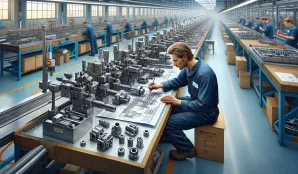
Series assembler, metal salary
Latest available salary statistics are for 2025. Compare average pay, salary range and related job listings.
32 100 - 35 800 SEK / month
Women earn 95% of what men do.
Industriell tillverkning
Related tools
Salary progression Series assembler, metal
What does a series assembler in metal do? – Tasks and work environment
A series assembler in metal is responsible for assembling and putting together metal components into finished products or parts of products in an industrial manufacturing environment. The tasks often involve working on assembly lines or at stations where precision and speed are crucial. Instructions and drawings must be followed carefully to ensure the final product meets quality standards. The work environment is characterized by machinery, tools, and often repetitive motions, demanding both endurance and accuracy. Safety routines are strict due to the machinery and materials handled daily.
Salary development over time
The salary for a series assembler in metal has experienced a steady increase over the past three years. In 2022, the average salary was 29,600 SEK per month, which increased to 32 700 SEK in 2023 and further to 33 500 SEK in 2024. This corresponds to a total increase of approximately 10.5% over the three-year period. Wage increases have partly been driven by increased demand for assemblers in industry, changes in collective agreements, and inflation effects on the labor market. Although the pace of wage growth has been relatively consistent, differences between genders and regional variations still exist.
Series assembler, metal salary – comprehensive overview
- Average salary: 33 500 SEK/month
- Lowest salary: 29,700 SEK/month
- Highest salary: 35,600 SEK/month
- Hourly wage (average): 196 SEK
- Men's average salary: 33 900 SEK/month
- Women's average salary: 32 200 SEK/month
- Women earn: 95% of what men do
- Regional differences: Present, with higher wages in certain regions and sectors
Education and qualifications
To work as a series assembler in metal, usually no higher education is required, but a high school education in industry, technology, or similar is advantageous. Many employers offer internal training and induction to ensure employees can follow safety routines and quality standards. Practical experience from industrial work or assembly is highly beneficial and can sometimes outweigh formal education.
- High school education: Industrial technology programs (3 years)
- Internal training: Usually upon employment
- Practical training: Meritorious, often via high school or apprenticeship programs
- Prerequisites: Basic Swedish and mathematics skills
- Certifications: May be required for certain special tasks
Many series assemblers in metal have the opportunity to work with advanced automation and robotics, and the profession is rapidly evolving thanks to digitization and technological progress. This opens new career paths and tasks beyond traditional assembly.
Common benefits and compensation
Series assemblers in metal are often offered collective agreement-based benefits such as occupational pension, insurance, wellness contributions, and sometimes subsidized lunch. Shift work can provide extra compensation for inconvenient working hours, and some employers also offer bonuses or supplements for experience and specialized skills.
Competition and challenges
Despite large opportunities for employment nationwide within the profession, the industry is characterized by a paradoxical situation where recruitment difficulties coexist with high unemployment. This challenge is often due to employers seeking candidates with the right experience and skills, while many job seekers lack these qualifications. The work can be physically demanding and repetitive, requiring both endurance and precision. Technological development also leads to changing tasks, demanding that professionals be willing to learn new methods and machines. Fluctuations in demand depending on economic cycles and regional industry investments are also common.
Tips for those who want to become a series assembler in metal
To succeed as a series assembler in metal, it is good to have a meticulous and resilient attitude towards work, as precision and repetitive tasks are a significant part of daily life. Good teamwork skills facilitate working in teams on assembly lines or in shift groups. Flexibility is also an important trait, as tasks can vary and technology constantly evolves. It is wise to take initiatives for further education and certifications to strengthen your skills and improve employability. Showing engagement and responsibility towards safety routines and quality work is appreciated by employers. Practical experience, such as through internships or summer jobs, provides valuable insights into the profession and increases the chances of employment. Finally, having a positive attitude towards change and willingness to learn new tasks as technology and work environments develop is crucial.
Key facts about Series assembler, metal
- Salary range: 29,700–35,600 SEK/month
- Education level: High school or equivalent
- Work environment: Industrial, often with shift work
- Demand: Great opportunities for nationwide employment
- Gender wage gap: Women earn 95% of men's wages
Career paths and future prospects
After three to five years as a series assembler in metal, opportunities exist to advance to senior assembler, supervisor, or technical specialist within production. Some choose to further their education in automation, maintenance, or quality control, where experience from assembly is highly valuable. Employment forecasts indicate large opportunities for work and are expected to remain stable over the next five years, despite the paradox of recruitment difficulties and high unemployment. Digitalization and increased automation influence the profession, making technical interest and a desire to develop important qualities for long-term career success. The profession also has a large number of available jobs, providing good prospects for those looking to establish themselves in the labor market.
Frequently asked questions about Series assembler, metal
- What does a series assembler, metal earn?
- A series assembler in metal has an average salary of 33 500 SEK per month. - How has the salary development been for a series assembler, metal?
- The salary has increased from 29,600 SEK (2022) to 33 500 SEK (2024), which corresponds to an increase of approximately 10.5%. - What education is required to become a series assembler, metal?
- A high school education in industry or technology is advantageous, but many also receive internal training upon employment. - Are there differences in salary between men and women?
- Yes, women earn on average 32 200 SEK while men earn 33 900 SEK. - What does the job market look like for a series assembler, metal?
- Opportunities for work are substantial, with many available jobs nationwide within the profession. - What benefits are common for series assemblers, metal?
- Common benefits include occupational pension, insurance, wellness contributions, and overtime pay. - What career paths are available for experienced series assemblers, metal?
- Advancement to supervisor, technical specialist, or further education in automation and quality control is possible.

Salary distributed by age and sector
| Age | Base salary | Monthly salary | |
|---|---|---|---|
| 18-24 | 97% | 29800 kr | 30900 kr |
| 25-34 | 99% | 32200 kr | 33200 kr |
| 35-44 | 94% | 32500 kr | 33400 kr |
| 45-54 | 98% | 33100 kr | 33900 kr |
| 55-64 | 89% | 34600 kr | 35100 kr |
| Snitt | 95% | 32700 kr | 33500 kr |
| Age | Base salary | Monthly salary | |
|---|---|---|---|
| 18-24 | 97% | 29800 kr | 30900 kr |
| 25-34 | 99% | 32200 kr | 33200 kr |
| 35-44 | 94% | 32500 kr | 33400 kr |
| 45-54 | 98% | 33100 kr | 33900 kr |
| 55-64 | 89% | 34600 kr | 35100 kr |
| Snitt | 95% | 32700 kr | 33500 kr |
| Age | Base salary | Monthly salary | |
|---|---|---|---|
| 18-24 | 97% | 29800 kr | 30900 kr |
| 25-34 | 99% | 32200 kr | 33200 kr |
| 35-44 | 94% | 32500 kr | 33400 kr |
| 45-54 | 98% | 33100 kr | 33900 kr |
| 55-64 | 89% | 34600 kr | 35100 kr |
| Snitt | 95% | 32700 kr | 33500 kr |
| Age | Base salary | Monthly salary | |
|---|---|---|---|
| 18-24 | 97% | 30100 kr | 31100 kr |
| 25-34 | 99% | 32300 kr | 33200 kr |
| 35-44 | 94% | 33000 kr | 33900 kr |
| 45-54 | 98% | 33300 kr | 34100 kr |
| 55-64 | 89% | 35500 kr | 35900 kr |
| Snitt | 95% | 33100 kr | 33900 kr |
| Age | Base salary | Monthly salary | |
|---|---|---|---|
| 18-24 | 97% | 30100 kr | 31100 kr |
| 25-34 | 99% | 32300 kr | 33200 kr |
| 35-44 | 94% | 33000 kr | 33900 kr |
| 45-54 | 98% | 33300 kr | 34100 kr |
| 55-64 | 89% | 35500 kr | 35900 kr |
| Snitt | 95% | 33100 kr | 33900 kr |
| Age | Base salary | Monthly salary | |
|---|---|---|---|
| 18-24 | 97% | 30100 kr | 31100 kr |
| 25-34 | 99% | 32300 kr | 33200 kr |
| 35-44 | 94% | 33000 kr | 33900 kr |
| 45-54 | 98% | 33300 kr | 34100 kr |
| 55-64 | 89% | 35500 kr | 35900 kr |
| Snitt | 95% | 33100 kr | 33900 kr |
| Age | Base salary | Monthly salary | |
|---|---|---|---|
| 18-24 | 97% | 29000 kr | 30200 kr |
| 25-34 | 99% | 31700 kr | 32800 kr |
| 35-44 | 94% | 31200 kr | 31900 kr |
| 45-54 | 98% | 32300 kr | 33300 kr |
| 55-64 | 89% | 31200 kr | 32000 kr |
| Snitt | 95% | 31300 kr | 32200 kr |
| Age | Base salary | Monthly salary | |
|---|---|---|---|
| 18-24 | 97% | 29000 kr | 30200 kr |
| 25-34 | 99% | 31700 kr | 32800 kr |
| 35-44 | 94% | 31200 kr | 31900 kr |
| 45-54 | 98% | 32300 kr | 33300 kr |
| 55-64 | 89% | 31200 kr | 32000 kr |
| Snitt | 95% | 31300 kr | 32200 kr |
| Age | Base salary | Monthly salary | |
|---|---|---|---|
| 18-24 | 97% | 29000 kr | 30200 kr |
| 25-34 | 99% | 31700 kr | 32800 kr |
| 35-44 | 94% | 31200 kr | 31900 kr |
| 45-54 | 98% | 32300 kr | 33300 kr |
| 55-64 | 89% | 31200 kr | 32000 kr |
| Snitt | 95% | 31300 kr | 32200 kr |

About the data
All information displayed on this page is based on data from the Swedish Central Bureau of Statistics (SCB), the Swedish Tax Agency and the Swedish employment agency. Learn more about our data and data sources here.
All figures are gross salaries, meaning salaries before tax. The average salary, or mean salary, is calculated by adding up the total salary for all individuals within the profession and dividing it by the number of individuals. For specific job categories, we have also considered various criteria such as experience and education.
Profession Series assembler, metal has the SSYK code 8213, which we use to match against the SCB database to obtain the latest salary statistics.
-

Sunscreen Installer at Primetex in Jönköping
Assemblers, metal, rubber and plastic products
Mon, 13 Jul 2026 - 23:52 -

Fine Assembler for Aimpoint in Malmö
Assemblers, metal, rubber and plastic products
Mon, 13 Jul 2026 - 23:52 -

Technician for Electromechanical Products - Hughes Power System AB
Assemblers, metal, rubber and plastic products
Mon, 13 Jul 2026 - 21:25 -

Installer for Cable Laying, Step Assembly, and Metalwork
Assemblers, metal, rubber and plastic products
Mon, 13 Jul 2026 - 21:06 -

Looking for industrial jobs in Töcksfors or Årjäng? Apply now!
Assemblers, metal, rubber and plastic products
Mon, 13 Jul 2026 - 21:05
Compare salary, work tasks and job outlook in adjacent occupations to find roles with similar skills or pay levels.
-

Charcuterie worker, manufacturing salary
Average salary: 33 000 SEK/month • Industriell tillverkning
Machine operators, meat and fish processing industry
Compare with Series assembler, metal
Tue, 14 Jul 2026 - 08:18 -
Textile machine adjuster, yarn preparation salary
Average salary: 32 200 SEK/month • Industriell tillverkning
Other machine operators, textile, leather and leather industry
Compare with Series assembler, metal
Tue, 14 Jul 2026 - 07:14 -

Average salary: 33 900 SEK/month • Industriell tillverkning
Machine operators, rubber industry
Compare with Series assembler, metal
Mon, 13 Jul 2026 - 01:29 -

Average salary: 47 800 SEK/month • Industriell tillverkning
Production supervisors
Compare with Series assembler, metal
Thu, 9 Jul 2026 - 13:10 -

Average salary: 40 000 SEK/month • Industriell tillverkning
Rolling mill operators
Compare with Series assembler, metal
Mon, 13 Jul 2026 - 09:37 -

Supervisor, confectionery salary
Average salary: 47 800 SEK/month • Industriell tillverkning
Production supervisors
Compare with Series assembler, metal
Tue, 14 Jul 2026 - 10:08


