- Salary statistics
- Rotary press salary
Rotary press salary
Latest available salary statistics are for 2025. Compare average pay, salary range and related job listings.
32 300 - 37 600 SEK / month
Women earn 92% of what men do.
Industriell tillverkning
Related tools
Salary progression Rotary press
What does a rotation printer do? – Tasks and work environment
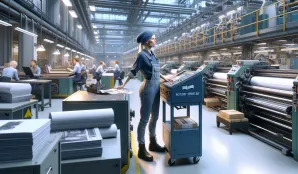
A rotation printer works with handling and monitoring large printing presses, often within the newspaper, packaging, and advertising industries. Tasks include preparing printing plates, adjusting color mixes, overseeing the printing process, and performing quality checks on printed products. The work requires high precision and technical knowledge, as the machines are advanced and production moves at a high pace. Rotation printers typically work in production facilities where noise levels can be high, and the work involves both day and night shifts, demanding good physical endurance and accuracy.
Salary development over time
Rotation printers have experienced relatively stable salary development in recent years. In 2022, the average salary was 33,100 SEK per month, while in 2023 it was 35 000. In 2024, the average salary has increased to 34 600, representing a growth of approximately 7.7% from the previous year. This positive trend is linked to continued demand for experienced printers, as well as technological advancements in the industry requiring more skilled labor. Salary differences between genders persist, with women earning an average of 92% of men's salaries. The market shows some regional variation, but generally, salaries have increased due to skill shortages and increased production rates in certain parts of the country.
Rotation printer salary – comprehensive overview
- Average salary: 34 600 SEK/month
- Lowest salary: 32,000 SEK/month (woman), 34,000 SEK/month (man)
- Highest salary: 32,300 SEK/month (woman), 37,000 SEK/month (man)
- Hourly wage: 210 SEK/hour
- Gender differences: Women earn 92% of men's salaries
- Regional differences: Some variation depending on location and sector
Education and qualifications
To work as a rotation printer, a high school education in graphic technology or equivalent is usually required, often supplemented with practical training at printing facilities. Many employers value experience with machinery handling and technical understanding, and some offer internal training programs. Specialized courses in printing technology can be advantageous, as well as the ability to work shifts and perform quality control in a production environment.
- High school education: Graphic technology, 3 years
- Internship: Workplace-based internship often a requirement
- Certifications: Courses in printing technology and machine maintenance can be advantageous
- Prerequisites: Good technical understanding and attention to detail
- Tips for choosing: Select education focused on graphic production or industrial technology
Many rotation printers develop a keen sense for color and print quality, enabling them to quickly detect small deviations and ensure high standards for the final product. This tactile sensitivity is often one of the most valued qualities among experienced printers.
Common benefits and compensations
Common benefits for rotation printers include shift allowances, overtime pay, and wellness contributions. Some workplaces also offer subsidized lunches, work clothing, and opportunities for internal training. Larger printing facilities may include bonus schemes and pension contributions as part of the employment package.
Competition and challenges
Rotation printers operate in an industry where automation and digitalization have significantly transformed the job market. Competition for jobs is generally moderate, but the availability of vacancies depends on economic conditions and demand for printed products. Technological changes require continuous skills development, and there is a need to quickly adapt to new machinery and methods. The physical work environment and shift work can be demanding, requiring endurance and flexibility. Despite these challenges, the demand for skilled rotation printers remains relatively high, especially in larger cities and specialized print shops.
Tips for aspiring rotation printers
To succeed as a rotation printer, it helps to be technically interested and detail-oriented, as precision is crucial when handling advanced printing presses. Gaining practical experience increases employability, so internships during training are recommended. A problem-solving attitude facilitates troubleshooting and maintenance, while good teamwork skills are important since work often occurs in teams. Flexibility and the ability to work shifts are advantageous, as production runs 24/7. Staying updated on new technology and participating in further training enhances career prospects. Finally, patience and stress tolerance are important, as the pace can be high, and precision must be maintained under pressure.
Key facts about rotation printers
- Salary range: 32,000–37,000 SEK/month
- Education level: High school diploma with a technical focus
- Work environment: Production, often shift work
- Demand: 1,437 job openings within the profession
- Gender differences: Women earn 92% of men's salaries
Career paths and future prospects
After three to five years as a rotation printer, there are opportunities to advance to supervisor, production manager, or technical specialist within the printing industry. Some choose to further their education and take roles in machine maintenance or quality control. According to labor market forecasts, the demand for qualified rotation printers remains stable, especially within larger production units and specialized print shops. Digitalization and technological development mean that those who continuously build on their skills have good chances for a secure and rewarding career.
Frequently asked questions about rotation printers
- What does a rotation printer earn?
- The average salary for a rotation printer is 34 600 SEK per month. - What are the salary differences between men and women?
- Men earn an average of 35 200 SEK, while women earn 32,000 SEK, which corresponds to 92% of men's salaries. - What education is required to become a rotation printer?
- High school education in graphic technology or equivalent, often supplemented with practical training. - Are there regional salary differences?
- Yes, salaries can vary depending on location and sector. - What career opportunities are available after a few years in the profession?
- Roles include supervisor, production manager, or technical specialist. - What are the future prospects for rotation printers?
- Demand remains stable with 1437 job openings within the profession. - What is the hourly wage for a rotation printer?
- The hourly wage is 210 SEK on average.

Salary distributed by age and sector
| Age | Base salary | Monthly salary | |
|---|---|---|---|
| 18-24 | 28200 kr | 30100 kr | |
| 25-34 | 32000 kr | 33300 kr | |
| 35-44 | 33300 kr | 34400 kr | |
| 45-54 | 36600 kr | 37700 kr | |
| 55-64 | 34500 kr | 35500 kr | |
| Snitt | 92% | 33400 kr | 34600 kr |
| Age | Base salary | Monthly salary | |
|---|---|---|---|
| 18-24 | 28200 kr | 30100 kr | |
| 25-34 | 32000 kr | 33300 kr | |
| 35-44 | 33300 kr | 34300 kr | |
| 45-54 | 36600 kr | 37700 kr | |
| 55-64 | 34500 kr | 35500 kr | |
| Snitt | 92% | 33400 kr | 34600 kr |
| Age | Base salary | Monthly salary | |
|---|---|---|---|
| 18-24 | 28200 kr | 30100 kr | |
| 25-34 | 32000 kr | 33300 kr | |
| 35-44 | 33300 kr | 34300 kr | |
| 45-54 | 36600 kr | 37700 kr | |
| 55-64 | 34500 kr | 35500 kr | |
| Snitt | 92% | 33400 kr | 34600 kr |
| Age | Base salary | Monthly salary | |
|---|---|---|---|
| 18-24 | 28500 kr | 30300 kr | |
| 25-34 | 32500 kr | 33700 kr | |
| 35-44 | 34000 kr | 35000 kr | |
| 45-54 | 37300 kr | 38300 kr | |
| 55-64 | 35000 kr | 36000 kr | |
| Snitt | 92% | 34100 kr | 35200 kr |
| Age | Base salary | Monthly salary | |
|---|---|---|---|
| 18-24 | 28500 kr | 30300 kr | |
| 25-34 | 32500 kr | 33700 kr | |
| 35-44 | 34000 kr | 35000 kr | |
| 45-54 | 37300 kr | 38300 kr | |
| 55-64 | 35000 kr | 36000 kr | |
| Snitt | 92% | 34100 kr | 35200 kr |
| Age | Base salary | Monthly salary | |
|---|---|---|---|
| 18-24 | 28500 kr | 30300 kr | |
| 25-34 | 32500 kr | 33700 kr | |
| 35-44 | 34000 kr | 35000 kr | |
| 45-54 | 37300 kr | 38300 kr | |
| 55-64 | 35000 kr | 36000 kr | |
| Snitt | 92% | 34100 kr | 35200 kr |
| Age | Base salary | Monthly salary | |
|---|---|---|---|
| Snitt | 92% | 30900 kr | 32300 kr |
| Age | Base salary | Monthly salary | |
|---|---|---|---|
| Snitt | 92% | 30900 kr | 32300 kr |
| Age | Base salary | Monthly salary | |
|---|---|---|---|
| Snitt | 92% | 30900 kr | 32300 kr |

About the data
All information displayed on this page is based on data from the Swedish Central Bureau of Statistics (SCB), the Swedish Tax Agency and the Swedish employment agency. Learn more about our data and data sources here.
All figures are gross salaries, meaning salaries before tax. The average salary, or mean salary, is calculated by adding up the total salary for all individuals within the profession and dividing it by the number of individuals. For specific job categories, we have also considered various criteria such as experience and education.
Profession Rotary press has the SSYK code 7322, which we use to match against the SCB database to obtain the latest salary statistics.
-

Machine Operator for Printing Press in Gothenburg – Immediate Start
Printers
Tue, 7 Jul 2026 - 20:48 -
Machine Operator for Printing Press in Gothenburg – Start Immediately
Printers
Tue, 7 Jul 2026 - 20:32



Compare salary, work tasks and job outlook in adjacent occupations to find roles with similar skills or pay levels.
-

Average salary: 36 800 SEK/month • Industriell tillverkning
Welders and gas cutters
Compare with Rotary press
Tue, 14 Jul 2026 - 17:55 -

Average salary: 36 000 SEK/month • Industriell tillverkning
Machine operators, surface treatment
Compare with Rotary press
Tue, 14 Jul 2026 - 13:54 -

Machine operator, textile industry, sewing salary
Average salary: 32 200 SEK/month • Industriell tillverkning
Other machine operators, textile, leather and leather industry
Compare with Rotary press
Tue, 14 Jul 2026 - 17:57 -

Average salary: 36 900 SEK/month • Industriell tillverkning
Machine operators, dairy
Compare with Rotary press
Tue, 14 Jul 2026 - 13:55 -

Charcuterie worker, manufacturing salary
Average salary: 33 000 SEK/month • Industriell tillverkning
Machine operators, meat and fish processing industry
Compare with Rotary press
Tue, 14 Jul 2026 - 13:08 -

Average salary: 35 700 SEK/month • Industriell tillverkning
Grinders etc.
Compare with Rotary press
Tue, 14 Jul 2026 - 18:51


