- Salary statistics
- Ranger salary
Ranger salary
Latest available salary statistics are for 2025. Compare average pay, salary range and related job listings.
37 700 - 38 800 SEK / month
Women earn 97% of what men do.
Transport
Related tools
Salary progression Ranger
What does a ranger do? – Tasks and work environment
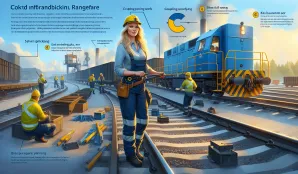
A ranger works within the yard area and is responsible for ensuring that train sets are coupled and decoupled safely and efficiently. Tasks include directing train cars, supervising loading and unloading, and coordinating with other transport and logistics functions. The work environment is often outdoors with shift work that can occur during both day and night. Safety is a central part of the job, requiring the ranger to follow strict rules and routines to prevent accidents.
Salary development over time
Rangers have experienced steady salary growth over the past three years. In 2022, the average salary was 34,800 SEK per month, which increased to 37 200 SEK in 2023 and further to 38 600 SEK in 2024. This represents a total increase of approximately 6.9 percent over the period. The positive trend is linked to increased demand for qualified yard personnel and general wage adjustments within the transport and logistics sector. Education requirements and safety responsibilities also contribute to higher salary levels, as competence and experience are important factors in the profession.
Rangers often need good communication skills and stress resilience because the work requires quick decision-making in an environment where safety must always be prioritized.
Ranger salary – comprehensive overview
- Average salary: 38 600 SEK/month
- Lowest salary: 36,600 SEK/month (both men and women with a three-year upper secondary education)
- Highest salary: 39,700 SEK/month (man, private sector employee with upper secondary education, up to 2 years)
- Hourly wage: 224 SEK (based on 166 working hours/month)
- Gender differences: Women earn on average 36,600 SEK, which is 97 % of men's 38 800 SEK
- Regional differences: Data is lacking for clear regional differences, but salary levels may vary depending on the geographic location and sector of the workplace
Education and qualifications
The education for a ranger is usually upper secondary with a focus on transport or logistics. The profession requires practical experience in yard work and good knowledge of safety regulations. It is common to complete a vocational training with internships to acquire the necessary qualifications.
- Upper secondary education: Transport or industrial program, 3 years
- Certifications: Safety training and possibly forklift license
- Internships: Apprenticeships or trainee programs within railway and transport companies
- Prerequisites: Basic knowledge of safety and logistics
- Tips for choosing: Select education with a focus on transport and safety for the best prospects
Common benefits and compensations
Rangers are often offered benefits such as collective agreement pension and insurance solutions, compensation for unsocial hours, and holiday pay. Many employers provide wellness allowances and opportunities for skills development. Shift work and night shifts are usually compensated with extra pay.
Competition and challenges
The profession of a ranger demands high accuracy and safety, which can make competition for positions fierce. The physically demanding work environment and irregular working hours can be challenging for some. Additionally, the profession requires continuous updating of safety knowledge and adaptation to new rules and technology. The availability of job openings varies regionally and can be affected by economic cycles within the transport sector.
Tips for those who want to become a ranger
To succeed as a ranger, it is good to have a high safety awareness and be meticulous in your work. Developing good communication skills is important for effective collaboration with colleagues and train conductors. Flexibility and stress resilience during shift work enable handling unexpected situations calmly. It is recommended to acquire relevant education in transport and logistics and gain practical experience through internships or apprenticeships. A positive attitude towards working in varied environments and weather conditions also facilitates success in the profession.
Key facts about rangers
- Education level: Upper secondary education in transport or logistics
- Salary range: 36,600–39,700 SEK/month
- Work environment: Outdoors, often shift work
- Occupational group: Yard personnel
- Demand: 412 job openings within the occupational group according to the Swedish Public Employment Service
Career paths and future prospects
After 3–5 years as a ranger, there are opportunities to advance to supervisory positions within the yard and transport sector. Some choose to specialize in safety or logistics planning. The future outlook is uncertain due to limited data for the specific ranger profession, but within the broader yard personnel group, there are several vacancies. The Swedish Public Employment Service does not provide a specific forecast for rangers, but the transport and logistics industry continues to be important for Sweden's infrastructure.
Frequently asked questions about rangers
- What does a ranger earn?
- The average salary is approximately 38 600 SEK per month, with variation between 36,600 and 39,700 SEK depending on experience and sector. - What education is required to become a ranger?
- Upper secondary education in transport or logistics is most common, often supplemented with internships and safety training. - Are there gender differences in the ranger profession?
- Yes, women earn on average 97 % of men's salaries within the profession. - What is the work environment like for a ranger?
- The work environment is often outdoors and can involve shift work with varying weather conditions. - What are the future prospects for rangers?
- No specific forecast exists, but within the yard personnel group, there are several job openings and continued demand. - What personal qualities are important for a ranger?
- Accuracy, stress resilience, and good communication skills are central qualities. - Are there regional differences in ranger salaries?
- There is no clear data, but salaries may vary depending on geographic location and employer.

Salary distributed by age and sector
| Age | Base salary | Monthly salary | |
|---|---|---|---|
| 25-34 | 34300 kr | 37700 kr | |
| 35-44 | 35900 kr | 39200 kr | |
| 55-64 | 37000 kr | 40500 kr | |
| Snitt | 97% | 35100 kr | 38600 kr |
| Age | Base salary | Monthly salary | |
|---|---|---|---|
| 25-34 | 34300 kr | 37700 kr | |
| 35-44 | 35900 kr | 39200 kr | |
| 55-64 | 37000 kr | 40500 kr | |
| Snitt | 97% | 35100 kr | 38600 kr |
| Age | Base salary | Monthly salary | |
|---|---|---|---|
| 25-34 | 34300 kr | 37700 kr | |
| 35-44 | 35900 kr | 39200 kr | |
| 55-64 | 37000 kr | 40500 kr | |
| Snitt | 97% | 35100 kr | 38600 kr |
| Age | Base salary | Monthly salary | |
|---|---|---|---|
| 25-34 | 34400 kr | 37700 kr | |
| 35-44 | 35900 kr | 39600 kr | |
| 55-64 | 37300 kr | 41000 kr | |
| Snitt | 97% | 35200 kr | 38800 kr |
| Age | Base salary | Monthly salary | |
|---|---|---|---|
| 25-34 | 34400 kr | 37700 kr | |
| 35-44 | 35900 kr | 39600 kr | |
| 55-64 | 37300 kr | 41000 kr | |
| Snitt | 97% | 35200 kr | 38800 kr |
| Age | Base salary | Monthly salary | |
|---|---|---|---|
| 25-34 | 34400 kr | 37700 kr | |
| 35-44 | 35900 kr | 39600 kr | |
| 55-64 | 37300 kr | 41000 kr | |
| Snitt | 97% | 35200 kr | 38800 kr |
| Age | Base salary | Monthly salary | |
|---|---|---|---|
| Snitt | 97% | 34600 kr | 37700 kr |
| Age | Base salary | Monthly salary | |
|---|---|---|---|
| Snitt | 97% | 34600 kr | 37700 kr |
| Age | Base salary | Monthly salary | |
|---|---|---|---|
| Snitt | 97% | 34600 kr | 37700 kr |

About the data
All information displayed on this page is based on data from the Swedish Central Bureau of Statistics (SCB), the Swedish Tax Agency and the Swedish employment agency. Learn more about our data and data sources here.
All figures are gross salaries, meaning salaries before tax. The average salary, or mean salary, is calculated by adding up the total salary for all individuals within the profession and dividing it by the number of individuals. For specific job categories, we have also considered various criteria such as experience and education.
Profession Ranger has the SSYK code 8312, which we use to match against the SCB database to obtain the latest salary statistics.
Compare salary, work tasks and job outlook in adjacent occupations to find roles with similar skills or pay levels.
-

Average salary: 34 800 SEK/month • Transport
Warehouse and terminal staff
Compare with Ranger
Tue, 14 Jul 2026 - 18:36 -

Average salary: 34 600 SEK/month • Transport
Cabin crew etc.
Compare with Ranger
Tue, 14 Jul 2026 - 16:45 -

Average salary: 34 600 SEK/month • Transport
Truck drivers etc.
Compare with Ranger
Tue, 14 Jul 2026 - 16:19 -

Average salary: 34 600 SEK/month • Transport
Cabin crew etc.
Compare with Ranger
Tue, 14 Jul 2026 - 18:47 -

Average salary: 37 200 SEK/month • Transport
Forklift drivers
Compare with Ranger
Tue, 14 Jul 2026 - 17:50 -

Average salary: 51 700 SEK/month • Transport
Engine officers
Compare with Ranger
Tue, 14 Jul 2026 - 20:54


