- Salary statistics
- Pump fitter, manufacturing salary
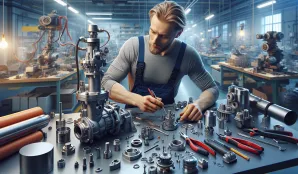
Pump fitter, manufacturing salary
Latest available salary statistics are for 2025. Compare average pay, salary range and related job listings.
32 100 - 35 800 SEK / month
Women earn 95% of what men do.
Industriell tillverkning
Related tools
Salary progression Pump fitter, manufacturing
What does a pump installer, manufacturing do? – Tasks and work environment
A pump installer in manufacturing is responsible for assembling and putting together pumps and related components according to technical drawings and specifications. Tasks often include handling tools, inspecting parts to ensure quality, troubleshooting, and adjusting assembled products. The work environment is usually industrial, involving mechanical work where safety and precision are important. Pump installers often work in teams and collaborate closely with production and quality control.
Salary development over time
Over the past three years, the salary for pump installers in manufacturing has steadily increased. In 2022, the average salary was 29,600 SEK per month, rising in 2023 to 32 700 SEK and reaching 33 500 SEK in 2024. This represents a total increase of just over 10 percent over the period, indicating positive salary growth. This trend can be linked to increased demand for skilled installers in industry and general wage adjustments within the manufacturing sector. Education level and experience also influence salary changes, with more qualified installers tending to earn higher wages. The market’s need for specialized roles within metal and plastic industries contributes to pushing up salary levels.
Pump installers often need to be skilled problem solvers because they must identify and fix faults in complex machine parts, which requires high technical understanding and patience.
Pump installer, manufacturing salary – complete overview
- Average salary: 33 500 SEK/month
- Lowest salary: 29,700 SEK (female, pre-secondary education)
- Highest salary: 35,600 SEK (male, regional sector, pre-secondary education)
- Hourly wage: 196 SEK (based on 166 working hours/month)
- Gender differences: Women earn on average 32 200 SEK, which is 95% of men's 33 900 SEK
- Regional differences: Higher salaries are noted in regional sectors compared to other areas
Education and qualifications
The educational path for pump installers in manufacturing is often vocational, focusing on technical training in mechanics, industrial production, or equivalent. Practical experience and relevant certifications can be crucial for employment and career development.
- High school programs: Industrial technology program or equivalent, usually 3 years
- Certifications/courses: Safety training and specialized courses in assembly and quality control
- Internships: Apprenticeships or internships within industrial companies are common
- Prerequisites: Basic technical knowledge and good hand-eye coordination
- Tips for choosing: Select programs with internships and focus on mechanical assembly for the best preparation
Common benefits and compensations
Pump installers in manufacturing are often offered collective agreement benefits such as overtime pay, holiday pay, and pension contributions. Wellness allowances, opportunities for skills development, and training within the company are common. Some workplaces may also offer bonuses linked to production targets or safety performance.
Competition and challenges
The profession as a pump installer is characterized by a paradoxical situation where there are recruitment difficulties alongside high unemployment within the trade. Competition can vary depending on region and company size. Challenges include staying updated with technological changes and managing physically demanding tasks. Another aspect is that the profession requires precision and patience, which can be challenging in high-paced production environments.
Tips for those who want to become a pump installer, manufacturing
To succeed as a pump installer in manufacturing, it is good to develop a strong technical understanding and practical problem-solving skills. Precision is an important trait since accuracy in assembly affects product quality and function. Being flexible and open to working in different production environments facilitates adaptation to various tasks. At the same time, teamwork skills are necessary because installers often work in teams and need to communicate effectively. Finally, patience is valuable for handling repetitive tasks and troubleshooting without losing focus.
Key facts about pump installer, manufacturing
- Salary range: 29,700–35,600 SEK/month
- Education level: Vocational high school or equivalent technical training
- Work environment: Industrial, involving mechanical and physical work
- Demand: Nationally, job opportunities are considered to be high
- Recruitment situation: Difficulties recruiting despite high unemployment in the profession
Career paths and future prospects
After 3–5 years of experience, pump installers can advance to specialist roles in assembly or quality assurance, or move into supervisory positions within production. There is also the possibility to broaden skills toward maintenance or technical support. The Swedish Employment Service’s forecast for the group of metal, rubber, and plastic product assemblers estimates that demand for pump installers will remain unchanged over five years. Despite recruitment challenges, unemployment in the group is high, which may be due to a mismatch between available jobs and skills. Overall, there are over 1,400 job openings nationwide, providing good opportunities for qualified individuals.
Frequently asked questions about pump installer, manufacturing
- What is the salary of a Pump installer, manufacturing?
- The average salary is approximately 33 500 SEK per month, with variation between 29,700 and 35,600 SEK depending on experience and sector. - What education is required to become a pump installer?
- Typically, technical education from vocational high school, often in industrial technology or equivalent. - Are there gender differences in salaries for pump installers?
- Yes, women earn on average 95% of men's salaries within the profession. - What are the future prospects for pump installers?
- Demand is expected to remain unchanged with great job opportunities but also recruitment challenges. - What personal qualities are important in the profession?
- Precision, technical understanding, teamwork skills, and patience are important qualities. - What benefits are often included in employment?
- Collective agreement benefits such as overtime pay, holiday pay, and wellness contributions are common. - How does the salary vary regionally?
- Higher salaries are noted in regional sectors compared to other areas.

Salary distributed by age and sector
| Age | Base salary | Monthly salary | |
|---|---|---|---|
| 18-24 | 97% | 29800 kr | 30900 kr |
| 25-34 | 99% | 32200 kr | 33200 kr |
| 35-44 | 94% | 32500 kr | 33400 kr |
| 45-54 | 98% | 33100 kr | 33900 kr |
| 55-64 | 89% | 34600 kr | 35100 kr |
| Snitt | 95% | 32700 kr | 33500 kr |
| Age | Base salary | Monthly salary | |
|---|---|---|---|
| 18-24 | 97% | 29800 kr | 30900 kr |
| 25-34 | 99% | 32200 kr | 33200 kr |
| 35-44 | 94% | 32500 kr | 33400 kr |
| 45-54 | 98% | 33100 kr | 33900 kr |
| 55-64 | 89% | 34600 kr | 35100 kr |
| Snitt | 95% | 32700 kr | 33500 kr |
| Age | Base salary | Monthly salary | |
|---|---|---|---|
| 18-24 | 97% | 29800 kr | 30900 kr |
| 25-34 | 99% | 32200 kr | 33200 kr |
| 35-44 | 94% | 32500 kr | 33400 kr |
| 45-54 | 98% | 33100 kr | 33900 kr |
| 55-64 | 89% | 34600 kr | 35100 kr |
| Snitt | 95% | 32700 kr | 33500 kr |
| Age | Base salary | Monthly salary | |
|---|---|---|---|
| 18-24 | 97% | 30100 kr | 31100 kr |
| 25-34 | 99% | 32300 kr | 33200 kr |
| 35-44 | 94% | 33000 kr | 33900 kr |
| 45-54 | 98% | 33300 kr | 34100 kr |
| 55-64 | 89% | 35500 kr | 35900 kr |
| Snitt | 95% | 33100 kr | 33900 kr |
| Age | Base salary | Monthly salary | |
|---|---|---|---|
| 18-24 | 97% | 30100 kr | 31100 kr |
| 25-34 | 99% | 32300 kr | 33200 kr |
| 35-44 | 94% | 33000 kr | 33900 kr |
| 45-54 | 98% | 33300 kr | 34100 kr |
| 55-64 | 89% | 35500 kr | 35900 kr |
| Snitt | 95% | 33100 kr | 33900 kr |
| Age | Base salary | Monthly salary | |
|---|---|---|---|
| 18-24 | 97% | 30100 kr | 31100 kr |
| 25-34 | 99% | 32300 kr | 33200 kr |
| 35-44 | 94% | 33000 kr | 33900 kr |
| 45-54 | 98% | 33300 kr | 34100 kr |
| 55-64 | 89% | 35500 kr | 35900 kr |
| Snitt | 95% | 33100 kr | 33900 kr |
| Age | Base salary | Monthly salary | |
|---|---|---|---|
| 18-24 | 97% | 29000 kr | 30200 kr |
| 25-34 | 99% | 31700 kr | 32800 kr |
| 35-44 | 94% | 31200 kr | 31900 kr |
| 45-54 | 98% | 32300 kr | 33300 kr |
| 55-64 | 89% | 31200 kr | 32000 kr |
| Snitt | 95% | 31300 kr | 32200 kr |
| Age | Base salary | Monthly salary | |
|---|---|---|---|
| 18-24 | 97% | 29000 kr | 30200 kr |
| 25-34 | 99% | 31700 kr | 32800 kr |
| 35-44 | 94% | 31200 kr | 31900 kr |
| 45-54 | 98% | 32300 kr | 33300 kr |
| 55-64 | 89% | 31200 kr | 32000 kr |
| Snitt | 95% | 31300 kr | 32200 kr |
| Age | Base salary | Monthly salary | |
|---|---|---|---|
| 18-24 | 97% | 29000 kr | 30200 kr |
| 25-34 | 99% | 31700 kr | 32800 kr |
| 35-44 | 94% | 31200 kr | 31900 kr |
| 45-54 | 98% | 32300 kr | 33300 kr |
| 55-64 | 89% | 31200 kr | 32000 kr |
| Snitt | 95% | 31300 kr | 32200 kr |

About the data
All information displayed on this page is based on data from the Swedish Central Bureau of Statistics (SCB), the Swedish Tax Agency and the Swedish employment agency. Learn more about our data and data sources here.
All figures are gross salaries, meaning salaries before tax. The average salary, or mean salary, is calculated by adding up the total salary for all individuals within the profession and dividing it by the number of individuals. For specific job categories, we have also considered various criteria such as experience and education.
Profession Pump fitter, manufacturing has the SSYK code 8213, which we use to match against the SCB database to obtain the latest salary statistics.
-

Sunscreen Installer at Primetex in Jönköping
Assemblers, metal, rubber and plastic products
Mon, 13 Jul 2026 - 23:52 -

Fine Assembler for Aimpoint in Malmö
Assemblers, metal, rubber and plastic products
Mon, 13 Jul 2026 - 23:52 -

Technician for Electromechanical Products - Hughes Power System AB
Assemblers, metal, rubber and plastic products
Mon, 13 Jul 2026 - 21:25 -

Installer for Cable Laying, Step Assembly, and Metalwork
Assemblers, metal, rubber and plastic products
Mon, 13 Jul 2026 - 21:06 -

Looking for industrial jobs in Töcksfors or Årjäng? Apply now!
Assemblers, metal, rubber and plastic products
Mon, 13 Jul 2026 - 21:05
Compare salary, work tasks and job outlook in adjacent occupations to find roles with similar skills or pay levels.
-
Average salary: 33 700 SEK/month • Industriell tillverkning
Other machine operators, food industry etc.
Compare with Pump fitter, manufacturing
Tue, 14 Jul 2026 - 11:56 -

Average salary: 37 800 SEK/month • Industriell tillverkning
Machine operators, cement, stone and concrete products
Compare with Pump fitter, manufacturing
Mon, 13 Jul 2026 - 10:26 -

Average salary: 42 500 SEK/month • Industriell tillverkning
Process operators, paper
Compare with Pump fitter, manufacturing
Tue, 14 Jul 2026 - 08:16 -
Wallpaper roller engravers salary
Average salary: 35 300 SEK/month • Industriell tillverkning
Prepress technicians
Compare with Pump fitter, manufacturing
Tue, 14 Jul 2026 - 11:05 -

Average salary: 36 900 SEK/month • Industriell tillverkning
Other process and machine operators
Compare with Pump fitter, manufacturing
Tue, 14 Jul 2026 - 13:04 -

Hasplare, textile industry salary
Average salary: 32 200 SEK/month • Industriell tillverkning
Other machine operators, textile, leather and leather industry
Compare with Pump fitter, manufacturing
Tue, 14 Jul 2026 - 11:54


