- Salary statistics
- Fur leather processor salary
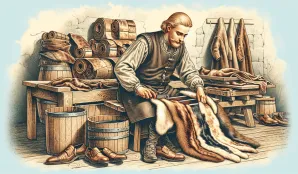
Fur leather processor salary
Latest available salary statistics are for 2025. Compare average pay, salary range and related job listings.
34 100 - 34 100 SEK / month
Hantverksyrken
Related tools
Salary progression Fur leather processor
What does a fur skin preparer do? – Tasks and work environment
A fur skin preparer works with treating and refining animal hides and pelts for use in the textile and fashion industries. The tasks include cleaning, preparing, and processing the skin to achieve the desired quality and appearance. The process may involve chemical treatments, stretching, drying, and dyeing of pelts. Work is often carried out in small workshops or industrial facilities where modern machines and traditional craftsmanship methods are combined. The work environment can vary, but it often involves physical work, moisture, and contact with various chemicals.
Salary development over time
The profession of fur skin preparer has shown a clear increase in wages in recent years. In 2022, the average salary was 28,600 SEK per month, increasing to 33 300 SEK in 2023. The latest data from 2024 shows a further rise to 34 100 SEK, which represents a wage increase of approximately 16.4% over three years. This positive trend can partly be explained by increased demand for artisanal and specialized professions and a reduced supply of experienced fur skin preparers. Industry development is also influenced by market interest in sustainable craftsmanship and unique materials, which has helped strengthen the profession’s wage position.
Fur skin preparer salary – comprehensive overview
- Average salary: 34 100 SEK/month
- Lowest/Highest salary: Data unavailable
- Hourly wage: 200 SEK
- Gender differences: Men earn 34 000 SEK; data on women is unavailable
- Regional differences: Specific regional differences are lacking
Education and qualifications
To work as a fur skin preparer, a secondary education in crafts is usually required, preferably with a focus on textiles or leather. Many learn the profession through apprenticeships or as trainees in workshop environments, as traditional knowledge and craftsmanship are central. Further education, short courses, or specialized training in skin and pelt handling can be advantageous.
- Secondary education: Craft programs with a focus on textiles/leather (3 years)
- Practical training or apprenticeship: Common for gaining work experience
- Short vocational courses: Available via folk high schools or industry organizations
- Prerequisites: Interest in crafts and attention to detail
- Tip: Applying for internships with established fur tailors can provide valuable contacts
Although fur skin preparer is a traditional craft profession, today it involves advanced technology and modern machinery. Combining classic craftsmanship with digital tools and sustainable methods has become increasingly important, especially to meet demands for environmentally friendly production and high quality.
Common benefits and compensations
Fur skin preparers often have access to benefits such as collective agreement-based occupational pensions, wellness allowances, and sometimes work clothing. In some cases, further training or opportunities to participate in fairs and industry events are offered. Other compensations may include overtime pay for working unsociable hours and workplace insurance.
Competition and challenges
The profession of fur skin preparer is a narrow occupational group where competition for jobs can vary significantly depending on region and economic conditions. Since the number of trained professionals is limited and many workplaces are small businesses or workshops, access to permanent positions can be limited. At the same time, the low competition in some areas means that in-demand specialists have good prospects for employment. However, the industry faces challenges related to sustainability, environmental requirements, and changing consumer behaviors, which require constant adaptation and innovation.
Tips for those who want to become a fur skin preparer
To succeed as a fur skin preparer, it’s good to combine precision with a genuine interest in crafts and materials. Patience and perseverance are important, as the work often requires accuracy and multiple steps. Practical experience is valuable, so seek internships or apprenticeships to develop your skills. Creativity can be an asset when solving problems or developing new techniques, and the ability to collaborate is important in workshop environments where teamwork is common. Staying updated on new materials and sustainable methods can also increase your chances of success and growth in the profession.
Key facts about Fur Skin Preparers
- Education level: Secondary education with a craft focus
- Work environment: Workshop or small industry, often physically demanding
- Typical employment: Full-time or hourly employment
- Demand: 341 available jobs within the profession (May 2024)
- Special skills: Craftsmanship and material knowledge
Career paths and future prospects
After a few years in the profession, a fur skin preparer can gain specialized expertise in specific treatment techniques or take on greater responsibility as a supervisor. Some choose to start their own business or specialize in exclusive products and custom work. According to the Swedish Public Employment Service, no separate assessment is made for the profession due to limited data, but within the profession group, there are about 341 available jobs, indicating some demand. Future prospects are influenced by industry development in sustainability and consumers’ increasing interest in unique, handcrafted products.
Frequently asked questions about Fur Skin Preparers
- What does a fur skin preparer earn?
- A fur skin preparer has an average salary of 34 100 SEK per month. - What is the hourly wage for a fur skin preparer?
- The hourly wage is on average 200 SEK. - What education is required to become a fur skin preparer?
- Secondary education in crafts, preferably with a focus on textiles or leather, is most common. - How is the job market for fur skin preparers?
- There is some demand, with approximately 341 available jobs within the profession in May 2024. - Are there regional salary differences?
- Specific information about regional salary differences for fur skin preparers is lacking. - What personal qualities are important in this profession?
- Attention to detail, patience, interest in crafts, and knowledge of materials are highly valued.

Salary distributed by age and sector
| Age | Base salary | Monthly salary | |
|---|---|---|---|
| Snitt | 34100 kr | 34100 kr |
| Age | Base salary | Monthly salary | |
|---|---|---|---|
| Snitt | 34100 kr | 34100 kr |
| Age | Base salary | Monthly salary | |
|---|---|---|---|
| Snitt | 34100 kr | 34100 kr |
| Age | Base salary | Monthly salary | |
|---|---|---|---|
| Snitt | 33900 kr | 34000 kr |
| Age | Base salary | Monthly salary | |
|---|---|---|---|
| Snitt | 33900 kr | 34000 kr |
| Age | Base salary | Monthly salary | |
|---|---|---|---|
| Snitt | 33900 kr | 34000 kr |

About the data
All information displayed on this page is based on data from the Swedish Central Bureau of Statistics (SCB), the Swedish Tax Agency and the Swedish employment agency. Learn more about our data and data sources here.
All figures are gross salaries, meaning salaries before tax. The average salary, or mean salary, is calculated by adding up the total salary for all individuals within the profession and dividing it by the number of individuals. For specific job categories, we have also considered various criteria such as experience and education.
Profession Fur leather processor has the SSYK code 7534, which we use to match against the SCB database to obtain the latest salary statistics.
-

Orthotist/Prosthetist Position at Ottobock Care in Solna
Leather craftsmen and shoemakers
Sat, 30 May 2026 - 02:15 -
Orthopedic Technical Patient Receptionist in Jönköping
Leather craftsmen and shoemakers
Wed, 20 May 2026 - 22:43
Compare salary, work tasks and job outlook in adjacent occupations to find roles with similar skills or pay levels.
-

Average salary: 34 000 SEK/month • Hantverksyrken
Musical instrument makers and other artisans
Compare with Fur leather processor
Tue, 14 Jul 2026 - 07:16 -

Average salary: 34 000 SEK/month • Hantverksyrken
Musical instrument makers and other artisans
Compare with Fur leather processor
Mon, 13 Jul 2026 - 16:47 -

Average salary: 40 900 SEK/month • Hantverksyrken
Precision mechanics
Compare with Fur leather processor
Tue, 14 Jul 2026 - 07:12 -

Fine mechanic, assembler salary
Average salary: 40 900 SEK/month • Hantverksyrken
Precision mechanics
Compare with Fur leather processor
Tue, 14 Jul 2026 - 07:16 -

Average salary: 32 802 SEK/month • Hantverksyrken
Seamstresses
Compare with Fur leather processor
Sat, 11 Jul 2026 - 00:10 -

Average salary: 36 738 SEK/month • Hantverksyrken
Gold and silversmiths
Compare with Fur leather processor
Tue, 14 Jul 2026 - 08:00


