- Salary statistics
- Fitter, rubber products salary
Fitter, rubber products salary
Latest available salary statistics are for 2025. Compare average pay, salary range and related job listings.
32 100 - 35 800 SEK / month
Women earn 95% of what men do.
Industriell tillverkning
Related tools
Salary progression Fitter, rubber products
What does an installer of rubber products do? – Tasks and work environment
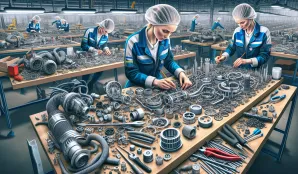
An installer of rubber products mainly works with assembling, joining, and inspecting rubber-based components, often in industrial manufacturing. Tasks can include processing raw materials, performing quality checks, and handling machines and tools used to connect rubber parts. The work is often carried out in factories or workshops with high demands for precision, safety, and following clear instructions. The environment is typically industrial with repetitive tasks, but can also vary depending on the product and production line.
Salary development over time
The salary for installers of rubber products has steadily increased over the past three years. In 2022, the average salary was 29,600 SEK per month, rising to 32 700 SEK in 2023 and further to 33 500 SEK in 2024. This represents a total increase of approximately 10.5% during this period. This development reflects a generally increased demand for industrial workers and a need to attract and retain skilled personnel in a sector where technological development and quality demands are constantly rising. The salary increase can also be linked to inflation and the industry’s desire to offer competitive conditions during recruitment challenges.
Installer of rubber products salary – comprehensive overview
- Average salary: 33 500 SEK/month
- Lowest salary: 29,700 SEK/month
- Highest salary: 35,600 SEK/month
- Average salary men: 33 900 SEK/month
- Average salary women: 32 200 SEK/month
- Women’s share of men’s salary: 95%
- Hourly wage (average): 196 SEK
- Regional differences: Slight variations occur depending on labor market conditions and industrial presence.
Education and qualifications
To work as an installer of rubber products, usually no higher education is required, but a high school diploma with a focus on industry or technology is highly advantageous. Many employers offer introductory training on-site, but practical experience and technical understanding are major benefits. Some tasks may require certifications or specific safety training.
- High school education: Industrial technology programs, 3 years
- Certifications: Occupational safety training and safety courses may be required
- Internship: Opportunities for internships or trainee periods are often available upon employment
- Prerequisites: Good knowledge of Swedish and mathematics
- Self-study: Opportunities to deepen knowledge in materials and quality control via online courses
Many installers of rubber products quickly develop a very good sense for materials and can often determine quality and defect-free products simply by feeling and bending them with their hands. This tactile sense is hard to replace with machines and makes the profession unique in the industry.
Common benefits and compensations
Installers of rubber products are often offered collective agreement benefits such as occupational pension, wellness allowances, and sometimes subsidized lunches or work clothing. Shift and overtime compensation are common for work during inconvenient hours, and opportunities for further training or skills development are typical in larger companies.
Competition and challenges
The profession is characterized by high demand but also a paradoxical situation where there are both recruitment difficulties and relatively high unemployment within the group. Competition for the most attractive positions can be fierce, especially in regions with a strong industrial presence. Technological changes and automation impose increased demands for flexibility and skills development. The ability to quickly adapt to new work methods and machines is a key factor for long-term job security. The work environment can be demanding, with monotonous tasks and sometimes physically strenuous work, requiring endurance and accuracy.
Tips for those who want to become an installer of rubber products
To succeed as an installer of rubber products, it is good to be meticulous and have good finger dexterity, as the work often requires handling small details with precision. Being flexible and able to quickly adapt to new machines and tasks is a big advantage, especially in a sector where technology develops rapidly. Cooperation skills facilitate work in production lines where teamwork is central, and reliability is highly valued since quality and delivery security are crucial. Showing initiative and willingness to learn new tasks can lead to more responsibilities and faster development. Patience is a trait often needed for repetitive tasks, and good physical endurance can be necessary during longer shifts. Finally, having an eye for detail and being able to work independently when required is always valuable.
Key facts about Installer of rubber products
- Education level: High school diploma, often industrial technology programs
- Work environment: Industrial setting with repetitive and physical tasks
- Common work form: Shift work at factory or workshop
- Demand: Great opportunities for employment according to the Employment Service
- Special skills: Material knowledge and quality control
Career paths and future prospects
After three to five years as an installer of rubber products, opportunities often open for more qualified roles, such as supervisor, production technician, or quality inspector. Some choose to further their education in automation or production technology to advance further in the industry. The Employment Service assesses that job opportunities are plentiful and that the demand for installers of metal, rubber, and plastic products will remain unchanged over five years. Despite some recruitment difficulties, there are many vacancies, providing good prospects for both recent graduates and experienced installers to find work in the profession.
Frequently asked questions about Installer of rubber products
- What does a Installer of rubber products earn?
- The average salary is 33 500 SEK per month, with variations between 29,700 SEK and 35,600 SEK depending on experience and sector. - What education is required to become an installer of rubber products?
- High school education with an industrial focus is common, but introductory training is often provided at the workplace. - Are there gender differences in salary?
- Yes, women earn on average 95% of men's salaries in the profession. - What are the future prospects like?
- Demand is high and expected to remain unchanged over the next five years according to the Employment Service. - What personal qualities are important?
- Meticulousness, teamwork ability, and dexterity are particularly important for success. - What is the most common work environment?
- Work primarily takes place in industrial environments, often with shift work and some monotonous tasks. - Are there opportunities for further education?
- Yes, many employers offer training in quality control, safety, and production technology.

Salary distributed by age and sector
| Age | Base salary | Monthly salary | |
|---|---|---|---|
| 18-24 | 97% | 29800 kr | 30900 kr |
| 25-34 | 99% | 32200 kr | 33200 kr |
| 35-44 | 94% | 32500 kr | 33400 kr |
| 45-54 | 98% | 33100 kr | 33900 kr |
| 55-64 | 89% | 34600 kr | 35100 kr |
| Snitt | 95% | 32700 kr | 33500 kr |
| Age | Base salary | Monthly salary | |
|---|---|---|---|
| 18-24 | 97% | 29800 kr | 30900 kr |
| 25-34 | 99% | 32200 kr | 33200 kr |
| 35-44 | 94% | 32500 kr | 33400 kr |
| 45-54 | 98% | 33100 kr | 33900 kr |
| 55-64 | 89% | 34600 kr | 35100 kr |
| Snitt | 95% | 32700 kr | 33500 kr |
| Age | Base salary | Monthly salary | |
|---|---|---|---|
| 18-24 | 97% | 29800 kr | 30900 kr |
| 25-34 | 99% | 32200 kr | 33200 kr |
| 35-44 | 94% | 32500 kr | 33400 kr |
| 45-54 | 98% | 33100 kr | 33900 kr |
| 55-64 | 89% | 34600 kr | 35100 kr |
| Snitt | 95% | 32700 kr | 33500 kr |
| Age | Base salary | Monthly salary | |
|---|---|---|---|
| 18-24 | 97% | 30100 kr | 31100 kr |
| 25-34 | 99% | 32300 kr | 33200 kr |
| 35-44 | 94% | 33000 kr | 33900 kr |
| 45-54 | 98% | 33300 kr | 34100 kr |
| 55-64 | 89% | 35500 kr | 35900 kr |
| Snitt | 95% | 33100 kr | 33900 kr |
| Age | Base salary | Monthly salary | |
|---|---|---|---|
| 18-24 | 97% | 30100 kr | 31100 kr |
| 25-34 | 99% | 32300 kr | 33200 kr |
| 35-44 | 94% | 33000 kr | 33900 kr |
| 45-54 | 98% | 33300 kr | 34100 kr |
| 55-64 | 89% | 35500 kr | 35900 kr |
| Snitt | 95% | 33100 kr | 33900 kr |
| Age | Base salary | Monthly salary | |
|---|---|---|---|
| 18-24 | 97% | 30100 kr | 31100 kr |
| 25-34 | 99% | 32300 kr | 33200 kr |
| 35-44 | 94% | 33000 kr | 33900 kr |
| 45-54 | 98% | 33300 kr | 34100 kr |
| 55-64 | 89% | 35500 kr | 35900 kr |
| Snitt | 95% | 33100 kr | 33900 kr |
| Age | Base salary | Monthly salary | |
|---|---|---|---|
| 18-24 | 97% | 29000 kr | 30200 kr |
| 25-34 | 99% | 31700 kr | 32800 kr |
| 35-44 | 94% | 31200 kr | 31900 kr |
| 45-54 | 98% | 32300 kr | 33300 kr |
| 55-64 | 89% | 31200 kr | 32000 kr |
| Snitt | 95% | 31300 kr | 32200 kr |
| Age | Base salary | Monthly salary | |
|---|---|---|---|
| 18-24 | 97% | 29000 kr | 30200 kr |
| 25-34 | 99% | 31700 kr | 32800 kr |
| 35-44 | 94% | 31200 kr | 31900 kr |
| 45-54 | 98% | 32300 kr | 33300 kr |
| 55-64 | 89% | 31200 kr | 32000 kr |
| Snitt | 95% | 31300 kr | 32200 kr |
| Age | Base salary | Monthly salary | |
|---|---|---|---|
| 18-24 | 97% | 29000 kr | 30200 kr |
| 25-34 | 99% | 31700 kr | 32800 kr |
| 35-44 | 94% | 31200 kr | 31900 kr |
| 45-54 | 98% | 32300 kr | 33300 kr |
| 55-64 | 89% | 31200 kr | 32000 kr |
| Snitt | 95% | 31300 kr | 32200 kr |

About the data
All information displayed on this page is based on data from the Swedish Central Bureau of Statistics (SCB), the Swedish Tax Agency and the Swedish employment agency. Learn more about our data and data sources here.
All figures are gross salaries, meaning salaries before tax. The average salary, or mean salary, is calculated by adding up the total salary for all individuals within the profession and dividing it by the number of individuals. For specific job categories, we have also considered various criteria such as experience and education.
Profession Fitter, rubber products has the SSYK code 8213, which we use to match against the SCB database to obtain the latest salary statistics.
-

Sunscreen Installer at Primetex in Jönköping
Assemblers, metal, rubber and plastic products
Mon, 13 Jul 2026 - 23:52 -

Fine Assembler for Aimpoint in Malmö
Assemblers, metal, rubber and plastic products
Mon, 13 Jul 2026 - 23:52 -

Technician for Electromechanical Products - Hughes Power System AB
Assemblers, metal, rubber and plastic products
Mon, 13 Jul 2026 - 21:25 -

Installer for Cable Laying, Step Assembly, and Metalwork
Assemblers, metal, rubber and plastic products
Mon, 13 Jul 2026 - 21:06 -

Looking for industrial jobs in Töcksfors or Årjäng? Apply now!
Assemblers, metal, rubber and plastic products
Mon, 13 Jul 2026 - 21:05
Compare salary, work tasks and job outlook in adjacent occupations to find roles with similar skills or pay levels.
-
Tool technician, tool maker salary
Average salary: 37 900 SEK/month • Industriell tillverkning
Toolmakers
Compare with Fitter, rubber products
Tue, 14 Jul 2026 - 10:09 -

Machine operator, glass wool salary
Average salary: 36 900 SEK/month • Industriell tillverkning
Other process and machine operators
Compare with Fitter, rubber products
Tue, 14 Jul 2026 - 10:05 -

Average salary: 34 200 SEK/month • Industriell tillverkning
Machine operators, plastics industry
Compare with Fitter, rubber products
Tue, 14 Jul 2026 - 07:11 -

Average salary: 36 900 SEK/month • Industriell tillverkning
Other process and machine operators
Compare with Fitter, rubber products
Tue, 14 Jul 2026 - 07:12 -

Average salary: 36 300 SEK/month • Industriell tillverkning
Machine setters and machine operators, metal work
Compare with Fitter, rubber products
Tue, 14 Jul 2026 - 03:57 -

Stencil manufacturer, screen printing salary
Average salary: 34 600 SEK/month • Industriell tillverkning
Printers
Compare with Fitter, rubber products
Tue, 14 Jul 2026 - 08:18


