- Salary statistics
- Machine operator, metal surface treatment salary
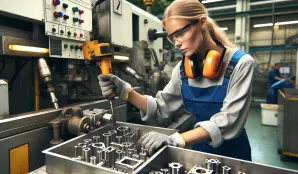
Machine operator, metal surface treatment salary
Latest available salary statistics are for 2025. Compare average pay, salary range and related job listings.
33 300 - 37 200 SEK / month
Women earn 91% of what men do.
Industriell tillverkning
Related tools
Salary progression Machine operator, metal surface treatment
What does a machine operator in metal surface treatment do? – Tasks and work environment
A machine operator in metal surface treatment primarily handles, monitors, and adjusts machines that treat metal surfaces. Tasks often include preparing materials, setting machine parameters, checking processes, and quality assurance of the final product. Processes may include galvanization, anodizing, painting, or other surface treatments depending on the type of metal and end product. The work is typically performed in industrial environments where safety regulations are crucial and where the work environment is often characterized by high pace, noise, and sometimes high temperatures. Precision and responsibility are essential to ensure products meet quality standards and that machines operate smoothly without disruptions.
Wage development over time
The salary for machine operators in metal surface treatment has shown a clear upward trend in recent years. In 2022, the average salary was 31,100 SEK per month, increasing in 2023 to 35 200 SEK and further to 35,200 SEK in 2024. This represents a total wage increase of over 13% in three years, which is a relatively strong development compared to many other industrial sectors. The wage increase can largely be explained by increased demand for skilled operators, technological changes requiring higher skills, and general wage inflation within the industry. However, gender differences persist, with women generally earning lower wages than men, which also influences the overall wage development within the profession.
Machine operator, metal surface treatment salary – full overview
- Average salary: 35,200 SEK/month
- Lowest salary: 32,400 SEK/month (woman)
- Highest salary: 36,200 SEK/month (man in regional sector)
- Hourly wage (average): 212 SEK
- Women’s salary as a percentage of men’s: 91%
- Regional differences: The highest salaries are found within the regional sector
Education and qualifications
The typical entry route into the profession of machine operator in metal surface treatment is through high school programs in industry or engineering, often with a focus on production or mechanical engineering. Practical experience in industrial environments is highly valued, and many employers prefer candidates who have completed internships or traineeships. For some specialized roles, certifications in machine safety or specific surface treatment methods may be required. Qualification requirements can vary depending on the employer, but basic technical understanding and proficiency in Swedish are always advantageous.
- High school education: Industrial technology programs, 3 years
- Internship/Traineeship: Common, often 6–12 months
- Certifications: For example, hot work, work environment/lifting
- Prerequisites: Technical interest, precision, Swedish language skills
- Tips: Choose specialization in production technology or automation for more opportunities
Working with metal surface treatment often means following the entire process from raw material to finished product, providing a unique insight into various aspects of industry. Many operators report that the variety of tasks and the opportunity to work with both technology and quality assurance make the profession especially stimulating.
Common benefits and compensations
Machine operators in metal surface treatment are often offered benefits such as shift and overtime allowances, wellness contributions, work clothing, and sometimes bonuses linked to production or quality. Occupational pension schemes and insurance coverage are standard in most industry companies, and some workplaces provide further training or certification support to promote employee development.
Competition and challenges
The competition for jobs as a machine operator in metal surface treatment varies depending on region and economic conditions. Despite the large number of vacancies, currently around 1437 according to recent data, it is important to have the right technical skills and experience to stand out. Challenges in the profession often include quickly adapting to new technology and changing production demands, as well as maintaining high standards of quality and safety. The work environment can be demanding, with monotonous tasks and physical effort, requiring endurance and precision. Digitalization and automation are also increasing the demands for technical understanding and problem-solving skills.
Tips for those who want to become a machine operator in metal surface treatment
To succeed as a machine operator in metal surface treatment, it is beneficial to combine technical interest with precision and a sense of responsibility. Being solution-oriented helps when machine breakdowns or quality deviations occur, while patience and resilience are key qualities for handling monotonous or physically demanding tasks. Gaining practical experience early through internships or summer jobs in industry is advisable, along with further training in automation or quality assurance to open more doors. Good communication skills facilitate teamwork with colleagues and supervisors, especially in shift work. Staying updated on new technologies and machines in the field is also a success factor. Finally, demonstrating engagement and a willingness to develop is often appreciated by employers in the industry.
Key facts about machine operators in metal surface treatment
- Education level: High school diploma, often in technical or industrial programs
- Work environment: Industrial environment with shift work
- Demand: 1,437 job openings within the profession
- Special skills: Surface treatment techniques, machine handling
- Gender equality: Women earn 91% of men's wages
Career paths and future prospects
After three to five years in the role of machine operator in metal surface treatment, there are opportunities to advance to positions such as team leader, production manager, or quality technician. Further training in automation and production technology can lead to more specialized roles or supervisory positions. According to statistics from the Employment Service, it is difficult to give an exact forecast for future prospects, but currently, there are many job openings in the field. The industry is influenced by economic cycles and technological development, but demand for skilled machine operators in metal surface treatment is expected to remain stable, especially for those with broad technical skills and experience with modern production techniques.
Frequently asked questions about machine operators in metal surface treatment
- What does a machine operator in metal surface treatment earn?
- The average salary is 35,200 SEK per month, but it can vary depending on experience, region, and employer. - What education is required to become a machine operator in metal surface treatment?
- Most commonly, a high school education in industry or engineering, preferably with practical training or specialization in production and mechanical engineering. - What is the work environment like for machine operators in metal surface treatment?
- The work is usually performed in industrial environments with shift work, noise, and requirements for safety and precision. - Are there many job openings in this profession?
- Yes, currently there are 1437 job openings within the occupational group of machine operators, surface treatment. - What benefits are common for machine operators in metal surface treatment?
- Common benefits include shift allowances, wellness contributions, work clothing, and sometimes bonuses related to production or quality. - Are there wage differences between women and men in this profession?
- Yes, women earn on average 91% of men's wages in this profession. - What are the career opportunities?
- After a few years, one can advance to roles such as team leader, production manager, or quality technician, especially with further training.

Salary distributed by age and sector
| Age | Base salary | Monthly salary | |
|---|---|---|---|
| 18-24 | 29900 kr | 33900 kr | |
| 25-34 | 31700 kr | 35400 kr | |
| 35-44 | 32500 kr | 35900 kr | |
| 45-54 | 34100 kr | 37000 kr | |
| 55-64 | 33800 kr | 36500 kr | |
| Snitt | 91% | 32700 kr | 36000 kr |
| Age | Base salary | Monthly salary | |
|---|---|---|---|
| 18-24 | 29900 kr | 33900 kr | |
| 25-34 | 31700 kr | 35400 kr | |
| 35-44 | 32500 kr | 35900 kr | |
| 45-54 | 34100 kr | 37000 kr | |
| 55-64 | 33800 kr | 36500 kr | |
| Snitt | 91% | 32700 kr | 36000 kr |
| Age | Base salary | Monthly salary | |
|---|---|---|---|
| 18-24 | 29900 kr | 33900 kr | |
| 25-34 | 31700 kr | 35400 kr | |
| 35-44 | 32500 kr | 35900 kr | |
| 45-54 | 34100 kr | 37000 kr | |
| 55-64 | 33800 kr | 36500 kr | |
| Snitt | 91% | 32700 kr | 36000 kr |
| Age | Base salary | Monthly salary | |
|---|---|---|---|
| 25-34 | 31900 kr | 35700 kr | |
| 35-44 | 33000 kr | 36500 kr | |
| 45-54 | 34700 kr | 37800 kr | |
| 55-64 | 34500 kr | 37300 kr | |
| Snitt | 91% | 33200 kr | 36600 kr |
| Age | Base salary | Monthly salary | |
|---|---|---|---|
| 25-34 | 31900 kr | 35700 kr | |
| 35-44 | 33000 kr | 36500 kr | |
| 45-54 | 34700 kr | 37800 kr | |
| 55-64 | 34500 kr | 37300 kr | |
| Snitt | 91% | 33200 kr | 36600 kr |
| Age | Base salary | Monthly salary | |
|---|---|---|---|
| 25-34 | 31900 kr | 35700 kr | |
| 35-44 | 33000 kr | 36500 kr | |
| 45-54 | 34700 kr | 37800 kr | |
| 55-64 | 34500 kr | 37300 kr | |
| Snitt | 91% | 33200 kr | 36600 kr |
| Age | Base salary | Monthly salary | |
|---|---|---|---|
| Snitt | 91% | 30700 kr | 33300 kr |
| Age | Base salary | Monthly salary | |
|---|---|---|---|
| Snitt | 91% | 30700 kr | 33300 kr |
| Age | Base salary | Monthly salary | |
|---|---|---|---|
| Snitt | 91% | 30700 kr | 33300 kr |

About the data
All information displayed on this page is based on data from the Swedish Central Bureau of Statistics (SCB), the Swedish Tax Agency and the Swedish employment agency. Learn more about our data and data sources here.
All figures are gross salaries, meaning salaries before tax. The average salary, or mean salary, is calculated by adding up the total salary for all individuals within the profession and dividing it by the number of individuals. For specific job categories, we have also considered various criteria such as experience and education.
Profession Machine operator, metal surface treatment has the SSYK code 8121, which we use to match against the SCB database to obtain the latest salary statistics.
-

Part-time Job in Industry and Warehousing in Falkenberg
Machine operators, surface treatment
Thu, 9 Jul 2026 - 01:16 -

Machine Operator for Paint Factory in Arlöv
Machine operators, surface treatment
Mon, 6 Jul 2026 - 23:28 -

Operator for Production Operations – Day Shift
Machine operators, surface treatment
Mon, 6 Jul 2026 - 22:02 -

Machine Operator for Precision Industry in Northern Stockholm
Machine operators, surface treatment
Sat, 4 Jul 2026 - 01:43 -

We are hiring new employees at Press Kogyo Sweden – Oskarshamn
Machine operators, surface treatment
Fri, 3 Jul 2026 - 22:37
Compare salary, work tasks and job outlook in adjacent occupations to find roles with similar skills or pay levels.
-

Average salary: 34 200 SEK/month • Industriell tillverkning
Machine operators, plastics industry
Compare with Machine operator, metal surface treatment
Tue, 14 Jul 2026 - 11:56 -

Average salary: 48 700 SEK/month • Industriell tillverkning
Process operators, stone crushing and ore processing
Compare with Machine operator, metal surface treatment
Tue, 14 Jul 2026 - 03:32 -

Steel engravers, print media salary
Average salary: 35 300 SEK/month • Industriell tillverkning
Prepress technicians
Compare with Machine operator, metal surface treatment
Tue, 14 Jul 2026 - 13:14 -

Average salary: 32 200 SEK/month • Industriell tillverkning
Other machine operators, textile, leather and leather industry
Compare with Machine operator, metal surface treatment
Mon, 13 Jul 2026 - 11:22 -

Average salary: 28 600 SEK/month • Industriell tillverkning
Machine operators, bleaching, dyeing and washing
Compare with Machine operator, metal surface treatment
Tue, 14 Jul 2026 - 13:55 -

Average salary: 33 800 SEK/month • Industriell tillverkning
Bookbinders etc.
Compare with Machine operator, metal surface treatment
Tue, 14 Jul 2026 - 13:55


