- Salary statistics
- Lighting designer salary
Lighting designer salary
Latest available salary statistics are for 2025. Compare average pay, salary range and related job listings.
37 700 - 43 000 SEK / month
Women earn 94% of what men do.
Kultur, media, design
Related tools
Salary progression Lighting designer
What does a lighting designer do? – Tasks and work environment
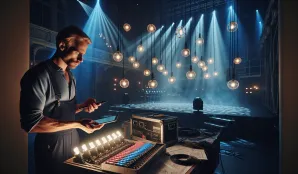
Lighting designers work on creating and planning lighting setups for various environments and events, such as theater, concerts, TV productions, exhibitions, and public spaces. Tasks include analyzing the local needs, creating lighting plans, selecting technical equipment, and coordinating lighting with other creative disciplines like scenography and sound. The lighting designer uses both technical and aesthetic knowledge to enhance atmosphere, function, and experience. The work environment varies and may include office work, stage work, as well as participation in installations and rehearsals, often under time pressure and with irregular hours.
Salary development over time
Lighting designers have seen a clear increase in salary over the past three years. In 2022, the average salary was 35,100 SEK per month. During 2023, this increased to 38 600, representing growth of just over 1.1%. Between 2023 and 2024, there was a more significant rise to 39 700, which means an increase of nearly 8.7%. This positive trend is linked to increased demand for stage and event productions, as well as more projects requiring advanced lighting design. Increased professionalism within the industry and higher technical competence demands have also pushed salary levels upward. At the same time, differences based on gender, employer, and region exist.
Lighting designer salary – comprehensive overview
- Average salary: 39 700 SEK/month
- Lowest salary: 33,600 SEK/month (female), 36,100 SEK/month (male)
- Highest salary: 40,300 SEK/month (female), 43,700 SEK/month (male)
- Hourly wage: 232 SEK
- Gender differences: Women earn 94% of what men do (37 800 SEK/month vs 40 000 SEK/month)
- Regional differences: Salaries may vary depending on location and employer, but exact statistics are unavailable
Education and qualifications
To work as a lighting designer, a post-secondary education in lighting design, performing arts, or related fields is usually required. The education combines technical knowledge with artistic expression and often includes internships or project work. Many employers also seek documented experience from stage productions or similar environments, as well as good collaboration skills and creativity.
- Formal education: Post-secondary education in lighting design, often 2–3 years
- Certifications: Courses in lighting control and digital lighting boards can be advantageous
- Internships: Workplace internships or trainee programs provide valuable experience
- Prerequisites: High school diploma, often with a focus on technology, aesthetics, or media
- Self-study: Opportunities for further education via online courses and workshops
- Tips for choosing: Combine technical and artistic subjects for broad competence
Lighting designers often work closely with directors, scenographers, and technicians – teamwork and communication are therefore as important as artistic expression. Many lighting designers have opportunities to work internationally and on large events, opening doors to exciting projects and networks.
Common benefits and compensations
Lighting designers are often offered benefits such as overtime pay for evening and weekend work, flexible hours, and sometimes wellness stipends. Larger theaters and production companies may also provide further training, skills development, and access to modern technical equipment. Public sector employers sometimes offer extra vacation days or pension contributions.
Competition and challenges
The competition for lighting designer positions can be tough, especially at larger stages, TV stations, and event companies. The profession is relatively niche, and the number of trained lighting designers is limited, which can lead to high workload and flexibility demands. Technological innovations and digitalization require continuous further education. Seasonal variations occur, with busy periods around productions and events. Many lighting designers work as freelancers, which can mean uncertainty regarding employment and income.
Tips for aspiring lighting designers
To succeed as a lighting designer, it is good to combine technical interest with creativity and a willingness to collaborate. Developing a sense for color, form, and spatiality can be crucial for creating unique lighting environments, and curiosity helps keep you updated on new technology. Good organizational skills and stress resilience facilitate work under tight deadlines and complex projects. Early internships provide valuable contacts, and thoroughness and reliability are appreciated by employers. Finally, it is important to be communicative and attentive to understand different wishes and visions in the productions you participate in.
Key facts about Lighting Designer
- Education level: Post-secondary education (2–3 years)
- Work environment: Varied – studio, stage, office, and events
- Work form: Both permanent employment and freelance
- Demand: Around 620 job openings within the profession in 2024
- Gender distribution: Women earn 94% of men's salaries
Career paths and future prospects
After 3–5 years in the profession, a lighting designer can take on more advanced assignments, such as chief lighting technician, project manager for larger productions, or specialize in architectural lighting. Some choose to start their own business or work internationally. Projections from the Employment Service show that there is insufficient data for an exact assessment of future prospects for lighting designers, but within the group of lighting, sound, and stage technicians, there were 620 job openings in 2024. Demand is influenced by the development of the events industry, public sector, and cultural investments, and employment opportunities are considered stable but competitive.
Common questions about Lighting Designer
- What does a lighting designer earn?
- A lighting designer has an average salary of 39 700 SEK per month, with variation depending on experience, sector, and gender. - What education is required to become a lighting designer?
- Typically, a post-secondary education in lighting design or performing arts, often 2–3 years long, along with practical experience. - Are there salary differences between men and women?
- Yes, women earn on average 94% of what men do within the profession. - What is the job market like for lighting designers?
- There are approximately 620 job openings within the profession, but competition can be tough, especially at larger workplaces. - What personal qualities are important?
- Creativity, technical interest, teamwork skills, and stress resilience are central qualities for the profession. - Can you work internationally as a lighting designer?
- Yes, there are good opportunities to work on international projects and events. - What development opportunities are available?
- After a few years of experience, you can advance to roles such as project manager, chief lighting technician, or specialize in specific areas.

Salary distributed by age and sector
| Age | Base salary | Monthly salary | |
|---|---|---|---|
| 25-34 | 34800 kr | 35500 kr | |
| 35-44 | 37300 kr | 38100 kr | |
| 45-54 | 44000 kr | 45100 kr | |
| 55-64 | 43500 kr | 43900 kr | |
| Snitt | 94% | 38900 kr | 39700 kr |
| Age | Base salary | Monthly salary | |
|---|---|---|---|
| 25-34 | 36800 kr | 36800 kr | |
| 35-44 | 100% | 38800 kr | 39000 kr |
| 45-54 | 94% | 40000 kr | 40500 kr |
| 55-64 | 112% | 39800 kr | 40000 kr |
| Snitt | 100% | 39400 kr | 39700 kr |
| Age | Base salary | Monthly salary | |
|---|---|---|---|
| 25-34 | 36800 kr | 36800 kr | |
| 35-44 | 100% | 38800 kr | 39000 kr |
| 45-54 | 94% | 40000 kr | 40500 kr |
| 55-64 | 112% | 39800 kr | 40000 kr |
| Snitt | 100% | 39400 kr | 39700 kr |
| Age | Base salary | Monthly salary | |
|---|---|---|---|
| 25-34 | 34700 kr | 35400 kr | |
| 35-44 | 37300 kr | 38100 kr | |
| 45-54 | 44100 kr | 45300 kr | |
| 55-64 | 43700 kr | 44100 kr | |
| Snitt | 94% | 38900 kr | 39700 kr |
| Age | Base salary | Monthly salary | |
|---|---|---|---|
| 25-34 | 34700 kr | 35400 kr | |
| 35-44 | 37300 kr | 38100 kr | |
| 45-54 | 44100 kr | 45300 kr | |
| 55-64 | 43700 kr | 44100 kr | |
| Snitt | 94% | 38900 kr | 39700 kr |
| Age | Base salary | Monthly salary | |
|---|---|---|---|
| 25-34 | 34600 kr | 35300 kr | |
| 35-44 | 37100 kr | 37800 kr | |
| 45-54 | 44500 kr | 45700 kr | |
| 55-64 | 43500 kr | 43900 kr | |
| Snitt | 94% | 39200 kr | 40000 kr |
| Age | Base salary | Monthly salary | |
|---|---|---|---|
| 35-44 | 100% | 38800 kr | 39000 kr |
| 45-54 | 94% | 40200 kr | 40800 kr |
| 55-64 | 112% | 39300 kr | 39500 kr |
| Snitt | 100% | 39400 kr | 39800 kr |
| Age | Base salary | Monthly salary | |
|---|---|---|---|
| 35-44 | 100% | 38800 kr | 39000 kr |
| 45-54 | 94% | 40200 kr | 40800 kr |
| 55-64 | 112% | 39300 kr | 39500 kr |
| Snitt | 100% | 39400 kr | 39800 kr |
| Age | Base salary | Monthly salary | |
|---|---|---|---|
| 25-34 | 34600 kr | 35300 kr | |
| 35-44 | 37000 kr | 37800 kr | |
| 45-54 | 44700 kr | 45900 kr | |
| 55-64 | 43700 kr | 44200 kr | |
| Snitt | 94% | 39200 kr | 40000 kr |
| Age | Base salary | Monthly salary | |
|---|---|---|---|
| 25-34 | 34600 kr | 35300 kr | |
| 35-44 | 37000 kr | 37800 kr | |
| 45-54 | 44700 kr | 45900 kr | |
| 55-64 | 43700 kr | 44200 kr | |
| Snitt | 94% | 39200 kr | 40000 kr |
| Age | Base salary | Monthly salary | |
|---|---|---|---|
| Snitt | 94% | 37000 kr | 37800 kr |
| Age | Base salary | Monthly salary | |
|---|---|---|---|
| 25-34 | 36900 kr | 36900 kr | |
| 35-44 | 100% | 39000 kr | 39000 kr |
| 45-54 | 94% | 38400 kr | 38400 kr |
| 55-64 | 112% | 44400 kr | 44400 kr |
| Snitt | 100% | 39600 kr | 39600 kr |
| Age | Base salary | Monthly salary | |
|---|---|---|---|
| 25-34 | 36900 kr | 36900 kr | |
| 35-44 | 100% | 39000 kr | 39000 kr |
| 45-54 | 94% | 38400 kr | 38400 kr |
| 55-64 | 112% | 44400 kr | 44400 kr |
| Snitt | 100% | 39600 kr | 39600 kr |
| Age | Base salary | Monthly salary | |
|---|---|---|---|
| Snitt | 94% | 36900 kr | 37700 kr |
| Age | Base salary | Monthly salary | |
|---|---|---|---|
| Snitt | 94% | 36900 kr | 37700 kr |

About the data
All information displayed on this page is based on data from the Swedish Central Bureau of Statistics (SCB), the Swedish Tax Agency and the Swedish employment agency. Learn more about our data and data sources here.
All figures are gross salaries, meaning salaries before tax. The average salary, or mean salary, is calculated by adding up the total salary for all individuals within the profession and dividing it by the number of individuals. For specific job categories, we have also considered various criteria such as experience and education.
Profession Lighting designer has the SSYK code 3522, which we use to match against the SCB database to obtain the latest salary statistics.
-

Computing Technician - Audiovisual (AV) & Conference Infrastructure
Lighting, sound and stage technicians
Fri, 10 Jul 2026 - 22:27 -
AV Technician Wanted at Svensk Kulturfilm Konferensteknik
Lighting, sound and stage technicians
Thu, 9 Jul 2026 - 02:08 -

Technician for Audio & Video Team in Linköping
Lighting, sound and stage technicians
Thu, 9 Jul 2026 - 01:54 -

Exhibition Technician at Östergötland Museum
Lighting, sound and stage technicians
Fri, 3 Jul 2026 - 22:35 -

Stage Technician at Astrid Lindgren's World
Lighting, sound and stage technicians
Fri, 3 Jul 2026 - 01:52
Compare salary, work tasks and job outlook in adjacent occupations to find roles with similar skills or pay levels.
-

Average salary: 40 600 SEK/month • Kultur, media, design
Translators, interpreters and linguists etc.
Compare with Lighting designer
Wed, 15 Jul 2026 - 01:37 -

Average salary: 41 986 SEK/month • Kultur, media, design
Choreographers and dancers
Compare with Lighting designer
Wed, 15 Jul 2026 - 03:56 -

Average salary: 38 900 SEK/month • Kultur, media, design
Librarians and archivists
Compare with Lighting designer
Tue, 14 Jul 2026 - 17:13 -

Average salary: 41 986 SEK/month • Kultur, media, design
Visual artists etc.
Compare with Lighting designer
Wed, 15 Jul 2026 - 04:34 -

Singer, classical music salary
Average salary: 47 400 SEK/month • Kultur, media, design
Musicians, singers and composers
Compare with Lighting designer
Tue, 14 Jul 2026 - 18:04 -

Industrial photographer salary
Average salary: 38 500 SEK/month • Kultur, media, design
Photographers
Compare with Lighting designer
Tue, 14 Jul 2026 - 13:58


