- Salary statistics
- Puppet player salary
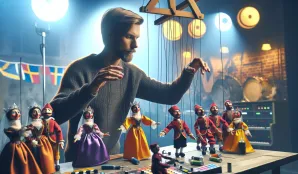
Puppet player salary
Latest available salary statistics are for 2025. Compare average pay, salary range and related job listings.
35 600 - 35 600 SEK / month
Women earn 100% of what men do.
Kultur, media, design
Related tools
Salary progression Puppet player
What does a Puppet Performer do? – Tasks and work environment
A puppet performer is responsible for bringing puppets and figures to life on stage or in front of the camera, often within theater, film, TV, and events. Tasks include manipulating puppets with hands, strings, or rods, and sometimes providing voice and expression for the characters. Puppet performers often work in creative teams alongside directors, set designers, and technicians, adapting to different production needs and technical conditions. The work environment can range from traditional theater stages to TV studios and outdoor settings, with often irregular hours including evenings and weekends.
Salary development over time
Over the past three years, puppet performers have experienced a slight decline in wages. In 2022, the average salary was 36,200 SEK, which decreased in 2023 to 35 200 SEK, and further to 35,200 SEK SEK in 2024. This represents a reduction of approximately 5.5% over three years. This negative trend can partly be explained by increased competition within the cultural sector and limited demand for permanent positions. Meanwhile, the job market has expanded somewhat through new media channels, but this has not led to higher wages. Salaries are relatively equal between genders and show minor regional differences.
Puppet Performer salary – comprehensive overview
- Average salary: 35,200 SEK/month
- Lowest salary: 35,200 SEK/month
- Highest salary: 35,300 SEK/month
- Hourly wage (average): 212 SEK
- Gender differences: Women earn 35,300 SEK, men 35,200 SEK
- Regional differences: Small or non-existent
Education and qualifications
The path to becoming a puppet performer often involves theater or drama studies, but there are also specialized courses and workshops in puppet theater. Practical experience and artistic talent are crucial, and many performers develop their skills through practice, projects, and self-training. Formal educational requirements are uncommon, but a broad artistic background is advantageous.
- Theater school or drama education: 3–4 years
- Specialized courses in puppet theater: 1 semester–1 year
- Internships or traineeships: Common at established theaters
- Self-study and workshops: Recommended for skill development
- No formal eligibility requirements: Talent and experience are highly valued
Puppet performers often use their own bodies as tools to animate puppets, requiring great body control and coordination. It is common for professionals to contribute to the design and construction of puppets as well. Artistic freedom is significant, and many performers engage in their own productions or work with independent groups.
Common benefits and compensations
Puppet performers often have access to collective agreement benefits such as occupational pension, holiday pay, and insurance. Freelance performers may also receive travel allowances, per diems, and compensation for rehearsal time, depending on the scope of assignments and the organizer's policies.
Competition and challenges
The job market for puppet performers is relatively narrow, and competition for permanent positions is high. Many work as freelancers or on project basis, which requires flexibility and the ability to create their own opportunities. The need to continuously develop techniques and adapt to new forms of expression is an ongoing challenge. There is also a risk of irregular income and periods of low demand, especially during economic downturns or changes in cultural funding.
Tips for those who want to become a puppet performer
To succeed as a puppet performer, it is good to combine creativity with patience and perseverance. Training body control and finger dexterity provides advantages when handling different puppet types and techniques. Good collaboration skills are important, as work often occurs in teams with other artistic professionals. Taking initiative and participating in workshops or independent groups can open doors to new projects. Flexibility and willingness to adapt to various productions increase employment chances. Curiosity and interest in both performing arts and technology provide a solid foundation. Finally, showing engagement and passion for the profession in every opportunity is valuable.
Key facts about Puppet Performers
- Education level: Often theater school or specialized courses
- Work environment: Theater, TV studios, and tours
- Common employment form: Freelance or project-based
- Demand: Approximately 620 available positions within the profession
- Gender salary differences: Non-existent
Career paths and future prospects
After three to five years in the profession, a puppet performer can progress to more independent roles, such as director of puppet theater or leader of their own productions. Some choose to deepen their skills in pedagogy and train others in puppet techniques, while others move into roles within set design or puppet manufacturing. According to the Swedish Public Employment Service, competition remains high, but opportunities exist for those who are creative and adaptable. Future prospects are influenced by cultural funding and audience interest, but digitalization and new media channels may open up additional job opportunities.
Frequently asked questions about Puppet Performers
- What does a Puppet Performer earn?
- The average salary is 35,200 SEK per month, with minor differences between genders. - Are there gender differences in salary for Puppet Performers?
- No, women earn on average the same or slightly more than men in this profession. - Is any special education required to become a Puppet Performer?
- Formal education is not a requirement, but theater training and practical experience are highly beneficial. - What is the job market like for Puppet Performers?
- There are approximately 620 available positions within the profession, but competition is high. - In what work environments do Puppet Performers work?
- Work environments vary between theater, TV studios, tours, and events. - What is the hourly wage for a Puppet Performer?
- A part-time Puppet Performer earns an average hourly wage of 212 SEK. - What are the highest and lowest salaries for Puppet Performers?
- The highest salary is 35,300 SEK and the lowest is 35,200 SEK, with very small differences between individuals.

Salary distributed by age and sector
| Age | Base salary | Monthly salary | |
|---|---|---|---|
| 25-34 | 32500 kr | 32600 kr | |
| Snitt | 100% | 35300 kr | 35600 kr |
| Age | Base salary | Monthly salary | |
|---|---|---|---|
| 25-34 | 32500 kr | 32600 kr | |
| Snitt | 100% | 35300 kr | 35600 kr |
| Age | Base salary | Monthly salary | |
|---|---|---|---|
| 25-34 | 32500 kr | 32600 kr | |
| Snitt | 100% | 35300 kr | 35600 kr |
| Age | Base salary | Monthly salary | |
|---|---|---|---|
| Snitt | 100% | 35500 kr | 35600 kr |
| Age | Base salary | Monthly salary | |
|---|---|---|---|
| Snitt | 100% | 35500 kr | 35600 kr |
| Age | Base salary | Monthly salary | |
|---|---|---|---|
| Snitt | 100% | 35500 kr | 35600 kr |
| Age | Base salary | Monthly salary | |
|---|---|---|---|
| Snitt | 100% | 34800 kr | 35600 kr |
| Age | Base salary | Monthly salary | |
|---|---|---|---|
| Snitt | 100% | 34800 kr | 35600 kr |
| Age | Base salary | Monthly salary | |
|---|---|---|---|
| Snitt | 100% | 34800 kr | 35600 kr |

About the data
All information displayed on this page is based on data from the Swedish Central Bureau of Statistics (SCB), the Swedish Tax Agency and the Swedish employment agency. Learn more about our data and data sources here.
All figures are gross salaries, meaning salaries before tax. The average salary, or mean salary, is calculated by adding up the total salary for all individuals within the profession and dividing it by the number of individuals. For specific job categories, we have also considered various criteria such as experience and education.
Profession Puppet player has the SSYK code 3439, which we use to match against the SCB database to obtain the latest salary statistics.
-

Head of Industrial Co-operation – AEW&C / GlobalEye
Other professions in culture and entertainment
Fri, 10 Jul 2026 - 21:57 -

Program Manager Data & AI – Architecture, Security & Responsible AI
Other professions in culture and entertainment
Fri, 10 Jul 2026 - 07:31 -

Program Manager for Product Material Compliance
Other professions in culture and entertainment
Tue, 7 Jul 2026 - 21:49 -

Museum Hosts at the Museum of World Culture in Stockholm
Other professions in culture and entertainment
Fri, 3 Jul 2026 - 20:35
Compare salary, work tasks and job outlook in adjacent occupations to find roles with similar skills or pay levels.
-

Average salary: 45 500 SEK/month • Kultur, media, design
Journalists etc.
Compare with Puppet player
Mon, 13 Jul 2026 - 10:06 -

Average salary: 41 400 SEK/month • Kultur, media, design
Museum curators etc.
Compare with Puppet player
Sun, 12 Jul 2026 - 12:32 -
Average salary: 45 500 SEK/month • Kultur, media, design
Journalists etc.
Compare with Puppet player
Fri, 10 Jul 2026 - 19:49 -
Average salary: 40 600 SEK/month • Kultur, media, design
Translators, interpreters and linguists etc.
Compare with Puppet player
Tue, 14 Jul 2026 - 05:42 -

Average salary: 37 300 SEK/month • Kultur, media, design
Actors
Compare with Puppet player
Mon, 13 Jul 2026 - 16:57 -

Average salary: 47 400 SEK/month • Kultur, media, design
Musicians, singers and composers
Compare with Puppet player
Sun, 12 Jul 2026 - 15:38


