- Salary statistics
- Art weaver salary
Art weaver salary
Latest available salary statistics are for 2025. Compare average pay, salary range and related job listings.
43 692 - 41 986 SEK / month
Kultur, media, design
Related tools
Salary progression Art weaver
What does a textile artist do? – Tasks and work environment
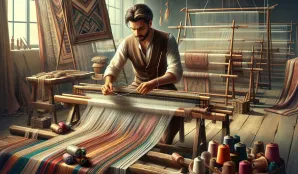
A textile artist works with creating textile artworks using traditional and modern weaving techniques. The profession includes everything from designing and planning patterns to selecting materials, colors, and textures to realize artistic visions. The work is often conducted in a personal studio or in collaboration with galleries and public institutions, where the artist can participate in exhibitions or larger projects. The environment is characterized by independence, creative creation, and a craft-focused approach, where precision and patience are central qualities.
Salary development over time
The salary for textile artists has steadily increased over the past three years. In 2022, the average salary was 36,200 SEK per month, rising to 39 779 SEK in 2023. By 2024, the salary has increased further to 41 986 SEK, which represents a total increase of about 10% during the period. This positive salary trend reflects a generally increased demand for skilled craftsmanship and artistic professions, as well as higher education levels and specialization among practitioners. However, the market is influenced by economic cycles and funding within the cultural sector, which can cause fluctuations in salary development over time.
Textile artist salary – complete overview
- Average salary: 41 986 SEK/month
- Lowest/Highest salary: Data not available
- Hourly wage: 239 SEK/hour
- Gender differences: Data not available
- Regional differences: Data not available
Education and qualifications
The path to becoming a textile artist often involves artistic education at folk high schools, vocational colleges, or universities with a focus on textiles and weaving. Practical skills and a strong artistic expression are central qualifications, and many supplement their studies with internships or self-study. Gaining experience through working in studios, participating in projects, and developing an individual artistic profile is common.
- Formal education: Artistic higher education or vocational training, typically 2–4 years
- Courses: Textile and weaving at folk high schools or art schools
- Internships: Studio work and project-based internships
- Prerequisites: Basic knowledge of textile techniques and artistic work
- Self-study: Common and recommended to develop a personal style
Many textile artists collaborate with other artists in exhibitions and public art projects, often leading to unique and innovative projects. Building networks and being active in artistic communities are therefore important parts of the profession.
Common benefits and compensations
Benefits for textile artists may include access to studio space, opportunities for grants, project support, and compensation for exhibitions. Other common benefits are flexible working hours and the possibility to work freelance or on assignments, which provides a certain degree of freedom in the work life.
Competition and challenges
The profession of textile artist is characterized by high competition, especially for grants, exhibition spaces, and public commissions. Since the work is often project-based and independent, perseverance and self-promotion are required. Uncertainty regarding permanent employment and irregular income can be challenging. At the same time, demand for unique textile art and craftsmanship remains relatively stable but varies with economic conditions and cultural investments.
Tips for aspiring textile artists
To succeed as a textile artist, it is good to have a strong artistic drive and perseverance in your creative process. Developing a personal style and daring to experiment are important to stand out in the competition, while precision and patience are necessary to handle technical aspects of weaving. Building a professional network through courses, exhibitions, and collaborations is valuable. Self-discipline and the ability to work independently are crucial, as is the willingness to continue learning and stay updated on new techniques and materials. Openness to collaborations and projects can open new opportunities and inspiration within the profession.
Key facts about Textile Artists
- Educational level: Artistic higher education or vocational training, 2–4 years
- Work environment: Own studio or project-based collaboration
- Work form: Freelance, commissions, or own business
- Demand: Approximately 620 available jobs within the profession
- Special skills: Textile techniques and artistic expression
Career paths and future prospects
After three to five years, many textile artists have established themselves with solo exhibitions, collaborations, or public art commissions. Many develop a niche in areas such as public art or design for the furniture and interior industry. The future outlook is considered difficult to assess due to limited data, according to the Swedish Public Employment Service’s forecasts for visual artists. However, the number of available jobs indicates some demand, especially for those with unique expressions and good contacts. Continued education and specialization can also lead to opportunities as educators, project managers, or curators in the art field.
Frequently asked questions about Textile Artists
- What does a textile artist earn?
- A textile artist has an average salary of 41 986 SEK per month. - How to become a textile artist?
- The path usually involves artistic education at university, folk high school, or vocational college with a focus on textiles and weaving. - What are common workplaces?
- Own studio, artist collective, public projects or collaborations with galleries and institutions are common workplaces. - Are there many jobs for textile artists?
- Within the visual arts profession, there are approximately 620 available jobs, but competition is high. - What qualities are important as a textile artist?
- Creativity, patience, precision, and independence are important for success in the profession. - What does the future look like for textile artists?
- The outlook is difficult to assess, but unique artistic expressions and broad skills provide better opportunities.

Salary distributed by age and sector

About the data
All information displayed on this page is based on data from the Swedish Central Bureau of Statistics (SCB), the Swedish Tax Agency and the Swedish employment agency. Learn more about our data and data sources here.
All figures are gross salaries, meaning salaries before tax. The average salary, or mean salary, is calculated by adding up the total salary for all individuals within the profession and dividing it by the number of individuals. For specific job categories, we have also considered various criteria such as experience and education.
Profession Art weaver has the SSYK code 2651, which we use to match against the SCB database to obtain the latest salary statistics.

Compare salary, work tasks and job outlook in adjacent occupations to find roles with similar skills or pay levels.
-

Average salary: 55 500 SEK/month • Kultur, media, design
Industrial designers
Compare with Art weaver
Tue, 14 Jul 2026 - 13:58 -
Average salary: 42 300 SEK/month • Kultur, media, design
Image and broadcast technicians
Compare with Art weaver
Tue, 14 Jul 2026 - 15:02 -

Average salary: 41 400 SEK/month • Kultur, media, design
Museum curators etc.
Compare with Art weaver
Tue, 14 Jul 2026 - 13:59 -

Average salary: 47 400 SEK/month • Kultur, media, design
Musicians, singers and composers
Compare with Art weaver
Tue, 14 Jul 2026 - 15:23 -

Average salary: 38 500 SEK/month • Kultur, media, design
Photographers
Compare with Art weaver
Mon, 13 Jul 2026 - 02:11 -

Average salary: 55 500 SEK/month • Kultur, media, design
Industrial designers
Compare with Art weaver
Tue, 14 Jul 2026 - 15:57


