- Salary statistics
- Conservator, stone salary
Conservator, stone salary
Latest available salary statistics are for 2025. Compare average pay, salary range and related job listings.
43 692 - 41 986 SEK / month
Kultur, media, design
Related tools
Salary progression Conservator, stone
What does a Conservator, stone do – tasks and work environment
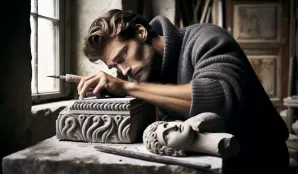
A conservator specializing in stone works to preserve, restore, and protect objects and environments made of stone material. Tasks can include cleaning and stabilizing sculptures and monuments, as well as advanced conservation of architectural details and archaeological finds. The work is often carried out in museums, churches, cultural environments, or directly on-site at culturally significant locations. The environment can range from laboratory-like indoor settings to outdoor work under varying weather conditions, requiring both precision and physical endurance.
Salary development over time
The salary for conservators within stone has increased positively over the past three years. In 2022, the average salary was 36,200 SEK per month. In 2023, this increased to 39 779 SEK, corresponding to approximately 6% growth. For 2024, the average salary has risen further to 41 986 SEK, an increase of just over 3.6% from the previous year. This trend indicates stable and steady salary growth, possibly due to increased awareness of the importance of cultural heritage preservation and the need for specialized expertise in the field. The demand for educated conservators, especially in stone, has been relatively constant, but the salary increases also reflect a generally higher demand for skilled labor within the cultural heritage sector.
Conservator, stone salary – complete overview
- Average salary: 41 986 SEK/month
- Lowest/Highest salary: Data unavailable
- Hourly wage: 239 SEK/hour
- Gender differences: Data unavailable
- Regional differences: Data unavailable
Education and qualifications
To work as a conservator focusing on stone, specialized education in conservation is required, often at the university level. The education combines theoretical knowledge of materials science, chemistry, and art history with practical skills in restoration and conservation techniques. Internships and supervised work experience are an important part of the training, as the profession demands high precision and craftsmanship.
- Formal degree: Bachelor's degree in conservation (3 years) with possible specialization in stone
- Further education: Master's program in conservation (2 years) is recommended for specialization
- Internships: Longer internships at museums or cultural heritage projects are common
- Certifications: Some employers require membership in industry organizations
- Prerequisites: Basic eligibility for higher education, often with a science or artistic focus
Many conservators working with stone have the opportunity to work on projects of great cultural-historical significance, such as restoring churches, castles, and public monuments. It is a profession where the individual’s work often leaves visible marks for future generations.
Common benefits and compensations
Common benefits for conservators within stone include wellness allowances, paid further training, and opportunities for skill development within specialized areas. Pension schemes and insurance coverage are often included, and employment within the public sector may also offer extra vacation days and flexible working hours.
Competition and challenges
The profession as a conservator specializing in stone is characterized by high competition for permanent positions, as the number of specialized roles is limited and recruitment often occurs on a project basis. Challenges can also arise from fluctuating workload and the requirement for continuous further training in new conservation methods and materials. Since the work is often carried out at culturally sensitive sites, great respect for laws and ethical guidelines is required. The availability of projects and assignments can vary depending on funding within the cultural sector and public investments in cultural heritage preservation.
Tips for those wanting to become a conservator, stone
To succeed as a conservator specializing in stone, it is good to be both analytical and meticulous, as the work requires documenting each action and adapting to unique situations. A genuine interest in cultural history and art is a significant asset, especially when unexpected restoration challenges arise. Patience and perseverance are important qualities, as conservation processes are often time-consuming and require precision. Building a network within museums and the cultural sector increases chances of projects and employment. Practical experience through internships or summer jobs provides insight and valuable credentials. A willingness to continuously upgrade skills is essential, as new techniques and materials are constantly developing. Lastly, the ability to collaborate in interdisciplinary teams and communicate results clearly is crucial.
Key facts about Conservator, stone
- Education level: Bachelor's degree in conservation (3 years), often with further specialization
- Work environment: Varied – both indoors in labs and outdoors at cultural sites
- Work format: Project-based or employment within the public sector
- Demand: Limited number of permanent positions, many temporary projects
- Special skills: Material science, restoration techniques, and documentation
Career paths and future prospects
After three to five years in the profession as a conservator specializing in stone, there is potential to advance to more specialized roles, such as project manager for larger restoration projects or expert in a specific conservation area. Some choose to run their own consulting firms or work internationally on cultural heritage projects. According to the Swedish Public Employment Service's forecasts, it is difficult to give an exact assessment of future prospects for conservators within stone, as the profession is part of a broader group with varying assessments and limited data. Within the group of visual artists and related professions, there are some job openings, and specialized skills in stone are considered in demand for larger cultural heritage projects. The future is heavily influenced by public investments in cultural heritage and the availability of project-based assignments.
Frequently asked questions about Conservator, stone
- What does a Conservator, stone earn?
- A conservator within stone has an average salary of 41 986 SEK per month. - What education is required to become a Conservator, stone?
- A bachelor's degree in conservation, preferably with a focus on stone, along with practical experience, is usually necessary. - What is the work environment like for a Conservator, stone?
- The work environment is varied and can include both laboratory work indoors and fieldwork outdoors. - Are there good future prospects for Conservators, stone?
- The prognosis is uncertain due to limited data, but specialized skills in stone are in demand for larger projects. - What personal qualities are important in the profession?
- Carefulness, analytical ability, patience, and teamwork skills are particularly important. - What does working project-based as a Conservator, stone involve?
- Many conservators work on temporary projects, which require flexibility and the ability to adapt quickly to new environments. - Are there regional salary differences for Conservators, stone?
- There is a lack of reliable data on regional salary differences within the profession.

Salary distributed by age and sector

About the data
All information displayed on this page is based on data from the Swedish Central Bureau of Statistics (SCB), the Swedish Tax Agency and the Swedish employment agency. Learn more about our data and data sources here.
All figures are gross salaries, meaning salaries before tax. The average salary, or mean salary, is calculated by adding up the total salary for all individuals within the profession and dividing it by the number of individuals. For specific job categories, we have also considered various criteria such as experience and education.
Profession Conservator, stone has the SSYK code 2651, which we use to match against the SCB database to obtain the latest salary statistics.


Compare salary, work tasks and job outlook in adjacent occupations to find roles with similar skills or pay levels.
-

Average salary: 41 986 SEK/month • Kultur, media, design
Choreographers and dancers
Compare with Conservator, stone
Tue, 14 Jul 2026 - 21:17 -

Accompaniment, popular music salary
Average salary: 47 400 SEK/month • Kultur, media, design
Musicians, singers and composers
Compare with Conservator, stone
Tue, 14 Jul 2026 - 13:06 -

Average salary: 47 400 SEK/month • Kultur, media, design
Musicians, singers and composers
Compare with Conservator, stone
Tue, 14 Jul 2026 - 16:17 -

Interior consultant, other salary
Average salary: 39 900 SEK/month • Kultur, media, design
Interior designers, decorators and scenographers etc.
Compare with Conservator, stone
Tue, 14 Jul 2026 - 20:19 -

Average salary: 41 400 SEK/month • Kultur, media, design
Museum curators etc.
Compare with Conservator, stone
Tue, 14 Jul 2026 - 17:55 -

Average salary: 41 986 SEK/month • Kultur, media, design
Choreographers and dancers
Compare with Conservator, stone
Tue, 14 Jul 2026 - 21:18


