- Salary statistics
- Ceramic press salary
Ceramic press salary
Latest available salary statistics are for 2025. Compare average pay, salary range and related job listings.
33 800 - 34 000 SEK / month
Hantverksyrken
Related tools
Salary progression Ceramic press
What does a ceramic press operator do? – Tasks and working environment
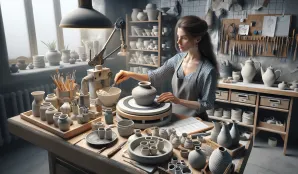
A ceramic press operator works with shaping and processing ceramic materials into various products, often using press machines and molds. Tasks include preparing raw materials, monitoring the pressing process, checking product quality, and finishing details such as sanding and post-processing. The work often takes place in workshop environments where manual and automated tasks are involved. The working environment can be dusty and requires precision and a good understanding of material properties.
Salary development over time
Over the past three years, the salary for ceramic press operators has shown a slight downward trend. In 2022, the average salary was 34,382 kronor, which then increased marginally to 30 900 kronor in 2023. However, the average salary decreased to 34 000 kronor in 2024, representing a reduction of approximately 10.8 % from the previous year. This development may be due to changing demand within the craft sector, increased competition, or decreased orders from industry. Salary trends for ceramic press operators are closely linked to market demand for crafts and the availability of specialized labor.
Ceramic press operator salary – comprehensive overview
- Average salary: 34 000 kr/month
- Lowest/Highest salary: Data not available
- Hourly wage: 186 kr/hour
- Gender differences: Data not available
- Regional differences: Data not available
Education and qualifications
To work as a ceramic press operator, education in craft, with a focus on ceramics and material science, is often required. Many employers value practical experience in workshop environments and knowledge of modern production methods. Education can be obtained through high school craft programs and vocational colleges, often including practical training.
- High school education: Craft program, specialization in ceramics (3 years)
- Vocational college: Craft education with practical training (2 years)
- Internship/trainee: Often requires workplace-based learning
- Courses/certifications: Specialization in material handling and machine pressing
- Prerequisites: Interest in craftsmanship and technical skills
Ceramic press operators often develop a unique sense of form and material. Many professionals combine industrial production with artistic creation, allowing for personal style even in serial manufacturing.
Common benefits and compensations
Ceramic press operators are often offered benefits such as wellness allowances, work clothing, and sometimes subsidized meals. In some cases, additional compensation may be provided for unsocial hours or further training within the company. Pension contributions and collectively agreed insurance are common within the industry.
Competition and challenges
The labor market for ceramic press operators is characterized by competition, especially within smaller workshops and studios where the number of positions is limited. Automation and increased import of ceramic products can reduce demand for skilled craftsmen in certain regions. At the same time, the profession requires a combination of technical knowledge and artistic sense, making it difficult to fully replace with machines. Changes in consumer trends and increased environmental awareness can also impact the demand for handcrafted products.
Tips for those who want to become a ceramic press operator
To succeed as a ceramic press operator, patience and attention to detail are important, as the profession demands precision at every step. An developed interest in form and color facilitates the development of new products, and creativity is a key trait in problem-solving during production. It is advisable to seek internships early to build experience and network within the industry. Being technically curious and willing to learn new machines and methods provides a competitive advantage. Flexibility and the ability to collaborate with others are also valuable, especially in larger workshops. Finally, continuous education and staying updated on new materials and processes are essential to remain relevant in the job market.
Key facts about ceramic press operators
- Education level: High school or vocational college
- Work environment: Workshop or industrial production environment
- Typical employment: Permanent position or hourly employment
- Demand: 341 available jobs in the occupational group
- Special skills: Material science and machine pressing
Career paths and future prospects
After three to five years in the profession, a ceramic press operator can advance to supervisory roles, become a specialist in a certain material area, or start their own business. Some choose to further their education in design or product development to broaden career opportunities. According to the Swedish Public Employment Service's forecasts, demand for craftspersons remains relatively stable, with 341 available jobs in the occupational group in the latest survey. Digitalization and new manufacturing methods can create additional opportunities for those wishing to develop within the profession. Related occupations include glassblower, porcelain painter, or technician in industrial design.
Frequently asked questions about ceramic press operators
- What does a ceramic press operator earn?
- The average salary is 34 000 kronor per month. - What is the working environment like for a ceramic press operator?
- The work primarily takes place in workshop environments where dust and noise may be present. - What education is required to become a ceramic press operator?
- High school craft programs or vocational college education focusing on ceramics are recommended. - Are there good future prospects in the profession?
- Yes, there are 341 available positions within the occupational group according to the latest statistics. - What personal qualities are important?
- Attention to detail, creativity, and technical interest are central qualities. - What is the hourly wage for a ceramic press operator?
- The average hourly wage is 186 kronor.

Salary distributed by age and sector
| Age | Base salary | Monthly salary | |
|---|---|---|---|
| Snitt | 33800 kr | 34000 kr |
| Age | Base salary | Monthly salary | |
|---|---|---|---|
| Snitt | 33800 kr | 34000 kr |
| Age | Base salary | Monthly salary | |
|---|---|---|---|
| Snitt | 33800 kr | 34000 kr |

About the data
All information displayed on this page is based on data from the Swedish Central Bureau of Statistics (SCB), the Swedish Tax Agency and the Swedish employment agency. Learn more about our data and data sources here.
All figures are gross salaries, meaning salaries before tax. The average salary, or mean salary, is calculated by adding up the total salary for all individuals within the profession and dividing it by the number of individuals. For specific job categories, we have also considered various criteria such as experience and education.
Profession Ceramic press has the SSYK code 7319, which we use to match against the SCB database to obtain the latest salary statistics.
-

Production Staff Wanted at Svebab – Svenska Brandslangsfabriken AB
Musical instrument makers and other artisans
Fri, 10 Jul 2026 - 21:23 -

Engraver and Customer Receptionist at Vasaboden – Full-Time Temporary Position
Musical instrument makers and other artisans
Tue, 7 Jul 2026 - 09:01 -

Screen Printer for Sign Production in Tumba
Musical instrument makers and other artisans
Mon, 29 Jun 2026 - 23:45 -

Machine Operator for Glass Manufacturing in Limmared
Musical instrument makers and other artisans
Thu, 25 Jun 2026 - 22:17 -

Teacher in Wood and Metal Craft at Vasaskolan in Hedemora
Musical instrument makers and other artisans
Thu, 25 Jun 2026 - 21:44
Compare salary, work tasks and job outlook in adjacent occupations to find roles with similar skills or pay levels.
-

Cabin assistant, glass cabin salary
Average salary: 34 000 SEK/month • Hantverksyrken
Musical instrument makers and other artisans
Compare with Ceramic press
Mon, 13 Jul 2026 - 18:19 -

Average salary: 34 200 SEK/month • Hantverksyrken
Fine, interior and furniture carpenters
Compare with Ceramic press
Wed, 8 Jul 2026 - 18:06 -

Average salary: 34 000 SEK/month • Hantverksyrken
Musical instrument makers and other artisans
Compare with Ceramic press
Tue, 14 Jul 2026 - 05:42 -

Average salary: 34 200 SEK/month • Hantverksyrken
Fine, interior and furniture carpenters
Compare with Ceramic press
Mon, 13 Jul 2026 - 11:47 -

Average salary: 40 900 SEK/month • Hantverksyrken
Precision mechanics
Compare with Ceramic press
Mon, 13 Jul 2026 - 14:21 -

Average salary: 34 000 SEK/month • Hantverksyrken
Musical instrument makers and other artisans
Compare with Ceramic press
Tue, 14 Jul 2026 - 05:19


