- Salary statistics
- Calender press, rubber salary
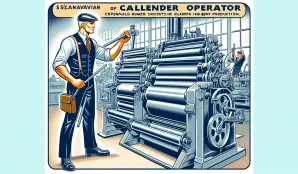
Calender press, rubber salary
Latest available salary statistics are for 2025. Compare average pay, salary range and related job listings.
31 500 - 35 400 SEK / month
Women earn 96% of what men do.
Industriell tillverkning
Related tools
Salary progression Calender press, rubber
What does a Kalanderpressare do in the rubber industry? – Tasks and working environment
A Kalanderpressare in the rubber industry is responsible for monitoring and operating calender presses, used to process and shape rubber into sheets, strips, or other products. The work involves preparing machines, feeding raw materials, supervising the process, checking quality, and adjusting machine settings as needed. The work environment is often industrial with machine noise, strong odors, and sometimes high temperatures, requiring precision and adherence to safety procedures. Individuals in this role work closely with colleagues and technicians to ensure smooth production without disruptions.
Salary development over time
The salary development for Kalanderpressare in the rubber industry has been steadily positive over the past three years. In 2022, the average salary was 30,200 SEK per month, which increased to 32 600 SEK in 2023. In 2024, the average salary is 33 900 SEK, representing a total increase of approximately 8% over the three-year period. This trend reflects general industry salary adjustments, where demand for skilled machine operators and increased automation have positively influenced wages. Salaries have also been affected by collective agreements and the labor market’s need for experienced operators, while competition for workforce in the industry has increased.
Kalanderpressare, rubber salary – complete overview
- Average salary: 33 900 SEK/month
- Lowest salary: 31,200 SEK/month (female, high school education 3 years)
- Highest salary: 33,100 SEK/month (male, privately employed, high school education up to 2 years)
- Hourly wage: 196 SEK
- Women’s salary as a percentage of men’s: 96%
- Regional differences: No clear regional variation reported
Education and qualifications
To work as a Kalanderpressare in the rubber industry, a high school education with a focus on industry, technology, or production is usually required, along with practical experience from similar machine operator roles. The profession demands technical understanding, the ability to follow instructions, and accuracy in daily work. Many employers prefer candidates who have completed relevant internships or internal training at the workplace.
- High school education: Industry or technology programs, 3 years
- Internship: Common as part of the education
- Introduction/trainee: Internal training often offered upon employment
- Certifications/courses: Machinery safety and work environment knowledge are advantageous
- Prerequisites: Technical interest and ability to work practically
Working as a Kalanderpressare often involves following clear routines while also making quick decisions during technical deviations. The ability to quickly identify and fix errors in the process is a valued trait among employers, especially in larger production facilities where downtime can be costly.
Common benefits and compensations
Kalanderpressare in the rubber industry are often covered by collective agreements that provide access to occupational pension, health insurance, extra vacation days, and overtime pay for shift work. Other common benefits include wellness allowances, work clothes, and opportunities for skill development through internal courses.
Challenges and competition
The profession of Kalanderpressare in the rubber industry is characterized by a relatively stable labor market, but competition may vary depending on regional access to larger industries. Automation within production increases demands for technical skills and adaptability. A challenge is to quickly learn new machine systems and stay updated on safety regulations. Few educational pathways are fully specialized for the profession, so practical experience often weighs heavily in recruitment. The shortage of new recruits in certain regions can create increased opportunities for those who are flexible and willing to work shifts.
Tips for those wanting to become a Kalanderpressare in the rubber industry
To succeed as a Kalanderpressare in the rubber industry, it is good to combine technical interest with a careful and responsible attitude towards work. Choosing an industrial technology focus during high school gives an advantage, especially in understanding machines and production processes. The ability to collaborate and communicate clearly with colleagues is crucial, as the work is often team-based and requires following instructions precisely. Flexibility and willingness to work shifts increase employment prospects, especially in larger factories. Taking initiatives to learn about machine maintenance or participating in internal training shows engagement and can lead to more career opportunities. Finally, patience and stress resilience are important, as production sometimes involves quick adjustments and high-pressure situations.
Key facts about Kalanderpressare, rubber
- Education level: High school, industry or technology
- Work environment: Industrial, often shift work
- Hourly wage: 196 SEK
- Demand: 1,437 available jobs within the profession
- Gender differences: Women earn 96% of men's salary
Career paths and future prospects
After three to five years as a Kalanderpressare in the rubber industry, opportunities may exist to advance to senior machine operator, supervisor, or production planner. Some choose to further their education in production technology or quality assurance to broaden their career options. According to the Swedish Public Employment Service's forecast, there is no precise assessment of future outlooks for the profession, but with 1,437 available jobs, demand is expected to continue. Automation and technological development will require higher competence, but those who are flexible and eager to learn will have good opportunities for continued employment and growth within the industry.
Common questions about Kalanderpressare, rubber
- What does a Kalanderpressare in rubber earn?
- The average salary is 33 900 SEK per month, with an hourly wage of 196 SEK. - How does the salary difference between men and women look?
- Women earn 96% of what men do in the profession. - What education is required to become a Kalanderpressare?
- High school education in industry or technology is most common, often supplemented with practical training or internal education. - Are there regional differences in salary?
- No clear regional salary differences have been reported for the profession. - What career opportunities are available after a few years in the profession?
- It is possible to advance to senior machine operator, supervisor, or further education in production technology. - What does the job market look like for Kalanderpressare?
- There are 1,437 available jobs within the profession, indicating a good demand.

Salary distributed by age and sector
| Age | Base salary | Monthly salary | |
|---|---|---|---|
| 25-34 | 30400 kr | 33200 kr | |
| 35-44 | 30900 kr | 33400 kr | |
| 45-54 | 34200 kr | 36100 kr | |
| 55-64 | 31200 kr | 33600 kr | |
| Snitt | 96% | 31500 kr | 33900 kr |
| Age | Base salary | Monthly salary | |
|---|---|---|---|
| 25-34 | 30400 kr | 33200 kr | |
| 35-44 | 30900 kr | 33400 kr | |
| 45-54 | 34200 kr | 36100 kr | |
| 55-64 | 31200 kr | 33600 kr | |
| Snitt | 96% | 31500 kr | 33900 kr |
| Age | Base salary | Monthly salary | |
|---|---|---|---|
| 25-34 | 30400 kr | 33200 kr | |
| 35-44 | 30900 kr | 33400 kr | |
| 45-54 | 34200 kr | 36100 kr | |
| 55-64 | 31200 kr | 33600 kr | |
| Snitt | 96% | 31500 kr | 33900 kr |
| Age | Base salary | Monthly salary | |
|---|---|---|---|
| 25-34 | 30900 kr | 34200 kr | |
| 35-44 | 31100 kr | 33700 kr | |
| 55-64 | 31700 kr | 34200 kr | |
| Snitt | 96% | 31900 kr | 34400 kr |
| Age | Base salary | Monthly salary | |
|---|---|---|---|
| 25-34 | 30900 kr | 34200 kr | |
| 35-44 | 31100 kr | 33700 kr | |
| 55-64 | 31700 kr | 34200 kr | |
| Snitt | 96% | 31900 kr | 34400 kr |
| Age | Base salary | Monthly salary | |
|---|---|---|---|
| 25-34 | 30900 kr | 34200 kr | |
| 35-44 | 31100 kr | 33700 kr | |
| 55-64 | 31700 kr | 34200 kr | |
| Snitt | 96% | 31900 kr | 34400 kr |
| Age | Base salary | Monthly salary | |
|---|---|---|---|
| Snitt | 96% | 30800 kr | 32900 kr |
| Age | Base salary | Monthly salary | |
|---|---|---|---|
| Snitt | 96% | 30800 kr | 32900 kr |
| Age | Base salary | Monthly salary | |
|---|---|---|---|
| Snitt | 96% | 30800 kr | 32900 kr |

About the data
All information displayed on this page is based on data from the Swedish Central Bureau of Statistics (SCB), the Swedish Tax Agency and the Swedish employment agency. Learn more about our data and data sources here.
All figures are gross salaries, meaning salaries before tax. The average salary, or mean salary, is calculated by adding up the total salary for all individuals within the profession and dividing it by the number of individuals. For specific job categories, we have also considered various criteria such as experience and education.
Profession Calender press, rubber has the SSYK code 8141, which we use to match against the SCB database to obtain the latest salary statistics.
-

Production Staff for Halmstad – Evening Shifts
Machine operators, rubber industry
Thu, 9 Jul 2026 - 21:40 -

Production Worker for Manufacturing Industry
Machine operators, rubber industry
Wed, 8 Jul 2026 - 08:59 -

Production Worker in Halmstad – Physical Team Role
Machine operators, rubber industry
Sun, 5 Jul 2026 - 06:37

Compare salary, work tasks and job outlook in adjacent occupations to find roles with similar skills or pay levels.
-
Tool technician, tool maker salary
Average salary: 37 900 SEK/month • Industriell tillverkning
Toolmakers
Compare with Calender press, rubber
Tue, 14 Jul 2026 - 10:09 -

Machine operator, glass wool salary
Average salary: 36 900 SEK/month • Industriell tillverkning
Other process and machine operators
Compare with Calender press, rubber
Tue, 14 Jul 2026 - 10:05 -

Average salary: 34 200 SEK/month • Industriell tillverkning
Machine operators, plastics industry
Compare with Calender press, rubber
Tue, 14 Jul 2026 - 07:11 -

Average salary: 36 900 SEK/month • Industriell tillverkning
Other process and machine operators
Compare with Calender press, rubber
Tue, 14 Jul 2026 - 07:12 -

Average salary: 36 300 SEK/month • Industriell tillverkning
Machine setters and machine operators, metal work
Compare with Calender press, rubber
Tue, 14 Jul 2026 - 03:57 -

Stencil manufacturer, screen printing salary
Average salary: 34 600 SEK/month • Industriell tillverkning
Printers
Compare with Calender press, rubber
Tue, 14 Jul 2026 - 08:18


