- Salary statistics
- Hand knitter salary
Hand knitter salary
Latest available salary statistics are for 2025. Compare average pay, salary range and related job listings.
33 800 - 34 000 SEK / month
Hantverksyrken
Related tools
Salary progression Hand knitter
What does a handknitter do? – Tasks and work environment
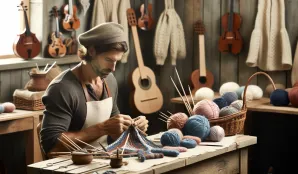
A handknitter works with creating textile products through manual knitting, often following traditional or custom-designed patterns. Tasks can include selecting materials, colors, and knitting techniques, as well as finishing garments or art pieces for sale or exhibition. The work is typically performed in smaller studios, at home, or in specialized workshops where craftsmanship and attention to detail are prioritized. The environment is often creative and independent, with opportunities to influence the workday structure and project design.
Salary development over time
The salary trend for handknitters has shown a downward trajectory over the past three years. In 2022, the average salary was 34,382 SEK per month and increased to 30 900 SEK in 2023, representing a modest increase of about 0.8%. Between 2023 and 2024, the average salary decreased to 34 000 SEK per month, a reduction of over 10%. This variation may be due to changes in demand, fewer assignments, or shifts in access to qualified tasks within the profession. The market for hand-knitted products is often influenced by trends in fashion and crafts, affecting both order volume and pricing.
Handknitter salary – full overview
- Average salary: 34 000 SEK/month
- Lowest/Highest salary: Data unavailable
- Hourly wage: 186 SEK/hour (based on 166 hours/month)
- Gender differences: Data unavailable
- Regional differences: Data unavailable
Education and qualifications
To work as a handknitter, formal university education is usually not required, but many have completed craft training at high school or postgraduate levels. Practical experience and a strong interest in textile techniques are highly valuable. Self-study, courses, and mentorship from experienced artisans are common pathways into the profession.
- High school craft education: Focus on textiles or crafts, 3 years
- Folk high school education: Textile/craft, 1–2 years
- Short courses and workshops: Knitting techniques, material knowledge
- Internship or apprenticeship: With an established handknitter
- Self-study: Online courses, literature, and personal practice
The craft of handknitting has a strong connection to cultural heritage and tradition, and many artisans work to preserve and develop old techniques that might otherwise be lost. There are also opportunities to participate in exhibitions and collaborate with designers in fashion and art.
Common benefits and compensations
Handknitters often enjoy flexible working hours and the possibility of remote work, especially if self-employed. Other common benefits include access to studio equipment, material discounts, and sometimes support for participation in fairs or exhibitions. In some cases, health benefits and opportunities for further training are also offered.
Competition and challenges
The competition within the craft is significant, especially since demand for handmade products can vary greatly depending on trends and economic conditions. Many handknitters work as entrepreneurs and must market their own products, requiring both business skills and creativity. Challenges may also include long production times and the need to constantly develop new patterns to attract customers. The market is often niche, which means specialized skills and a strong network are essential for success.
Tips for aspiring handknitters
To succeed as a handknitter, it is good to be creative and have a genuine passion for craftsmanship. Developing patience is important, as knitting is a time-consuming activity where precision and accuracy yield the best results. Building a broad network through courses, workshops, and fairs is recommended to connect with others in the profession. An entrepreneurial mindset is valuable, especially if you want to start your own business or sell your products, and early knowledge of marketing and sales is wise. Being open to new techniques and materials allows you to expand your offerings and adapt to customer preferences. Finally, resilience and the ability to work independently are crucial, as many projects require long-term focus and self-discipline.
Key facts about Handknitters
- Education level: High school or postgraduate craft training
- Work environment: Independent, often home or studio-based
- Work form: Self-employed or employed within crafts
- Demand: 341 available jobs within the profession
- Special skills: Knitting techniques, material selection, pattern construction
Career paths and future outlook
After three to five years as a handknitter, opportunities may open to work as a studio manager, pattern designer, or textile craft educator. Some choose to specialize in exclusive products or expand into design and product development. According to the Swedish Public Employment Service, the future outlook is stable, with 341 available jobs within the craft sector. However, the profession is competitive, making drive and the ability to develop a personal brand crucial for long-term success.
Frequently asked questions about Handknitters
- What does a Handknitter earn?
- The average salary for a handknitter is 34 000 SEK per month. - Is education required to become a handknitter?
- Formal education is not always necessary, but craftsmanship training and practical experience are highly valuable. - Are there many jobs for handknitters?
- There are 341 available jobs within the profession according to current statistics. - What work environments are common for handknitters?
- Many work from home, in their own studios or in small workshops. - What are the future prospects for handknitters?
- The outlook is stable but competitive, with a need for specialized skills and self-marketing. - What does it mean to be self-employed as a handknitter?
- It involves responsibility for the entire process, from production to sales and marketing.

Salary distributed by age and sector
| Age | Base salary | Monthly salary | |
|---|---|---|---|
| Snitt | 33800 kr | 34000 kr |
| Age | Base salary | Monthly salary | |
|---|---|---|---|
| Snitt | 33800 kr | 34000 kr |
| Age | Base salary | Monthly salary | |
|---|---|---|---|
| Snitt | 33800 kr | 34000 kr |

About the data
All information displayed on this page is based on data from the Swedish Central Bureau of Statistics (SCB), the Swedish Tax Agency and the Swedish employment agency. Learn more about our data and data sources here.
All figures are gross salaries, meaning salaries before tax. The average salary, or mean salary, is calculated by adding up the total salary for all individuals within the profession and dividing it by the number of individuals. For specific job categories, we have also considered various criteria such as experience and education.
Profession Hand knitter has the SSYK code 7319, which we use to match against the SCB database to obtain the latest salary statistics.
-

Production Staff Wanted at Svebab – Svenska Brandslangsfabriken AB
Musical instrument makers and other artisans
Fri, 10 Jul 2026 - 21:23 -

Engraver and Customer Receptionist at Vasaboden – Full-Time Temporary Position
Musical instrument makers and other artisans
Tue, 7 Jul 2026 - 09:01 -

Screen Printer for Sign Production in Tumba
Musical instrument makers and other artisans
Mon, 29 Jun 2026 - 23:45 -

Machine Operator for Glass Manufacturing in Limmared
Musical instrument makers and other artisans
Thu, 25 Jun 2026 - 22:17 -

Teacher in Wood and Metal Craft at Vasaskolan in Hedemora
Musical instrument makers and other artisans
Thu, 25 Jun 2026 - 21:44
Compare salary, work tasks and job outlook in adjacent occupations to find roles with similar skills or pay levels.
-

Average salary: 33 589 SEK/month • Hantverksyrken
Manual surface finishers, wood
Compare with Hand knitter
Tue, 14 Jul 2026 - 05:43 -

Average salary: 34 000 SEK/month • Hantverksyrken
Musical instrument makers and other artisans
Compare with Hand knitter
Mon, 13 Jul 2026 - 18:26 -

Inspectors, wood products salary
Average salary: 34 200 SEK/month • Hantverksyrken
Fine, interior and furniture carpenters
Compare with Hand knitter
Tue, 14 Jul 2026 - 08:17 -

Average salary: 35 000 SEK/month • Hantverksyrken
Glass technicians
Compare with Hand knitter
Tue, 14 Jul 2026 - 07:12 -

Average salary: 34 000 SEK/month • Hantverksyrken
Musical instrument makers and other artisans
Compare with Hand knitter
Tue, 14 Jul 2026 - 07:12 -

Average salary: 32 802 SEK/month • Hantverksyrken
Seamstresses
Compare with Hand knitter
Tue, 14 Jul 2026 - 07:14


