- Salary statistics
- Gemstone grinder salary
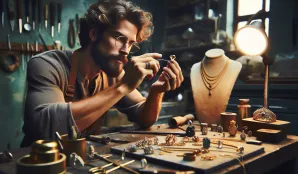
Gemstone grinder salary
Latest available salary statistics are for 2025. Compare average pay, salary range and related job listings.
36 607 - 36 738 SEK / month
Hantverksyrken
Related tools
Salary progression Gemstone grinder
What does a gemstone cutter do? – Tasks and Work Environment
A gemstone cutter works with processing and shaping raw gemstones into finished jewelry stones with the highest possible brilliance and quality. Tasks include precise cutting, polishing, and inspecting stones such as diamonds, sapphires, rubies, and emeralds. It requires great accuracy, patience, and a sense of detail, as each stone has unique properties. The work environment is often a specially adapted workshop with access to grinding machines, microscopes, and other fine mechanical tools. Lighting, ergonomics, and dust management are important factors to ensure both work quality and health.
Salary development over time
The salary for gemstone cutters has shown a stable and slightly upward trend over the past three years. In 2022, the average salary was 34,382 SEK per month, increasing to 34 807 SEK in 2023. The latest reported average salary for 2024 is 36 738 SEK per month. This development corresponds to a total increase of about 1.2% over three years, which is slightly below the average salary growth in the craft professions overall. The modest increase can partly be explained by low turnover in the profession and many employers being small workshops with limited salary budgets. The demand for skilled gemstone cutters remains relatively constant, but the niche nature of the profession and limited training places influence salary formation.
Gemstone cutter salary – comprehensive overview
- Average salary: 36 738 SEK/month
- Lowest/Highest salary: Data unavailable
- Hourly wage: 209 SEK/hour (based on 166 working hours/month)
- Gender differences: Data unavailable
- Regional differences: Data unavailable
Education and qualifications
The path to becoming a gemstone cutter often involves craftsmanship-oriented education in jewelry design, gold- or silversmithing, sometimes with specialization in gemstone processing. Practical experience and supervised internships are crucial, as the work requires both technical and artistic skills. There are a limited number of training places in Sweden, and many supplement with self-study or courses abroad.
- Vocational training in gold- and silversmithing: 1–3 years
- Special courses in gemstone cutting: 6–12 months
- Internship with an experienced cutter or smith: Recommended
- Prerequisites: Good fine motor skills, accuracy, and color perception
- Self-study/online courses: Common for further development
It is not uncommon for skilled gemstone cutters to combine their craft with running their own business and jewelry design, opening up creative and entrepreneurial career paths. The ability to create unique, handmade jewelry often increases market demand.
Common benefits and compensation
Common benefits for gemstone cutters include wellness allowances, flexible working hours, and opportunities for skill development through courses and trade fairs. In smaller workshops, bonuses based on performance or sales are common, and employees may sometimes participate in profit sharing for larger orders. Insurance and security agreements are also common, especially with established employers.
Competition and challenges
The competition within the profession of gemstone cutters is relatively low, mainly due to the limited number of trained practitioners and the specialized knowledge required. Challenges include technological development and automation, where advanced machines can replace some tasks. At the same time, it is difficult to replace the craftsmanship and artistic eye of an experienced cutter. Another challenge is access to high-quality raw materials and staying updated on new materials and trends in the jewelry industry.
Tips for aspiring gemstone cutters
To succeed as a gemstone cutter, it’s important to have a keen interest in details and a lot of patience, as the work requires precision and often long periods of focus on small tasks. Curiosity about new techniques and materials provides clear advantages, especially as the industry develops rapidly. Creativity is a valuable trait for creating unique shapes and expressions in each stone. Being meticulous and having good hand-eye coordination are crucial, as even small mistakes can affect the final result. It’s recommended to seek internships early or work alongside experienced craftsmen to develop skills. Social skills and a professional attitude facilitate customer contacts and sales, especially if you want to run your own business. Finally, continuous further education and staying informed about industry trends are essential to remain competitive.
Key facts about gemstone cutters
- Education level: Vocational training or specialized craft courses
- Work environment: Workshop with specialized machines
- Typical employment: Full-time, often small businesses or self-employment
- Demand: Approximately 341 job openings in the profession
- Special skills: Fine motor skills and sense for shape and color
Career paths and future outlook
After three to five years as a gemstone cutter, opportunities exist to advance to more independent roles, start your own workshop, or specialize in exclusive jewelry and stones. Some choose to further educate in gemology or jewelry design. According to the Employment Service, no specific forecast is made for the profession due to limited data, but the general outlook for gold- and silversmiths indicates stable demand and ongoing need for skilled craftsmen. The number of job openings in the profession is 341, indicating some labor market mobility. However, future prospects are influenced by economic conditions, consumption trends, and the availability of trained artisans.
Frequently asked questions about gemstone cutters
- What does a gemstone cutter earn?
- The average salary is 36 738 SEK per month. - How do you become a gemstone cutter?
- Through vocational training in jewelry design or gold- and silversmithing, as well as practical experience with an experienced cutter. - Are there regional salary differences?
- There is no available information about regional differences for this profession. - What personal qualities are required?
- Precision, patience, fine motor skills, and creativity are important qualities. - What are the future prospects?
- No specific forecast is available, but demand remains stable within the profession. - Can I work as a self-employed person?
- Yes, many gemstone cutters run their own businesses or combine with jewelry design. - What education is required?
- Vocational training in craftsmanship and specialized courses in gemstone cutting are recommended.

Salary distributed by age and sector

About the data
All information displayed on this page is based on data from the Swedish Central Bureau of Statistics (SCB), the Swedish Tax Agency and the Swedish employment agency. Learn more about our data and data sources here.
All figures are gross salaries, meaning salaries before tax. The average salary, or mean salary, is calculated by adding up the total salary for all individuals within the profession and dividing it by the number of individuals. For specific job categories, we have also considered various criteria such as experience and education.
Profession Gemstone grinder has the SSYK code 7312, which we use to match against the SCB database to obtain the latest salary statistics.
-

Goldsmith at Haileys Jewelry House – Restoration & Repair
Gold and silversmiths
Wed, 13 May 2026 - 00:47



Compare salary, work tasks and job outlook in adjacent occupations to find roles with similar skills or pay levels.
-

Decorative painter, signage salary
Average salary: 34 000 SEK/month • Hantverksyrken
Musical instrument makers and other artisans
Compare with Gemstone grinder
Tue, 14 Jul 2026 - 10:58 -

Average salary: 34 100 SEK/month • Hantverksyrken
Leather craftsmen and shoemakers
Compare with Gemstone grinder
Sat, 11 Jul 2026 - 05:25 -

Average salary: 33 100 SEK/month • Hantverksyrken
Tailors and atelier seamstresses etc.
Compare with Gemstone grinder
Tue, 14 Jul 2026 - 12:39 -

Average salary: 34 100 SEK/month • Hantverksyrken
Leather craftsmen and shoemakers
Compare with Gemstone grinder
Tue, 14 Jul 2026 - 07:12 -

Average salary: 40 900 SEK/month • Hantverksyrken
Precision mechanics
Compare with Gemstone grinder
Mon, 13 Jul 2026 - 18:19 -

Average salary: 34 000 SEK/month • Hantverksyrken
Musical instrument makers and other artisans
Compare with Gemstone grinder
Tue, 14 Jul 2026 - 14:06


