- Salary statistics
- Musical instrument builder salary
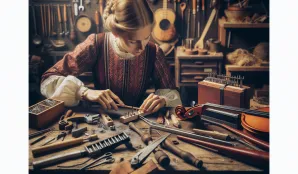
Musical instrument builder salary
Latest available salary statistics are for 2025. Compare average pay, salary range and related job listings.
33 800 - 34 000 SEK / month
Hantverksyrken
Related tools
Salary progression Musical instrument builder
What does a musical instrument maker do? – Tasks and work environment
A musical instrument maker works with manufacturing, repairing, and maintaining various types of musical instruments, often focusing on string, wind, or percussion instruments. The work requires high craftsmanship, precision, and a feel for materials such as wood, metal, and plastic. Many instrument makers operate in small workshops or studios, where each instrument is often handcrafted or repaired according to customer specifications. The work environment is characterized by physical activity, use of specialized tools, and sometimes exposure to noise and dust, which necessitates good ergonomics and safety routines.
Salary development over time
Over the past three years, salaries for musical instrument makers have shown variations. In 2022, the average salary was 34,382 SEK per month, while 2023 showed a slight increase to 30 900 SEK. For 2024, the average salary has decreased to 34 000 SEK per month, corresponding to a decline of about 10.8% compared to the previous year. This negative trend can partly be explained by decreased demand for handcrafted instruments, changing consumption patterns, and increased competition from industrially produced instruments. The industry is also affected by economic fluctuations and developments within the culture and music sector, which can cause salaries to vary from year to year.
Musical instrument maker salary – comprehensive overview
- Average salary: 34 000 SEK/month
- Lowest/Highest salary: Data unavailable
- Hourly rate: 186 SEK
- Gender differences: Specific data on men and women is unavailable
- Regional differences: No available statistics
Education and qualifications
To work as a musical instrument maker, a vocational education in craft or specialized training in instrument making is usually required. Many learn the profession through practical experience and mentorship from experienced colleagues, often with longer internships or apprenticeships. Some programs are available at university level, but self-study and further training are also important to stay updated on new techniques and materials.
- Formal education: Vocational college or craft training, 2–3 years
- Practical training: Apprenticeship or extended internship recommended
- Courses: Specialized short courses in instrument making and material science
- Prerequisites: Interest in music and craftsmanship, good fine motor skills
- Self-study: Common to supplement with online courses or self-education
Many musical instrument makers combine their craft with playing instruments themselves, which provides a deeper understanding of sound, playability, and customer needs. This interplay between craftsmanship and musicality often results in unique and personalized instruments.
Common benefits and compensations
Musical instrument makers are often offered benefits such as flexible working hours, the possibility to work in a workshop environment, and sometimes access to further education or courses in craftsmanship and materials science. Some employers may also offer bonuses for special projects or commissions from sales of their own instruments, but collective agreement benefits vary depending on employment type and employer.
Competition and challenges
The profession of musical instrument maker is characterized by a limited job market with fierce competition, especially in the production of exclusive and handcrafted instruments. Digitalization and mass production have reduced demand for traditional craftsmanship, which places high demands on specialization, innovation, and the ability to adapt to new markets. Challenges also include material availability and increased requirements for environmentally friendly processes. Establishing oneself as a self-employed craftsman can be difficult due to high startup costs and the need for a strong network within the music industry.
Tips for those who want to become a musical instrument maker
To succeed as a musical instrument maker, it’s good to combine patience and precision with a creative mind. Being attentive and having a good sense of detail facilitates the work of creating high-quality instruments that meet customer expectations. It’s recommended to actively seek internships or apprenticeship opportunities to build experience and industry contacts, while a genuine interest in music provides a deeper understanding of the craft. The ability to work independently is important, as is continuously developing technical skills through courses and self-education. Being communicative and service-oriented helps with customer contact and sales, while an entrepreneurial spirit facilitates starting your own business.
Key facts about musical instrument makers
- Education level: Vocational college or craft training (2–3 years)
- Work environment: Workshop or studio, often small-scale and practical
- Work form: Usually self-employed or small-scale employment
- Demand: Limited but niche, 341 available jobs in 2024
- Special skills: Material science, acoustics, and fine mechanics
Career paths and future prospects
After 3–5 years in the profession, many musical instrument makers have built a client base and can work more independently, sometimes as self-employed or with specialization in, for example, string or wind instruments. There are also opportunities to develop into roles such as workshop manager, trainer, or product developer within larger musical instrument companies. According to the Employment Service, the outlook is relatively stable for skilled craftsmen, although overall demand is limited. Those combining craftsmanship skills with entrepreneurship and industry networks have the best chance of long-term success in the field.
Frequently asked questions about musical instrument makers
- What does a musical instrument maker earn?
- The average salary is 34 000 SEK per month, with an hourly rate of 186 SEK. - What education is required to become a musical instrument maker?
- Vocational college or specialized craft training lasting 2–3 years is recommended, often with practical experience. - What is the job market like for musical instrument makers?
- The job market is niche and relatively small, but there were 341 available jobs in 2024. - What personal qualities are important in this profession?
- Patience, precision, creativity, and an interest in music are central qualities. - Are there gender differences in salary for musical instrument makers?
- Specific data on gender differences is unavailable for this profession. - Can one work as a self-employed person?
- Yes, many musical instrument makers run their own workshops or studios. - What benefits can be offered?
- Flexible working hours, opportunities for further education, and sometimes bonuses for special projects.

Salary distributed by age and sector
| Age | Base salary | Monthly salary | |
|---|---|---|---|
| Snitt | 33800 kr | 34000 kr |
| Age | Base salary | Monthly salary | |
|---|---|---|---|
| Snitt | 33800 kr | 34000 kr |
| Age | Base salary | Monthly salary | |
|---|---|---|---|
| Snitt | 33800 kr | 34000 kr |

About the data
All information displayed on this page is based on data from the Swedish Central Bureau of Statistics (SCB), the Swedish Tax Agency and the Swedish employment agency. Learn more about our data and data sources here.
All figures are gross salaries, meaning salaries before tax. The average salary, or mean salary, is calculated by adding up the total salary for all individuals within the profession and dividing it by the number of individuals. For specific job categories, we have also considered various criteria such as experience and education.
Profession Musical instrument builder has the SSYK code 7319, which we use to match against the SCB database to obtain the latest salary statistics.
-

Production Staff Wanted at Svebab – Svenska Brandslangsfabriken AB
Musical instrument makers and other artisans
Fri, 10 Jul 2026 - 21:23 -

Engraver and Customer Receptionist at Vasaboden – Full-Time Temporary Position
Musical instrument makers and other artisans
Tue, 7 Jul 2026 - 09:01 -

Screen Printer for Sign Production in Tumba
Musical instrument makers and other artisans
Mon, 29 Jun 2026 - 23:45 -

Machine Operator for Glass Manufacturing in Limmared
Musical instrument makers and other artisans
Thu, 25 Jun 2026 - 22:17 -

Teacher in Wood and Metal Craft at Vasaskolan in Hedemora
Musical instrument makers and other artisans
Thu, 25 Jun 2026 - 21:44
Compare salary, work tasks and job outlook in adjacent occupations to find roles with similar skills or pay levels.
-

Average salary: 33 100 SEK/month • Hantverksyrken
Tailors and atelier seamstresses etc.
Compare with Musical instrument builder
Tue, 14 Jul 2026 - 08:16 -

Average salary: 33 100 SEK/month • Hantverksyrken
Tailors and atelier seamstresses etc.
Compare with Musical instrument builder
Tue, 14 Jul 2026 - 11:56 -

Average salary: 34 000 SEK/month • Hantverksyrken
Musical instrument makers and other artisans
Compare with Musical instrument builder
Tue, 14 Jul 2026 - 07:13 -

Curtain seamstress, studio salary
Average salary: 33 100 SEK/month • Hantverksyrken
Tailors and atelier seamstresses etc.
Compare with Musical instrument builder
Tue, 14 Jul 2026 - 11:57 -

Ice cream grinder, other salary
Average salary: 34 000 SEK/month • Hantverksyrken
Musical instrument makers and other artisans
Compare with Musical instrument builder
Tue, 14 Jul 2026 - 10:07 -

Average salary: 34 200 SEK/month • Hantverksyrken
Fine, interior and furniture carpenters
Compare with Musical instrument builder
Tue, 14 Jul 2026 - 00:44


