- Salary statistics
- Molds, ceramics salary
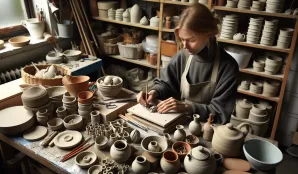
Molds, ceramics salary
Latest available salary statistics are for 2025. Compare average pay, salary range and related job listings.
33 800 - 34 000 SEK / month
Hantverksyrken
Related tools
Salary progression Molds, ceramics
What does a ceramic mold maker do? – Tasks and work environment
A ceramic mold maker is responsible for producing ceramic items through casting in molds. Tasks include preparing molds, mixing clay mass, monitoring the casting process, and post-processing and firing finished products. The work is often manual and machine-assisted in a workshop environment, where precision and material feel are crucial. The environment can be dusty and humid, requiring carefulness and safety awareness.
Salary development over time
The profession of ceramic mold maker has shown fluctuating salary trends over the past three years. In 2022, the average salary was 34,382 SEK per month, which increased slightly to 30 900 SEK in 2023. However, in 2024, the average salary decreased to 34 000 SEK per month, representing a decline of approximately 11% compared to the previous year. This decrease may be due to changing demand in the industry, restructuring, or temporarily reduced need for ceramic artisans. The salary trend has thus been somewhat unstable, reflecting market sensitivity to economic fluctuations and changing consumption patterns.
Ceramic mold maker salary – comprehensive overview
- Average salary: 34 000 SEK/month
- Lowest/Highest salary: Data not available
- Hourly wage: 186 SEK/hour
- Gender differences: Data missing
- Regional differences: Data missing
Education and qualifications
To work as a ceramic mold maker, a vocational education in ceramics or crafts is usually required, either at the high school level or through post-secondary vocational training. Practical experience and understanding of material properties are central, although some employers may require specialized courses or certifications.
- High school vocational education: Handicraft program with a focus on ceramics (3 years)
- Post-secondary education: Folk high school or YH training in ceramics (1–2 years)
- Internship: Workplace-based learning or internships during training
- Courses: Specialized courses in casting, material science, and design
- Prerequisites: Interest in crafts and good fine motor skills
Many ceramic mold makers develop their own signature techniques and styles, blending traditional craftsmanship with high personal creativity and innovation. This gives the profession a unique mix of art and technology, where each product can bear the marks of its creator's individuality.
Common benefits and compensations
Typical benefits for ceramic mold makers may include wellness allowances, workwear, and opportunities for further training through courses or trade fairs. Some workplaces also offer flexible working hours and the possibility for personal creation outside regular production.
Competition and challenges
The job market for ceramic mold makers is characterized by some competition, especially since the number of permanent positions is limited and many work as self-employed or in small workshops. The profession requires both technical skill and artistic sense, which can be challenging for recent graduates to establish themselves. The industry is affected by economic cycles and changing consumer habits, with demand for handmade products fluctuating over time. Digitalization and automation pose additional challenges but also open new opportunities for marketing and selling unique products.
Tips for aspiring ceramic mold makers
To succeed as a ceramic mold maker, patience and precision combined with a strong sense of form and design are important. Developing creativity by experimenting with different techniques and materials enhances understanding of the profession's possibilities. Seeking internships or apprenticeships can help build experience and networks within the industry. Entrepreneurial spirit facilitates selling own creations or starting a workshop. Good collaboration and communication skills are also vital, especially when working in teams or with clients. A willingness to continuously learn new methods and follow trends increases the chances of long-term success.
Key facts about ceramic mold makers
- Education level: High school or post-secondary vocational training
- Work environment: Workshop, often dusty and humid
- Work form: Self-employed or employed in small companies
- Demand: Total of 341 available jobs in the profession
- Special skills: Material science and design
Career paths and future prospects
After three to five years in the profession, a ceramic mold maker can take on more advanced tasks such as product development, mentoring new colleagues, or managing the entire production process. Those wishing to develop further can start their own ceramic workshop or specialize in a particular area, e.g., art ceramics or industrial production. According to the Swedish Public Employment Service, the outlook remains stable with 341 available jobs, but competition for attractive positions can be high, especially in larger cities. For those willing to invest in their own business or develop a niche, there are good opportunities for a long-term career.
Frequently asked questions about ceramic mold makers
- What does a ceramic mold maker earn?
- The average salary is 34 000 SEK per month. - What is required to become a ceramic mold maker?
- A high school or post-secondary vocational education in ceramics is recommended, along with practical experience. - What is the job market like for ceramic mold makers?
- There are 341 available jobs, but competition can be high. - What are the tasks of a ceramic mold maker?
- They manufacture ceramic products through casting, processing, and firing. - Where does a ceramic mold maker work?
- Usually in small workshops, artistic studios, or as self-employed. - What is the hourly wage for a ceramic mold maker?
- The average is 186 SEK per hour. - Are there regional salary differences?
- There is no available data on regional differences for this profession.

Salary distributed by age and sector
| Age | Base salary | Monthly salary | |
|---|---|---|---|
| Snitt | 33800 kr | 34000 kr |
| Age | Base salary | Monthly salary | |
|---|---|---|---|
| Snitt | 33800 kr | 34000 kr |
| Age | Base salary | Monthly salary | |
|---|---|---|---|
| Snitt | 33800 kr | 34000 kr |

About the data
All information displayed on this page is based on data from the Swedish Central Bureau of Statistics (SCB), the Swedish Tax Agency and the Swedish employment agency. Learn more about our data and data sources here.
All figures are gross salaries, meaning salaries before tax. The average salary, or mean salary, is calculated by adding up the total salary for all individuals within the profession and dividing it by the number of individuals. For specific job categories, we have also considered various criteria such as experience and education.
Profession Molds, ceramics has the SSYK code 7319, which we use to match against the SCB database to obtain the latest salary statistics.
-

Production Staff Wanted at Svebab – Svenska Brandslangsfabriken AB
Musical instrument makers and other artisans
Fri, 10 Jul 2026 - 21:23 -

Engraver and Customer Receptionist at Vasaboden – Full-Time Temporary Position
Musical instrument makers and other artisans
Tue, 7 Jul 2026 - 09:01 -

Screen Printer for Sign Production in Tumba
Musical instrument makers and other artisans
Mon, 29 Jun 2026 - 23:45 -

Machine Operator for Glass Manufacturing in Limmared
Musical instrument makers and other artisans
Thu, 25 Jun 2026 - 22:17 -

Teacher in Wood and Metal Craft at Vasaskolan in Hedemora
Musical instrument makers and other artisans
Thu, 25 Jun 2026 - 21:44
Compare salary, work tasks and job outlook in adjacent occupations to find roles with similar skills or pay levels.
-

Average salary: 33 589 SEK/month • Hantverksyrken
Manual surface finishers, wood
Compare with Molds, ceramics
Tue, 14 Jul 2026 - 05:43 -

Average salary: 34 000 SEK/month • Hantverksyrken
Musical instrument makers and other artisans
Compare with Molds, ceramics
Mon, 13 Jul 2026 - 18:26 -

Inspectors, wood products salary
Average salary: 34 200 SEK/month • Hantverksyrken
Fine, interior and furniture carpenters
Compare with Molds, ceramics
Tue, 14 Jul 2026 - 08:17 -

Average salary: 35 000 SEK/month • Hantverksyrken
Glass technicians
Compare with Molds, ceramics
Tue, 14 Jul 2026 - 07:12 -

Average salary: 34 000 SEK/month • Hantverksyrken
Musical instrument makers and other artisans
Compare with Molds, ceramics
Tue, 14 Jul 2026 - 07:12 -

Average salary: 32 802 SEK/month • Hantverksyrken
Seamstresses
Compare with Molds, ceramics
Tue, 14 Jul 2026 - 07:14


