- Salary statistics
- Fish creator salary
Fish creator salary
Latest available salary statistics are for 2025. Compare average pay, salary range and related job listings.
Naturbruk
Related tools
What does a fishing captain do? – Job tasks and work environment
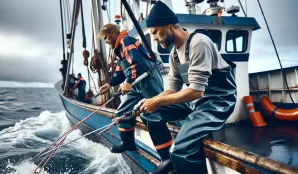
A fishing captain is responsible for leading and organizing fishing trips at sea or in lakes. The role includes planning and executing the fishing, navigating the vessel, supervising the crew’s work, and ensuring that catches are made according to current regulations and safety standards. Tasks also include maintaining equipment, handling catches, and documenting fishing activities. The work environment is often demanding, involving long days at sea, sometimes in harsh weather conditions and with high physical exertion.
Salary development over time
Salary information for fishing captains is limited, and no average monthly or hourly wages have been reported for the past three years. This makes it difficult to assess starting salaries and salary progression based on available statistics. The salary level is likely influenced by seasonal variations, a small number of large employers, and many fishing captains working as self-employed or on small family-owned boats. The trend indicates a continued lack of statistical data rather than clear increases or decreases in salary. Industry salary levels are also affected by fishing quotas, international regulations, and demand for Swedish catches. Since the profession is often linked to small-scale or traditional fishing, salary development is generally hard to compare with other occupations.
Fishing captain salary – complete overview
- Average salary: 0 SEK/month
- Lowest/Highest salary: Data unavailable
- Hourly wage: 0 SEK
- Gender differences: No specific data for men or women
- Regional differences: No available data
Education and qualifications
To work as a fishing captain, a combination of practical experience and formal education in maritime or fishing studies is usually required. Many start their careers as deckhands or fishermen and advance to captain through vocational training or specialized courses. Certifications in safety and navigation are often mandatory, and some onboard fishing vessel practice is an important part of qualification.
- Class VIII Certificate of Seaworthiness: Short vocational training, often 10–12 weeks
- Certifications: Safety training and navigation certificates
- Practice: Several months at sea are required for qualification
- Prerequisites: Basic knowledge of Swedish language and mathematics
- Tips: Practical work on fishing vessels provides valuable experience for further education
Fishing captains often encounter unique natural scenery and wildlife that few other professions experience. Navigating changing weather and working closely with the crew fosters a strong camaraderie onboard. Many describe the profession as a craft where tradition and modern technology meet.
Common benefits and compensations
Common benefits for fishing captains include free food and accommodation during longer trips at sea, insurance related to working in risky environments, and sometimes bonuses linked to catch size. Opportunities for further training in safety and navigation are also typical.
Competition and challenges
The job market for fishing captains is characterized by a limited number of positions and high competition for existing jobs. Many aspiring captains need to be flexible and prepared to work seasonally or on different vessels. The profession is affected by environmental regulations, fishing quotas, and stock changes, which can cause significant fluctuations in job availability over time. Technological advances and certification requirements demand ongoing education. Challenges also include long periods at sea and physically demanding work conditions.
Tips for those wanting to become a fishing captain
To succeed as a fishing captain, it is important to combine a strong sense of responsibility with a genuine interest in maritime life and nature. Endurance and stress tolerance during long sea passages are crucial, as is the ability to collaborate effectively with the crew. Practical experience in fishing provides a solid foundation, and early internships are recommended to build technical skills and confidence. Being meticulous and safety-conscious is vital, as work often occurs under challenging conditions. Good communication skills facilitate leadership onboard and contribute to a safe working environment. Flexibility and willingness to further educate oneself in new technologies and regulations make it easier to adapt to industry changes.
Key facts about Fishing Captains
- Education level: Class VIII Certificate of Seaworthiness or equivalent
- Work environment: At sea, often in harsh weather
- Employment type: Seasonal or permanent on larger vessels
- Demand: 360 available jobs in the fishing profession
- Special skills: Navigation, safety, and catch handling
Career paths and future prospects
After several years of experience as a fishing captain, it is possible to advance to chief officer on larger vessels or take responsibility for your own shipping company. Some choose to specialize in research, education, or fishing administration. According to the Swedish Public Employment Service, specific forecasts for fishing captains are lacking due to limited statistical data. The profession is part of the fishing industry, currently with 360 available jobs, but demand can vary greatly depending on season and legislation changes. Those wishing to develop within the industry can broaden their skills through further education and certifications in maritime, technical, or leadership areas.
Frequently asked questions about fishing captains
- What does a fishing captain earn?
- There are no current salary data for fishing captains, and the average salary is reported as 0 SEK/month. - What education is required to become a fishing captain?
- Typically, a Class VIII Certificate of Seaworthiness, safety certification, and onboard practice are required. - What is the job market like for fishing captains?
- There are 360 available jobs within the fishing profession, but specific forecasts are lacking. - What are the duties of a fishing captain?
- Leading fishing trips, navigating vessels, handling catches, and ensuring crew safety. - What benefits are common for fishing captains?
- Free food and accommodation at sea, insurance, and sometimes bonuses linked to catch size. - Are there regional salary differences?
- No, there is no available information on regional differences for fishing captains. - What qualities are important to succeed as a fishing captain?
- Responsibility, endurance, leadership, and good teamwork skills are central qualities.

Salary distributed by age and sector

About the data
All information displayed on this page is based on data from the Swedish Central Bureau of Statistics (SCB), the Swedish Tax Agency and the Swedish employment agency. Learn more about our data and data sources here.
All figures are gross salaries, meaning salaries before tax. The average salary, or mean salary, is calculated by adding up the total salary for all individuals within the profession and dividing it by the number of individuals. For specific job categories, we have also considered various criteria such as experience and education.
Profession Fish creator has the SSYK code 6222, which we use to match against the SCB database to obtain the latest salary statistics.
Compare salary, work tasks and job outlook in adjacent occupations to find roles with similar skills or pay levels.
-

Farmer, mixed operation salary
Average salary: 28 900 SEK/month • Naturbruk
Plant growers and animal breeders, mixed operations
Compare with Fish creator
Tue, 14 Jul 2026 - 19:05 -

Average salary: 28 200 SEK/month • Naturbruk
Berry pickers and planters etc.
Compare with Fish creator
Tue, 14 Jul 2026 - 20:07 -

Average salary: 32 000 SEK/month • Naturbruk
Gardeners etc.
Compare with Fish creator
Tue, 14 Jul 2026 - 08:36 -
Plant growers, mixed plant species salary
Average salary: 31 752 SEK/month • Naturbruk
Growers of agricultural crops, fruit and berries
Compare with Fish creator
Tue, 14 Jul 2026 - 15:02 -

Average salary: 44 900 SEK/month • Naturbruk
Specialists and advisors in agriculture etc.
Compare with Fish creator
Tue, 14 Jul 2026 - 20:05 -

Consultant, Board of Agriculture salary
Average salary: 44 900 SEK/month • Naturbruk
Specialists and advisors in agriculture etc.
Compare with Fish creator
Tue, 14 Jul 2026 - 20:13


