- Salary statistics
- Filleting salary
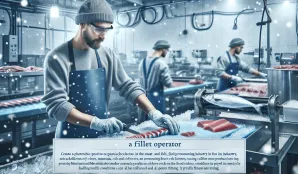
Filleting salary
Latest available salary statistics are for 2025. Compare average pay, salary range and related job listings.
31 500 - 34 400 SEK / month
Women earn 98% of what men do.
Industriell tillverkning
Related tools
Salary progression Filleting
What does a Fileterare do? – Tasks and work environment
A Fileterare primarily works with processing and filleting fish or meat in the food industry. The profession requires great precision and good hand motor skills, as the work is often performed with knives or various types of filleting machines. Tasks include cleaning, cutting, deboning, and sometimes packing products for further sale or distribution. The work takes place in cool, humid environments, where hygiene is strictly regulated. The tasks can be monotonous but require constant attention to detail to ensure quality and food safety.
Salary development over time
Over the past three years, Fileterare have experienced a stable and clear salary development. In 2022, the average salary was 28,500 SEK per month. The following year, the average increased to 30 800 SEK, corresponding to an increase of about 4.5%. In 2024, the trend continued upward, with an average salary of 33 000 SEK, a further increase of just over 3.4%. This positive trend is partly explained by continued demand for processed food, but also by employers needing to compete for labor in a sector where automation and technological development demand higher skills. Despite the profession being part of a larger occupational group where demand is expected to decline in the long term, the salary level appears to have improved for those currently working.
Fileterare salary – comprehensive overview
- Average salary: 33 000 SEK/month
- Lowest salary: 28,500 SEK/month (men), 31,400 SEK/month (women)
- Highest salary: 33,300 SEK/month (men), 32,700 SEK/month (women)
- Hourly wage: 185 SEK/hour (hourly worker, average 166 hours/month)
- Gender differences: Women earn 98% of what men do (men: 33 200 SEK, women: 32 600 SEK)
- Regional differences: Highest and lowest salaries are found within the regional sector
Education and qualifications
To work as a Fileterare, no formal education is usually required, but a high school education in the food program or equivalent is often advantageous. Employers value practical experience, good hygiene habits, and the ability to work efficiently with hands. Training often occurs directly on the workplace, and there are opportunities to undergo internal courses or shorter training to improve techniques and increase food safety.
- High school education: Food program, specialization in meat and fish preparation (3 years)
- Certifications: Hygiene training and food handling
- Practical experience: Often required through internships or introduction on the job
- Prerequisites: Good hand motor skills and endurance
- Tips: Interest in food and precision are important qualities
Many Fileterare develop impressive dexterity and a sense for raw material quality over time, making them invaluable resources in the food chain. Being able to quickly identify small bones or defects in fillets is a skill highly appreciated by both employers and customers.
Common benefits and compensations
Fileterare are often covered by collective agreements that entitle them to overtime pay, holiday pay, and sometimes wellness allowances. Other common benefits may include work clothing, employee discounts on company products, and opportunities for further training in food handling and hygiene. In some cases, health checks and insurance are included as part of the employment.
Competition and challenges
The job market for Fileterare is characterized by a balance between supply and demand, with 1437 available jobs in the occupational group of machine operators in the food industry. Over five years, demand is expected to decline somewhat, partly due to increased automation and advanced machinery taking over simpler tasks. For those wishing to establish themselves in the profession, it is important to quickly adapt to new working methods and be prepared for changing tasks. Competition may also be affected by seasonal variations and regional differences in the food industry.
Tips for aspiring Fileterare
To succeed as a Fileterare, patience and precision are key, as tasks are often repetitive and require accuracy. Good physical endurance and stamina are beneficial during long shifts in cold environments. An interest in food and raw materials facilitates learning different filleting techniques and improves work quality. Flexibility and the ability to quickly adapt to new machines or routines are also important, especially as technology advances. Maintaining hygiene and safety standards contributes to both personal and company reputation. Showing engagement and willingness to develop can also open doors to more advanced roles within the food industry.
Key facts about Fileterare
- Education level: High school education in food often advantageous
- Work environment: Cold, humid, and hygiene-regulated environments
- Work type: Shift work is common
- Demand: Moderate job market, 1437 available jobs
- Special skills: Hand motor skills, filleting technique, and food hygiene
Career paths and future prospects
After three to five years as a Fileterare, there are opportunities to advance to more specialized roles, such as production supervisor, quality inspector, or trainer for new employees. With further skill development, transitioning to other parts of the food industry, such as machine operator or production planner, is also possible. According to the Swedish Public Employment Service's forecast for machine operators in the food sector, the job market is balanced, but demand is expected to decrease over time due to technological development and increased automation. Those willing to learn new techniques and adapt to changes continue to have good opportunities for employment and advancement within the industry.
Frequently asked questions about Fileterare
- What is the average salary for a Fileterare?
- The average salary for a Fileterare is 33 000 SEK per month. - How does the salary of a Fileterare compare between men and women?
- Women earn on average 32 600 SEK and men 33 200 SEK, which means women earn 98% of men's salary. - What education is required to become a Fileterare?
- A high school education in the food program is common, but training often occurs on the job. - What is the work environment like for a Fileterare?
- Fileterare work in cool, humid environments with high hygiene standards and often in shifts. - What are the future prospects for a Fileterare?
- The job market is balanced but demand is expected to decline over time due to automation. - Are there regional differences in the salary of a Fileterare?
- Yes, both the highest and lowest salaries are found within the regional sector. - What career paths are available for a Fileterare?
- Common paths include supervisor, quality inspector, or further education within the food industry.

Salary distributed by age and sector
| Age | Base salary | Monthly salary | |
|---|---|---|---|
| 18-24 | 28600 kr | 32000 kr | |
| 25-34 | 98% | 29600 kr | 32400 kr |
| 35-44 | 101% | 30200 kr | 32700 kr |
| 45-54 | 97% | 30500 kr | 33100 kr |
| 55-64 | 92% | 31500 kr | 34700 kr |
| Snitt | 98% | 30200 kr | 33000 kr |
| Age | Base salary | Monthly salary | |
|---|---|---|---|
| 18-24 | 28600 kr | 32000 kr | |
| 25-34 | 98% | 29600 kr | 32400 kr |
| 35-44 | 101% | 30200 kr | 32700 kr |
| 45-54 | 97% | 30500 kr | 33100 kr |
| 55-64 | 92% | 31500 kr | 34700 kr |
| Snitt | 98% | 30200 kr | 33000 kr |
| Age | Base salary | Monthly salary | |
|---|---|---|---|
| 18-24 | 28600 kr | 32000 kr | |
| 25-34 | 98% | 29600 kr | 32400 kr |
| 35-44 | 101% | 30200 kr | 32700 kr |
| 45-54 | 97% | 30500 kr | 33100 kr |
| 55-64 | 92% | 31500 kr | 34700 kr |
| Snitt | 98% | 30200 kr | 33000 kr |
| Age | Base salary | Monthly salary | |
|---|---|---|---|
| 18-24 | 28600 kr | 32000 kr | |
| 25-34 | 98% | 29900 kr | 32600 kr |
| 35-44 | 101% | 30200 kr | 32700 kr |
| 45-54 | 97% | 30800 kr | 33500 kr |
| 55-64 | 92% | 32000 kr | 35800 kr |
| Snitt | 98% | 30300 kr | 33200 kr |
| Age | Base salary | Monthly salary | |
|---|---|---|---|
| 18-24 | 28600 kr | 32000 kr | |
| 25-34 | 98% | 29900 kr | 32600 kr |
| 35-44 | 101% | 30200 kr | 32700 kr |
| 45-54 | 97% | 30800 kr | 33500 kr |
| 55-64 | 92% | 32000 kr | 35800 kr |
| Snitt | 98% | 30300 kr | 33200 kr |
| Age | Base salary | Monthly salary | |
|---|---|---|---|
| 18-24 | 28600 kr | 32000 kr | |
| 25-34 | 98% | 29900 kr | 32600 kr |
| 35-44 | 101% | 30200 kr | 32700 kr |
| 45-54 | 97% | 30800 kr | 33500 kr |
| 55-64 | 92% | 32000 kr | 35800 kr |
| Snitt | 98% | 30300 kr | 33200 kr |
| Age | Base salary | Monthly salary | |
|---|---|---|---|
| 25-34 | 98% | 28700 kr | 32000 kr |
| 35-44 | 101% | 30100 kr | 32800 kr |
| 45-54 | 97% | 30100 kr | 32400 kr |
| 55-64 | 92% | 30700 kr | 33000 kr |
| Snitt | 98% | 29900 kr | 32600 kr |
| Age | Base salary | Monthly salary | |
|---|---|---|---|
| 25-34 | 98% | 28700 kr | 32000 kr |
| 35-44 | 101% | 30100 kr | 32800 kr |
| 45-54 | 97% | 30100 kr | 32400 kr |
| 55-64 | 92% | 30700 kr | 33000 kr |
| Snitt | 98% | 29900 kr | 32600 kr |
| Age | Base salary | Monthly salary | |
|---|---|---|---|
| 25-34 | 98% | 28700 kr | 32000 kr |
| 35-44 | 101% | 30100 kr | 32800 kr |
| 45-54 | 97% | 30100 kr | 32400 kr |
| 55-64 | 92% | 30700 kr | 33000 kr |
| Snitt | 98% | 29900 kr | 32600 kr |

About the data
All information displayed on this page is based on data from the Swedish Central Bureau of Statistics (SCB), the Swedish Tax Agency and the Swedish employment agency. Learn more about our data and data sources here.
All figures are gross salaries, meaning salaries before tax. The average salary, or mean salary, is calculated by adding up the total salary for all individuals within the profession and dividing it by the number of individuals. For specific job categories, we have also considered various criteria such as experience and education.
Profession Filleting has the SSYK code 8161, which we use to match against the SCB database to obtain the latest salary statistics.
-

Production Worker for Food Industry in Falkenberg
Machine operators, meat and fish processing industry
Fri, 10 Jul 2026 - 07:22 -

Process Operator at Feed Mill in Västerås
Machine operators, meat and fish processing industry
Thu, 9 Jul 2026 - 21:17 -

Production Worker for Meat and Fish Processing
Machine operators, meat and fish processing industry
Tue, 7 Jul 2026 - 21:29 -

Machine Operator in Food Production
Machine operators, meat and fish processing industry
Mon, 6 Jul 2026 - 20:45 -

Production Team Member for Food Production – Magnussons Fisk
Machine operators, meat and fish processing industry
Mon, 6 Jul 2026 - 06:29
Compare salary, work tasks and job outlook in adjacent occupations to find roles with similar skills or pay levels.
-

Average salary: 34 200 SEK/month • Industriell tillverkning
Machine operators, plastics industry
Compare with Filleting
Tue, 14 Jul 2026 - 11:56 -

Average salary: 48 700 SEK/month • Industriell tillverkning
Process operators, stone crushing and ore processing
Compare with Filleting
Tue, 14 Jul 2026 - 03:32 -

Steel engravers, print media salary
Average salary: 35 300 SEK/month • Industriell tillverkning
Prepress technicians
Compare with Filleting
Tue, 14 Jul 2026 - 13:14 -

Average salary: 32 200 SEK/month • Industriell tillverkning
Other machine operators, textile, leather and leather industry
Compare with Filleting
Mon, 13 Jul 2026 - 11:22 -

Average salary: 28 600 SEK/month • Industriell tillverkning
Machine operators, bleaching, dyeing and washing
Compare with Filleting
Tue, 14 Jul 2026 - 13:55 -

Average salary: 33 800 SEK/month • Industriell tillverkning
Bookbinders etc.
Compare with Filleting
Tue, 14 Jul 2026 - 13:55


