- Salary statistics
- Epoxy casters salary
Epoxy casters salary
Latest available salary statistics are for 2025. Compare average pay, salary range and related job listings.
32 600 - 35 200 SEK / month
Women earn 94% of what men do.
Industriell tillverkning
Related tools
Salary progression Epoxy casters
What does an epoxy molder do? – Tasks and work environment
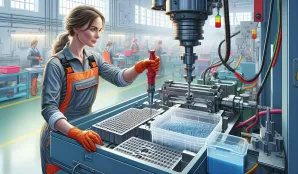
An epoxy molder mainly works with manufacturing and processing plastic parts and components through casting of epoxy materials. Tasks include preparing molds, measuring and mixing epoxy resins, monitoring the casting process, and ensuring the final product meets quality standards. The work often takes place in industrial environments where specialized machinery and protective gear are used to handle chemicals and prevent exposure to hazardous substances. The work environment can be noisy and requires good physical condition, precision, and adherence to safety routines.
Salary development over time
The salary for epoxy molders has steadily increased in recent years. In 2022, the average salary was 30,900 SEK per month. The following year, 2023, the average rose to 33 200 SEK, which is an increase of approximately 3.6%. For 2024, the salary continues to rise and now stands at 34 200 SEK, a further increase of about 3.8% from the previous year. This salary trend reflects a continued demand for skilled workers in the plastics industry, although signs of technological development and automation may slow wage growth in the future. Regional differences, education level, and sector also influence salary levels, with private sector employees often earning more than those in regional sectors.
Epoxy Molder salary – a complete overview
- Average salary: 34 200 SEK/month
- Lowest salary: 31,500 SEK (female, regional sector, high school education)
- Highest salary: 35,700 SEK (male, private sector, post-secondary education of at least 3 years)
- Hourly wage: 200 SEK
- Gender differences: Women earn 94 % of what men do (men: 34 800 SEK, women: 32 700 SEK)
- Regional differences: Salary levels vary depending on geographic area and sector
Education and qualifications
The path to becoming an epoxy molder usually involves a high school education in industry, plastics, or process technology. To work independently, additional courses or certifications in plastic processing and chemical safety are often required. Practical experience is highly valued, and many employers look favorably on previous work in similar industrial environments.
- Formal education: High school diploma in industry, plastics, or process technology (3 years)
- Certifications: Courses in plastic processing, safety training for chemical handling
- Internship: On-the-job training or internships during education are strongly recommended
- Prerequisites: Basic math and technology skills, sometimes B driving license required
- Tips for choosing: Select a program with close ties to industry for better employment chances
Epoxy molders often work with specialized machines and molds that require good technical understanding. Since the material cures quickly, tasks must be performed with high precision and in the correct tempo, making the profession both challenging and technically evolving.
Common benefits and compensations
Among epoxy molders, common benefits include shift allowances for night and weekend work, wellness contributions, and sometimes bonuses or performance-based pay. Additionally, compensation for work in hazardous environments, access to protective gear, and work clothes are typical.
Competition and challenges
Epoxy molders operate in an industry where demand for labor remains high, but technological development and increased automation are expected to reduce the need for manual skills in the long term. Recruitment difficulties in finding qualified personnel coexist with many leaving the profession, creating a paradox where there are both job openings and potential oversupply in the future. To meet these challenges, continuous skills development and adaptation to new working methods and technologies are essential.
Tips for those wanting to become an epoxy molder
To succeed as an epoxy molder, attention to detail and accuracy are important, as the work requires precision in mixing and casting materials. An interest in technology helps in understanding and handling machinery and following process descriptions. Being able to handle stress is an advantage, as some tasks must be completed within tight timeframes to prevent the material from curing prematurely. Teamwork and flexibility are key qualities, since the work is often performed in teams and may involve shift work or changing tasks. Finally, an epoxy molder should always be aware of safety importance and rigorously follow routines to protect themselves and colleagues.
Key facts about Epoxy Molders
- Education level: High school diploma in industry or plastics technology
- Work environment: Industrial, often noisy, with requirements for protective gear
- Typical work arrangement: Shift work occurs
- Demand: Great opportunities today, but forecasted to decline long-term
- Special skills: Handling epoxy resins and mold casting
Career paths and future prospects
After a few years in the profession, an epoxy molder can advance to roles such as supervisor, production technician, or specialist in quality control and process development. Some pursue further education in automation or mechanical engineering to meet the industry's increasing technical demands. The Employment Service's forecasts show good job opportunities in the plastics industry currently, but the demand for epoxy molders and similar roles may decrease over the next five years due to automation and technological advances. Nevertheless, many vacancies remain, and the job market is currently favorable for those with the right skills and education.
Common questions about Epoxy Molders
- What does an Epoxy Molder earn?
- The average salary for an epoxy molder is 34 200 SEK per month. - Are there differences between men and women in the profession?
- Yes, women earn on average 94 % of what men do within the profession. - What education is required to become an epoxy molder?
- A high school education in industry, plastics, or process technology is most common, often supplemented with courses in plastic processing. - What are the future prospects?
- Demand is high today but is expected to decrease in the long term according to the Employment Service's forecast. - What are the highest and lowest salaries in the profession?
- The highest salary is 35,700 SEK and the lowest is 31,500 SEK, depending on education, gender, and sector. - What does the work environment look like for epoxy molders?
- Work is carried out in industrial environments with requirements for protective equipment and precision. - What benefits are common?
- Common benefits include shift allowances, wellness contributions, and protective gear.

Salary distributed by age and sector
| Age | Base salary | Monthly salary | |
|---|---|---|---|
| 18-24 | 28800 kr | 31400 kr | |
| 25-34 | 94% | 31200 kr | 34300 kr |
| 35-44 | 91% | 32300 kr | 34900 kr |
| 45-54 | 96% | 32300 kr | 34900 kr |
| 55-64 | 94% | 32500 kr | 34600 kr |
| Snitt | 94% | 31600 kr | 34200 kr |
| Age | Base salary | Monthly salary | |
|---|---|---|---|
| 18-24 | 28800 kr | 31400 kr | |
| 25-34 | 94% | 31200 kr | 34300 kr |
| 35-44 | 91% | 32300 kr | 34900 kr |
| 45-54 | 96% | 32300 kr | 34900 kr |
| 55-64 | 94% | 32500 kr | 34600 kr |
| Snitt | 94% | 31600 kr | 34200 kr |
| Age | Base salary | Monthly salary | |
|---|---|---|---|
| 18-24 | 28800 kr | 31400 kr | |
| 25-34 | 94% | 31200 kr | 34300 kr |
| 35-44 | 91% | 32300 kr | 34900 kr |
| 45-54 | 96% | 32300 kr | 34900 kr |
| 55-64 | 94% | 32500 kr | 34600 kr |
| Snitt | 94% | 31600 kr | 34200 kr |
| Age | Base salary | Monthly salary | |
|---|---|---|---|
| 18-24 | 28800 kr | 31900 kr | |
| 25-34 | 94% | 31300 kr | 34800 kr |
| 35-44 | 91% | 32900 kr | 35600 kr |
| 45-54 | 96% | 32400 kr | 35400 kr |
| 55-64 | 94% | 33000 kr | 35500 kr |
| Snitt | 94% | 31900 kr | 34800 kr |
| Age | Base salary | Monthly salary | |
|---|---|---|---|
| 18-24 | 28800 kr | 31900 kr | |
| 25-34 | 94% | 31300 kr | 34800 kr |
| 35-44 | 91% | 32900 kr | 35600 kr |
| 45-54 | 96% | 32400 kr | 35400 kr |
| 55-64 | 94% | 33000 kr | 35500 kr |
| Snitt | 94% | 31900 kr | 34800 kr |
| Age | Base salary | Monthly salary | |
|---|---|---|---|
| 18-24 | 28800 kr | 31900 kr | |
| 25-34 | 94% | 31300 kr | 34800 kr |
| 35-44 | 91% | 32900 kr | 35600 kr |
| 45-54 | 96% | 32400 kr | 35400 kr |
| 55-64 | 94% | 33000 kr | 35500 kr |
| Snitt | 94% | 31900 kr | 34800 kr |
| Age | Base salary | Monthly salary | |
|---|---|---|---|
| 25-34 | 94% | 30800 kr | 32700 kr |
| 35-44 | 91% | 30200 kr | 32400 kr |
| 45-54 | 96% | 32100 kr | 33900 kr |
| 55-64 | 94% | 31700 kr | 33200 kr |
| Snitt | 94% | 31000 kr | 32700 kr |
| Age | Base salary | Monthly salary | |
|---|---|---|---|
| 25-34 | 94% | 30800 kr | 32700 kr |
| 35-44 | 91% | 30200 kr | 32400 kr |
| 45-54 | 96% | 32100 kr | 33900 kr |
| 55-64 | 94% | 31700 kr | 33200 kr |
| Snitt | 94% | 31000 kr | 32700 kr |
| Age | Base salary | Monthly salary | |
|---|---|---|---|
| 25-34 | 94% | 30800 kr | 32700 kr |
| 35-44 | 91% | 30200 kr | 32400 kr |
| 45-54 | 96% | 32100 kr | 33900 kr |
| 55-64 | 94% | 31700 kr | 33200 kr |
| Snitt | 94% | 31000 kr | 32700 kr |

About the data
All information displayed on this page is based on data from the Swedish Central Bureau of Statistics (SCB), the Swedish Tax Agency and the Swedish employment agency. Learn more about our data and data sources here.
All figures are gross salaries, meaning salaries before tax. The average salary, or mean salary, is calculated by adding up the total salary for all individuals within the profession and dividing it by the number of individuals. For specific job categories, we have also considered various criteria such as experience and education.
Profession Epoxy casters has the SSYK code 8142, which we use to match against the SCB database to obtain the latest salary statistics.
-

Production Operator for UW Elast in Traryd – Day Shift
Machine operators, plastics industry
Fri, 10 Jul 2026 - 21:25 -

Setup Technician for Preformance in Öggestorp
Machine operators, plastics industry
Tue, 7 Jul 2026 - 21:53 -
Setter for Injection Molding at Preformance in Öggestorp
Machine operators, plastics industry
Tue, 7 Jul 2026 - 21:52 -
Hiring Setup Technician at Preformance in Jönköping
Machine operators, plastics industry
Tue, 7 Jul 2026 - 21:51

Compare salary, work tasks and job outlook in adjacent occupations to find roles with similar skills or pay levels.
-

Average salary: 34 800 SEK/month • Industriell tillverkning
Machine operators, filling, packing and labeling
Compare with Epoxy casters
Tue, 14 Jul 2026 - 15:04 -

Average salary: 32 200 SEK/month • Industriell tillverkning
Other machine operators, textile, leather and leather industry
Compare with Epoxy casters
Tue, 14 Jul 2026 - 09:18 -

Average salary: 35 200 SEK/month • Industriell tillverkning
Machine operators, mill, bakery and confectionery industry
Compare with Epoxy casters
Tue, 14 Jul 2026 - 07:40 -

Machine operator, plasterboard salary
Average salary: 37 800 SEK/month • Industriell tillverkning
Machine operators, cement, stone and concrete products
Compare with Epoxy casters
Tue, 14 Jul 2026 - 11:42 -

Average salary: 39 900 SEK/month • Industriell tillverkning
Stonemasons etc.
Compare with Epoxy casters
Mon, 13 Jul 2026 - 05:37 -

Average salary: 35 700 SEK/month • Industriell tillverkning
Vehicle assemblers
Compare with Epoxy casters
Tue, 14 Jul 2026 - 11:56


