- Salary statistics
- Electrode nurse salary
Electrode nurse salary
Latest available salary statistics are for 2025. Compare average pay, salary range and related job listings.
37 900 - 40 900 SEK / month
Women earn 96% of what men do.
Installation & drift/underhåll
Related tools
Salary progression Electrode nurse
What does an Electrode Technician do? – tasks and work environment
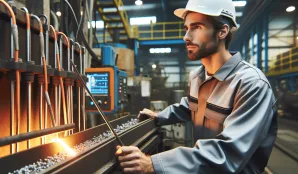
An Electrode Technician primarily works within the metal industry's process plants and is responsible for monitoring and maintaining electrodes in various smelting and refining processes. The role involves handling, inspecting, and replacing electrodes in, for example, furnaces where metal is melted or refined. The work is often performed in shifts and requires precision, technical understanding, and the ability to work safely in environments with high temperatures and heavy machinery. Collaboration with process operators and maintenance technicians is common, and the work environment is characterized by noise and physical strain. Safety routines are central to daily work to minimize risks associated with handling hazardous materials and advanced equipment.
Salary development over time
The salary for Electrode Technicians has shown a steady increase over the past three years. In 2022, the average monthly salary was 36,400 SEK. In 2023, the average salary increased to 39 700 SEK, corresponding to an increase of approximately 3.6%. In 2024, the average salary continued upward to 39 300 SEK, representing a further increase of nearly 5.3% compared to the previous year. This positive trend reflects increased demand for skilled workers in process monitoring and metal production. The industry has been affected by increased automation and technological development, which demands higher competence and education—factors that often lead to salary increases. Additionally, competition for experienced Electrode Technicians has been noticeable, further pushing wages upward within the profession.
Electrode Technician salary – a complete overview
- Average salary: 39 300 SEK/month
- Lowest salary: 38,000 SEK/month
- Highest salary: 40,200 SEK/month
- Hourly wage (average): 239 SEK
- Women earn: 38,000 SEK (96% of men's salary)
- Men earn: 39 500 SEK
- Regional differences: Highest salary (40,200 SEK) found in regional sector
Education and qualifications
To work as an Electrode Technician, a technical high school education with a focus on industry, electrical work, or automation is usually required. Many employers also prefer candidates with experience from process industries or similar work environments. Internal training and certifications may be relevant depending on the specific requirements of the workplace. Practical experience is highly valued, especially for managing safety routines and technical tasks involved in the profession.
- Formal education: High school diploma in industrial technology, electrical work, or automation (3 years)
- Certifications: Workplace/machine-specific certificates may be required
- Internship: Usually internship during education or as a trainee
- Prerequisites: Technical interest and good physical condition
- Tips: Additional courses in safety and process automation increase chances
Electrode Technicians often quickly gain significant responsibility and become an important part of the production chain. Many describe how the role provides a unique insight into all stages of metal production and opportunities for technical development, making the profession attractive for those who enjoy combining practical work and problem-solving.
Common benefits and compensations
Common benefits for Electrode Technicians include shift allowances, overtime pay, wellness contributions, and opportunities for further training. Employers often offer wellness stipends, work clothing, and additional education. Pension schemes and insurance are part of employment conditions, and some workplaces provide extra days off for unsocial hours.
Competitions and challenges
Competition for positions as an Electrode Technician varies depending on region and the economic situation within the metal industry. A clear challenge is the technical demands placed on practitioners, especially given the increasing automation and digitalization in the sector. Physical work environment, shift work, and safety risks require adaptation and continuous skills development. Since the profession is specialized, access to qualified job opportunities can vary, but experience and additional training provide competitive advantages. In some parts of the country, it may be difficult to find employers with a need for this specific skill set, which requires flexibility and mobility.
Tips for aspiring Electrode Technicians
To succeed as an Electrode Technician, it is beneficial to combine technical interest with a structured work approach and high safety awareness. Attention to detail and following routines are crucial to minimize risks in the often demanding work environment. Good teamwork skills facilitate collaboration with other process operators and technicians. Flexibility and problem-solving ability are valued, especially during urgent shutdowns or unexpected situations. Actively seeking further education and staying updated on new technology in the metal industry increases chances of employment and salary growth. Physical endurance is an advantage, as the work can be physically demanding and performed under varying conditions. Showing engagement and willingness to take responsibility often lead to greater trust and opportunities for advancement.
Key facts about Electrode Technicians
- Education level: High school diploma (industry, electrical, automation)
- Work environment: Process industry, often shift work
- Typical employment: Permanent, full-time
- Demand: 481 job openings within the profession (May 2024)
- Gender distribution: Women earn 96% of men's salary
Career paths and future prospects
After three to five years as an Electrode Technician, there are opportunities to advance to roles such as process operator, maintenance technician, or supervisor within the metal industry. Some choose to further educate themselves in automation or production technology to move into more specialized technical positions. The employment service does not make specific assessments for Electrode Technicians due to limited statistical data, but within the profession of process monitoring and metal production, there is stable demand with 481 job openings reported in spring 2024. Future prospects are influenced by economic cycles and technological development, but experience and further education provide good opportunities for continued career growth within the industry.
Frequently asked questions about Electrode Technicians
- What does an Electrode Technician earn?
- The average salary is 39 300 SEK per month, varying between 38,000 and 40,200 SEK depending on experience and sector. - Are there gender differences in the salary of Electrode Technicians?
- Yes, women earn an average of 38,000 SEK while men earn 39 500 SEK, which corresponds to 96% of men's salary. - What education is required to become an Electrode Technician?
- A high school diploma with a focus on industry, electrical work, or automation is most common, often supplemented with internships and certifications. - What is the work environment like for Electrode Technicians?
- The work takes place in an industrial environment with high temperatures, noise, and safety routines, often in shifts and in teams. - What are the future prospects for Electrode Technicians?
- Demand is stable within the profession, with 481 job openings reported in spring 2024, but specific forecasts are lacking. - What benefits are common for Electrode Technicians?
- Shift allowances, overtime pay, wellness contributions, and further training are common benefits. - Are there regional differences in the salary of Electrode Technicians?
- Yes, the highest salary of 40,200 SEK is found within the regional sector, while the lowest salary of 38,000 SEK applies to women in various sectors.

Salary distributed by age and sector
| Age | Base salary | Monthly salary | |
|---|---|---|---|
| 18-24 | 31700 kr | 36900 kr | |
| 25-34 | 33100 kr | 38000 kr | |
| 35-44 | 35200 kr | 40700 kr | |
| 45-54 | 35300 kr | 40500 kr | |
| 55-64 | 35600 kr | 39800 kr | |
| Snitt | 96% | 34400 kr | 39300 kr |
| Age | Base salary | Monthly salary | |
|---|---|---|---|
| 18-24 | 31700 kr | 36900 kr | |
| 25-34 | 33100 kr | 38000 kr | |
| 35-44 | 35200 kr | 40700 kr | |
| 45-54 | 35300 kr | 40500 kr | |
| 55-64 | 35600 kr | 39800 kr | |
| Snitt | 96% | 34400 kr | 39300 kr |
| Age | Base salary | Monthly salary | |
|---|---|---|---|
| 18-24 | 31700 kr | 36900 kr | |
| 25-34 | 33100 kr | 38000 kr | |
| 35-44 | 35200 kr | 40700 kr | |
| 45-54 | 35300 kr | 40500 kr | |
| 55-64 | 35600 kr | 39800 kr | |
| Snitt | 96% | 34400 kr | 39300 kr |
| Age | Base salary | Monthly salary | |
|---|---|---|---|
| 18-24 | 31600 kr | 36700 kr | |
| 25-34 | 33200 kr | 38100 kr | |
| 35-44 | 35500 kr | 41000 kr | |
| 45-54 | 35700 kr | 41200 kr | |
| 55-64 | 35600 kr | 39800 kr | |
| Snitt | 96% | 34500 kr | 39500 kr |
| Age | Base salary | Monthly salary | |
|---|---|---|---|
| 18-24 | 31600 kr | 36700 kr | |
| 25-34 | 33200 kr | 38100 kr | |
| 35-44 | 35500 kr | 41000 kr | |
| 45-54 | 35700 kr | 41200 kr | |
| 55-64 | 35600 kr | 39800 kr | |
| Snitt | 96% | 34500 kr | 39500 kr |
| Age | Base salary | Monthly salary | |
|---|---|---|---|
| 18-24 | 31600 kr | 36700 kr | |
| 25-34 | 33200 kr | 38100 kr | |
| 35-44 | 35500 kr | 41000 kr | |
| 45-54 | 35700 kr | 41200 kr | |
| 55-64 | 35600 kr | 39800 kr | |
| Snitt | 96% | 34500 kr | 39500 kr |
| Age | Base salary | Monthly salary | |
|---|---|---|---|
| Snitt | 96% | 33400 kr | 38100 kr |
| Age | Base salary | Monthly salary | |
|---|---|---|---|
| Snitt | 96% | 33400 kr | 38100 kr |
| Age | Base salary | Monthly salary | |
|---|---|---|---|
| Snitt | 96% | 33400 kr | 38100 kr |

About the data
All information displayed on this page is based on data from the Swedish Central Bureau of Statistics (SCB), the Swedish Tax Agency and the Swedish employment agency. Learn more about our data and data sources here.
All figures are gross salaries, meaning salaries before tax. The average salary, or mean salary, is calculated by adding up the total salary for all individuals within the profession and dividing it by the number of individuals. For specific job categories, we have also considered various criteria such as experience and education.
Profession Electrode nurse has the SSYK code 8193, which we use to match against the SCB database to obtain the latest salary statistics.
-

Production Worker in Eskilstuna – Shift Work
Process supervisors, metal production
Mon, 13 Jul 2026 - 21:46 -

Process Operator in Hallstahammar – 3 Shifts
Process supervisors, metal production
Tue, 7 Jul 2026 - 22:08 -

Industrial Worker in Sandviken – Upcoming Assignments
Process supervisors, metal production
Mon, 22 Jun 2026 - 22:24 -

Goods Receiver at LKAB Mekaniska in Kiruna
Process supervisors, metal production
Fri, 19 Jun 2026 - 20:42

Compare salary, work tasks and job outlook in adjacent occupations to find roles with similar skills or pay levels.
-
Telephone fitter, installation salary
Average salary: 40 200 SEK/month • Installation & drift/underhåll
Electronics repair and communication electricians etc.
Compare with Electrode nurse
Tue, 14 Jul 2026 - 17:14 -

Average salary: 40 200 SEK/month • Installation & drift/underhåll
Electronics repair and communication electricians etc.
Compare with Electrode nurse
Tue, 14 Jul 2026 - 16:25 -

Engine attendants, ships salary
Average salary: 40 500 SEK/month • Installation & drift/underhåll
Maintenance mechanics and machine repairers
Compare with Electrode nurse
Tue, 14 Jul 2026 - 16:19 -

Average salary: 27 300 SEK/month • Installation & drift/underhåll
Other service workers
Compare with Electrode nurse
Tue, 14 Jul 2026 - 16:17 -

Casting box attendant, steelworks salary
Average salary: 39 300 SEK/month • Installation & drift/underhåll
Process supervisors, metal production
Compare with Electrode nurse
Tue, 14 Jul 2026 - 13:07 -

Average salary: 33 600 SEK/month • Installation & drift/underhåll
Property caretakers
Compare with Electrode nurse
Tue, 14 Jul 2026 - 17:13


