- Salary statistics
- Brodör, handicraft salary
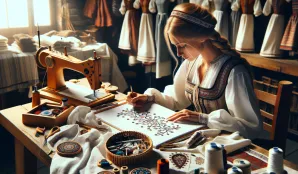
Brodör, handicraft salary
Latest available salary statistics are for 2025. Compare average pay, salary range and related job listings.
33 327 - 32 802 SEK / month
Hantverksyrken
Related tools
Salary progression Brodör, handicraft
What does an embroiderer in crafts do? – Tasks and work environment
Embroidery artists in crafts work with decorating textiles using embroidery techniques, often by hand but sometimes with machines. Tasks range from creating unique artworks on clothing, interior textiles, and accessories to restoring older embroidery and textiles. High precision, artistic skill, and an eye for detail are often required. The work takes place in an atelier, small workshops, or sometimes in larger textile companies, where the environment is characterized by sitting still and concentration, often with good lighting and access to specialized tools and materials.
Salary development over time
The salary for embroidery artists in crafts has been relatively stable over the past three years. In 2022, the average salary was 30,698 SEK per month, which increased slightly to 31 077 SEK in 2023. In 2024, the average salary has risen further to 32 802 SEK per month. The total increase amounts to just under one percent over three years, indicating very weak salary growth. This slow increase may be due to low demand, competition from cheaper production abroad, and the fact that the profession is often practiced in small companies or as self-employed, where profitability is limited. The market for embroidery crafts is niche and strongly influenced by trends in fashion and interior design.
Embroidery artist, crafts salary – complete overview
- Average salary: 32 802 SEK/month
- Lowest/Highest salary: Data unavailable
- Hourly wage: 187 SEK
- Gender differences: Data unavailable
- Regional differences: Data unavailable
Education and qualifications
The path to becoming an embroidery artist in crafts usually goes through high school crafts programs with a textile focus, supplemented by further education or specialized courses in embroidery techniques. Many also develop their skills through internships or apprenticeships, as well as self-study and continuous practice to refine technique and artistic expression.
- High school education: Crafts program, textile focus (3 years)
- Vocational education: Shorter specialized courses in embroidery
- Internship or apprenticeship: Recommended for gaining work experience
- Prerequisites: Basic textile knowledge and accuracy
- Self-study and practice: Important for developing artistic style
Many embroidery artists in crafts combine their profession with other creative tasks, such as sewing or textile design, to create a broader and more flexible career. This opens opportunities for collaborations, exhibitions, and personal projects that contribute to the profession's diversity and development.
Common benefits and compensations
For embroidery artists in crafts, benefits such as flexible working hours, remote work options, and sometimes access to workshops or materials via the employer are common. Self-employed individuals can control their working hours and workload, while employees may be offered wellness allowances and opportunities for further training in textiles and design.
Competition and challenges
The profession of embroidery artist in crafts is characterized by tough competition, especially from mass-produced and cheaper textiles imported from abroad. Demand for handmade embroidery is strongly linked to trends in fashion and interior design, which can make the job market uncertain. Securing permanent employment is often difficult, as many work as self-employed or on a project basis. Additionally, the profession requires high precision and patience, and long working hours can be strenuous for hands and eyesight. Technological developments and digital embroidery machines also mean a need to constantly update skills.
Tips for aspiring embroidery artists in crafts
To succeed as an embroidery artist in crafts, it’s good to be creative and have a genuine interest in textiles and details. Precision and patience are essential, especially when working with small stitches and complex patterns. Training your artistic skills through practicing different techniques and seeking internships or apprenticeships to gain insight into the profession’s daily life are recommended. Building a network within the textile industry can open doors to collaborations and new assignments. Flexibility and the ability to adapt to customer wishes are also important, as well as staying updated on new materials and tools. Finally, showcasing your work in a portfolio or at exhibitions can increase visibility and attract clients.
Key facts about embroidery artists in crafts
- Education level: High school or vocational courses in textiles
- Work environment: Atelier, workshop, or at home
- Work form: Often self-employed or project-based
- Demand: Niche market, 341 available jobs in the profession
- Special skills: Manual and machine embroidery techniques
Career paths and future prospects
After three to five years in the profession, an embroidery artist in crafts can develop into more advanced roles such as atelier manager, embroidery trainer, or start their own business in textile art. It is also possible to specialize in restoring older textiles or working with artistic projects and exhibitions. According to the Swedish Public Employment Service's forecasts, no clear assessment of the profession’s future outlook can be made due to limited data, but with 341 available jobs, demand remains, especially for those who are flexible and have good references. However, the job market depends on trends and customer willingness to invest in crafts.
Common questions about embroidery artists in crafts
- What does an embroidery artist in crafts earn?
- The average salary is 32 802 SEK per month. - How to become an embroidery artist in crafts?
- Through high school crafts programs, specialized courses, and internships in embroidery. - Are there many job opportunities for embroidery artists in crafts?
- There are 341 available jobs according to current data. - What personal qualities are needed?
- Creativity, accuracy, patience, and artistic sense are important qualities. - What is the work environment like?
- Work is usually done in an atelier, workshop, or at home, focusing on details and good lighting. - Are there regional salary differences?
- No available data on regional salary differences for this profession. - Which employers hire embroidery artists in crafts?
- Small textile companies, ateliers, self-employed individuals, and sometimes larger interior or fashion companies.

Salary distributed by age and sector

About the data
All information displayed on this page is based on data from the Swedish Central Bureau of Statistics (SCB), the Swedish Tax Agency and the Swedish employment agency. Learn more about our data and data sources here.
All figures are gross salaries, meaning salaries before tax. The average salary, or mean salary, is calculated by adding up the total salary for all individuals within the profession and dividing it by the number of individuals. For specific job categories, we have also considered various criteria such as experience and education.
Profession Brodör, handicraft has the SSYK code 7532, which we use to match against the SCB database to obtain the latest salary statistics.
Compare salary, work tasks and job outlook in adjacent occupations to find roles with similar skills or pay levels.
-
Upholsterer, seamstress salary
Average salary: 32 200 SEK/month • Hantverksyrken
Upholsterers
Compare with Brodör, handicraft
Mon, 13 Jul 2026 - 19:41 -

Average salary: 40 900 SEK/month • Hantverksyrken
Precision mechanics
Compare with Brodör, handicraft
Mon, 13 Jul 2026 - 13:51 -

Average salary: 34 200 SEK/month • Hantverksyrken
Fine, interior and furniture carpenters
Compare with Brodör, handicraft
Wed, 8 Jul 2026 - 18:06 -

Average salary: 34 000 SEK/month • Hantverksyrken
Musical instrument makers and other artisans
Compare with Brodör, handicraft
Tue, 14 Jul 2026 - 07:11 -

Average salary: 38 800 SEK/month • Hantverksyrken
Blacksmiths
Compare with Brodör, handicraft
Tue, 14 Jul 2026 - 07:13 -

Average salary: 34 000 SEK/month • Hantverksyrken
Musical instrument makers and other artisans
Compare with Brodör, handicraft
Tue, 14 Jul 2026 - 07:16


