- Salary statistics
- Screen saver salary
Screen saver salary
Latest available salary statistics are for 2025. Compare average pay, salary range and related job listings.
33 300 - 39 000 SEK / month
Women earn 89% of what men do.
Industriell tillverkning
Related tools
Salary progression Screen saver
What does a prepress technician do? – tasks and work environment
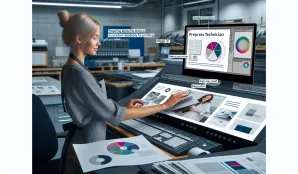
A prepress technician primarily works on digitally compiling, editing, and designing text and images for print or digital publishing. Tasks may include layout work, typographic decisions, and ensuring original files meet technical quality standards for printing presses or digital platforms. The work is often done in close collaboration with graphic designers, original plate makers, and printing staff. The work environment is generally office-based and digitally focused, with modern computers and advanced layout software as central tools. The pace can be fast, especially before deadlines for print or major digital publications.
Salary development over time
The profession of prepress technician has shown relatively stable salary development over the past three years. In 2022, the average salary was 33,000 SEK per month. In 2023, the average salary increased slightly to 34 700 SEK, reflecting an increase of about 5.5%. In 2024, the average salary was 35 300 SEK, indicating a slight decrease compared to the previous year but still a clear increase compared to 2022. This trend reflects a market where demand for technically skilled prepress technicians remains steady, but salary growth is pressured by digitalization and automation in the graphic industry. Variations in salary development can also depend on regional demand and individual skill development.
Prepress technician salary – comprehensive overview
- Average salary: 35 300 SEK/month
- Lowest salary: 31,800 SEK/month
- Highest salary: 37,800 SEK/month
- Hourly wage: 209 SEK
- Women: 33 400 SEK/month
- Men: 37 700 SEK/month
- Women earn: 89% of what men do
- Regional differences: May occur depending on market size and company structure
Education and qualifications
To work as a prepress technician, a high school education in graphic technology is usually required, with additional courses in prepress, digital image management, and layout. Many employers also prefer candidates with post-secondary education or relevant certifications in graphic production. Practical experience with layout software and digital workflows is often crucial, and self-study or online courses can provide competitive advantages.
- High school: Graphic technology, 3 years
- Post-secondary courses: Prepress, digital publishing
- Certifications: Adobe InDesign, Photoshop, Illustrator
- Internships: Commonly available through education or trainee programs
- Prerequisites: Computer skills, interest in typography and color management
- Self-study: Online courses in layout and image editing
Although the profession of prepress technician is often associated with printed media, digitalization has led many to work with both digital and printed production. The ability to quickly switch between different technical platforms and workflows is therefore a significant asset.
Common benefits and compensations
Prepress technicians are often covered by collective agreements that provide pension rights, wellness allowances, and insurance. Other common benefits include flexible working hours, the possibility of remote work, and access to modern technical equipment. Some employers also offer skills development and discounted employee benefits related to health and recreation.
Challenges and competition
The market for prepress technicians has changed significantly in recent years, mainly due to increased digitalization within media and printing. Automated workflows and advanced layout software have streamlined production, leading to increased competition for jobs. At the same time, there remains a continued need for skilled professionals who can handle specialized tasks and quickly adapt to new technologies. The profession requires ongoing skills development and the ability to stay up-to-date with industry technological advancements.
Tips for aspiring prepress technicians
To succeed as a prepress technician, it is beneficial to combine technical interest with creative ability. Precision is crucial, as small errors can have significant consequences in the final product, so developing structured work routines is a good tip. Being communicative and able to collaborate effectively with colleagues and clients leads to smoother workflows. Flexibility and willingness to learn new skills are important qualities, especially as the industry constantly evolves and new software is introduced. Regularly updating your knowledge in layout software and digital publishing provides a competitive edge. A good sense of color and form helps create appealing and functional productions. Finally, problem-solving skills are valuable, as unexpected technical challenges often arise in the work.
Key facts about prepress technicians
- Education level: High school education with recommended additional courses
- Occupational group: Prepress technician
- Work environment: Office-based, digitally focused
- Typical employment: Full-time, but part-time positions are also common
- Demand: 1,437 job openings within the occupational group (May 2024)
Career paths and future prospects
After three to five years in the profession, a prepress technician can advance to roles such as original plate maker, graphic designer, or production technician in printing and media. There are also opportunities to specialize in digital publishing or move into project management within larger production workflows. According to the Swedish Public Employment Service's forecasts, no separate assessment of future prospects for prepress technicians is made, but the occupational group of prepress technicians and printers has a stable number of job openings. However, digitalization and automation influence demand, so continuous skills development is important for long-term employability.
Frequently asked questions about prepress technicians
- What is the average salary of a prepress technician?
- A prepress technician has an average monthly salary of 35 300 SEK. - What is the starting salary for a prepress technician?
- The starting salary is usually close to 31,800 SEK per month, depending on experience and workplace. - Are there salary differences between men and women?
- Yes, women earn an average of 33 400 SEK and men 37 700 SEK, which means women earn 89% of men's salaries. - What education is required to become a prepress technician?
- High school education in graphic technology and post-secondary courses or certifications in prepress and digital publishing are recommended. - What is the job market like for prepress technicians?
- There are 1,437 job openings in the occupational group of prepress technicians and printers, but competition can be high depending on the region. - What are the job responsibilities of a prepress technician?
- Responsibilities include layout, image processing, typography, and preparing materials for print or digital publishing. - What career paths are available after a few years in the profession?
- With experience, you can advance to roles such as original plate maker, graphic designer, or production technician.

Salary distributed by age and sector
| Age | Base salary | Monthly salary | |
|---|---|---|---|
| 55-64 | 35600 kr | 36200 kr | |
| Snitt | 89% | 34800 kr | 35300 kr |
| Age | Base salary | Monthly salary | |
|---|---|---|---|
| 25-34 | 36200 kr | 36200 kr | |
| 35-44 | 36400 kr | 36700 kr | |
| 45-54 | 104% | 37300 kr | 37300 kr |
| 55-64 | 109% | 36900 kr | 36900 kr |
| Snitt | 104% | 36900 kr | 36900 kr |
| Age | Base salary | Monthly salary | |
|---|---|---|---|
| 25-34 | 36200 kr | 36200 kr | |
| 35-44 | 36400 kr | 36700 kr | |
| 45-54 | 104% | 37300 kr | 37300 kr |
| 55-64 | 109% | 36900 kr | 36900 kr |
| Snitt | 104% | 36900 kr | 36900 kr |
| Age | Base salary | Monthly salary | |
|---|---|---|---|
| 55-64 | 35600 kr | 36200 kr | |
| Snitt | 88% | 34700 kr | 35300 kr |
| Age | Base salary | Monthly salary | |
|---|---|---|---|
| 55-64 | 35600 kr | 36200 kr | |
| Snitt | 88% | 34700 kr | 35300 kr |
| Age | Base salary | Monthly salary | |
|---|---|---|---|
| Snitt | 89% | 37100 kr | 37700 kr |
| Age | Base salary | Monthly salary | |
|---|---|---|---|
| 45-54 | 104% | 36700 kr | 36700 kr |
| 55-64 | 109% | 35400 kr | 35400 kr |
| Snitt | 104% | 35900 kr | 36100 kr |
| Age | Base salary | Monthly salary | |
|---|---|---|---|
| 45-54 | 104% | 36700 kr | 36700 kr |
| 55-64 | 109% | 35400 kr | 35400 kr |
| Snitt | 104% | 35900 kr | 36100 kr |
| Age | Base salary | Monthly salary | |
|---|---|---|---|
| Snitt | 88% | 37100 kr | 37700 kr |
| Age | Base salary | Monthly salary | |
|---|---|---|---|
| Snitt | 88% | 37100 kr | 37700 kr |
| Age | Base salary | Monthly salary | |
|---|---|---|---|
| Snitt | 89% | 32900 kr | 33400 kr |
| Age | Base salary | Monthly salary | |
|---|---|---|---|
| 25-34 | 36200 kr | 36200 kr | |
| 35-44 | 37400 kr | 37500 kr | |
| 45-54 | 104% | 38400 kr | 38400 kr |
| 55-64 | 109% | 38400 kr | 38400 kr |
| Snitt | 104% | 37700 kr | 37700 kr |
| Age | Base salary | Monthly salary | |
|---|---|---|---|
| 25-34 | 36200 kr | 36200 kr | |
| 35-44 | 37400 kr | 37500 kr | |
| 45-54 | 104% | 38400 kr | 38400 kr |
| 55-64 | 109% | 38400 kr | 38400 kr |
| Snitt | 104% | 37700 kr | 37700 kr |
| Age | Base salary | Monthly salary | |
|---|---|---|---|
| Snitt | 88% | 32800 kr | 33300 kr |
| Age | Base salary | Monthly salary | |
|---|---|---|---|
| Snitt | 88% | 32800 kr | 33300 kr |

About the data
All information displayed on this page is based on data from the Swedish Central Bureau of Statistics (SCB), the Swedish Tax Agency and the Swedish employment agency. Learn more about our data and data sources here.
All figures are gross salaries, meaning salaries before tax. The average salary, or mean salary, is calculated by adding up the total salary for all individuals within the profession and dividing it by the number of individuals. For specific job categories, we have also considered various criteria such as experience and education.
Profession Screen saver has the SSYK code 7321, which we use to match against the SCB database to obtain the latest salary statistics.
-

Production Worker for CTT Systems in Nybro (via NearYou)
Prepress technicians
Sat, 4 Jul 2026 - 01:55 -
Assembler for Innovative Industrial Company – Full-time with Potential for Direct Hire
Prepress technicians
Thu, 2 Jul 2026 - 23:41 -
Graphic Designer to Join Nord-Lock Group's Creative Team in Gothenburg
Prepress technicians
Wed, 10 Jun 2026 - 09:30
Compare salary, work tasks and job outlook in adjacent occupations to find roles with similar skills or pay levels.
-

Average salary: 36 800 SEK/month • Industriell tillverkning
Welders and gas cutters
Compare with Screen saver
Tue, 14 Jul 2026 - 17:55 -

Average salary: 36 000 SEK/month • Industriell tillverkning
Machine operators, surface treatment
Compare with Screen saver
Tue, 14 Jul 2026 - 13:54 -

Machine operator, textile industry, sewing salary
Average salary: 32 200 SEK/month • Industriell tillverkning
Other machine operators, textile, leather and leather industry
Compare with Screen saver
Tue, 14 Jul 2026 - 17:57 -

Average salary: 36 900 SEK/month • Industriell tillverkning
Machine operators, dairy
Compare with Screen saver
Tue, 14 Jul 2026 - 13:55 -

Charcuterie worker, manufacturing salary
Average salary: 33 000 SEK/month • Industriell tillverkning
Machine operators, meat and fish processing industry
Compare with Screen saver
Tue, 14 Jul 2026 - 13:08 -

Average salary: 35 700 SEK/month • Industriell tillverkning
Grinders etc.
Compare with Screen saver
Tue, 14 Jul 2026 - 18:51


