- Salary statistics
- Enrichment worker, ore salary
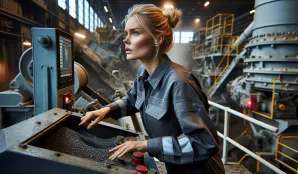
Enrichment worker, ore salary
Latest available salary statistics are for 2025. Compare average pay, salary range and related job listings.
46 200 - 51 100 SEK / month
Women earn 99% of what men do.
Industriell tillverkning
Related tools
Salary progression Enrichment worker, ore
What does a mineral processing worker in ore do? – Tasks and work environment
A mineral processing worker in ore works with refining and separating ore from rock and other unwanted materials in the mining and process industry. Tasks include monitoring and controlling machines and process facilities where the ore is crushed, ground, and processed to extract metals or minerals. The work often involves shift work and can include manual tasks as well as advanced process monitoring via digital control systems. The work environment is characterized by noise, vibrations, and sometimes dust, but is carefully regulated with regard to safety and protective equipment.
Salary development over time
The salary for a mineral processing worker in ore has shown stable and positive growth in recent years. In 2022, the average salary was 43,200 SEK per month, increasing to 47 800 SEK in 2023. In 2024, the average salary has further increased to 48 700 SEK, which is an increase of over 10.6% over three years. This salary increase can be explained by continued demand for skills in the mining and process industry, as well as an increased focus on technology and automation, which require higher expertise from employees. Inflation and collective bargaining negotiations have also positively influenced the salary development for the profession.
Mineral processing worker in ore salary – comprehensive overview
- Average salary: 48 700 SEK/month
- Lowest salary: 45,800 SEK/month
- Highest salary: 49,900 SEK/month
- Hourly wage: 287 SEK
- Men's average salary: 48 800 SEK/month
- Women's average salary: 47,200 SEK/month
- Women earn: 99% of what men do
- Regional differences: No specific data
Education and qualifications
To work as a mineral processing worker in ore, a high school education in industrial technology, process technology, or equivalent is usually required. Many employers also seek experience in process industries or supplementary courses in automation and machinery handling. Internships and on-the-job training are often part of the learning process, and some companies offer internal trainee programs to ensure the right skill level.
- High school education: Industrial technology program, 3 years
- Supplementary courses: Process technology, automation, safety
- Internship: Workplace-based internship or trainee period
- Prerequisites: Basic technical interest and good physical health
- Certificates: Some employers require forklift or crane licenses
Mineral processing workers in ore often work in teams where collaboration and communication are crucial for production safety and efficiency. Rapid technological development makes continuous further training and curiosity about new processes a competitive advantage.
Common benefits and compensations
Common benefits for mineral processing workers in ore include shift allowances, overtime pay, and extra compensation for inconvenient working hours. Many employers also offer wellness contributions, work clothing, protective equipment, and sometimes access to occupational health services. Pension contributions and insurance packages are also common parts of employment conditions.
Competition and challenges
The competition for jobs as a mineral processing worker in ore is currently relatively low, largely due to the limited number of trained and experienced candidates. One of the biggest challenges is staying updated on new technology and processes, as the mining industry is changing rapidly with increased digitization and automation. Physically demanding work, shift work, and high demands for accuracy place high requirements on health and concentration. Safety aspects are central, and the work environment can be strenuous for those who do not thrive in an industrial setting. The recruitment situation is also influenced by economic cycles and international commodity prices.
Tips for those who want to become a mineral processing worker in ore
To succeed as a mineral processing worker in ore, it is good to have a technical interest and curiosity about how machines and processes work, which facilitates learning and problem-solving in daily work. Precision is an important trait, as safety in the work environment must always be prioritized, and the processes require exact adjustments. Teamwork skills are crucial because the work often occurs in teams, and clear communication contributes to an effective and safe workflow. Flexibility and the ability to adapt to shift work and varying tasks increase the chances of enjoying and developing in the role. Showing initiative and willingness to further educate oneself in new technologies can open doors to more advanced roles. Finally, good physical condition and resilience to an industrial environment are advantageous, as the work can be physically and mentally demanding.
Key facts about mineral processing workers in ore
- Education level: High school or post-secondary in industrial/process technology
- Work environment: Industrial, often shift-based and safety-focused
- Typical employment: Full-time, shift work
- Demand: 1,437 job openings within the profession
- Special skills: Process and machinery technology, safety procedures
Career paths and future prospects
After three to five years as a mineral processing worker in ore, opportunities exist to advance to roles such as shift supervisor, process operator with specialization, or technical instructor within the process industry. Some choose to further their education in automation or production technology and take responsibility for operational optimization or maintenance. According to the Swedish Public Employment Service's forecasts, there is no specific assessment for this profession, but the broader job group has many vacant positions, indicating good future prospects for those with the right skills and willingness to develop within the industry. Technological development and increased demands for sustainability may create new roles and specializations in the future.
Frequently asked questions about mineral processing workers in ore
- What does a mineral processing worker in ore earn?
- The average salary is 48 700 SEK per month. - Are there salary differences between men and women?
- Yes, women earn an average of 47,200 SEK and men 48 800 SEK, meaning women earn 99% of men's salaries. - What does the work environment look like?
- Work takes place in industrial environments, often with shift work and high safety requirements. - What education is required to become a mineral processing worker in ore?
- Usually, a high school education in industrial or process technology along with some practical experience is required. - What are the future prospects?
- There are many job openings within the profession, but no exact forecast for the industry as a whole. - What are the most common benefits?
- Shift allowances, overtime pay, wellness contributions, and work clothing are common benefits. - What is the highest salary for a mineral processing worker in ore?
- The highest salary is 49,900 SEK and belongs to a man with post-secondary education shorter than 3 years.

Salary distributed by age and sector
| Age | Base salary | Monthly salary | |
|---|---|---|---|
| 18-24 | 38800 kr | 46100 kr | |
| 25-34 | 100% | 40800 kr | 48200 kr |
| 35-44 | 97% | 42400 kr | 50200 kr |
| 45-54 | 41600 kr | 48600 kr | |
| 55-64 | 41800 kr | 49300 kr | |
| Snitt | 99% | 41300 kr | 48700 kr |
| Age | Base salary | Monthly salary | |
|---|---|---|---|
| 18-24 | 38800 kr | 46100 kr | |
| 25-34 | 100% | 40800 kr | 48200 kr |
| 35-44 | 97% | 42400 kr | 50200 kr |
| 45-54 | 41600 kr | 48600 kr | |
| 55-64 | 41800 kr | 49300 kr | |
| Snitt | 99% | 41300 kr | 48700 kr |
| Age | Base salary | Monthly salary | |
|---|---|---|---|
| 18-24 | 38800 kr | 46100 kr | |
| 25-34 | 100% | 40800 kr | 48200 kr |
| 35-44 | 97% | 42400 kr | 50200 kr |
| 45-54 | 41600 kr | 48600 kr | |
| 55-64 | 41800 kr | 49300 kr | |
| Snitt | 99% | 41300 kr | 48700 kr |
| Age | Base salary | Monthly salary | |
|---|---|---|---|
| 18-24 | 38800 kr | 45900 kr | |
| 25-34 | 100% | 40900 kr | 48200 kr |
| 35-44 | 97% | 42700 kr | 50500 kr |
| 45-54 | 41600 kr | 48500 kr | |
| 55-64 | 41900 kr | 49300 kr | |
| Snitt | 99% | 41500 kr | 48800 kr |
| Age | Base salary | Monthly salary | |
|---|---|---|---|
| 18-24 | 38800 kr | 45900 kr | |
| 25-34 | 100% | 40900 kr | 48200 kr |
| 35-44 | 97% | 42700 kr | 50500 kr |
| 45-54 | 41600 kr | 48500 kr | |
| 55-64 | 41900 kr | 49300 kr | |
| Snitt | 99% | 41500 kr | 48800 kr |
| Age | Base salary | Monthly salary | |
|---|---|---|---|
| 18-24 | 38800 kr | 45900 kr | |
| 25-34 | 100% | 40900 kr | 48200 kr |
| 35-44 | 97% | 42700 kr | 50500 kr |
| 45-54 | 41600 kr | 48500 kr | |
| 55-64 | 41900 kr | 49300 kr | |
| Snitt | 99% | 41500 kr | 48800 kr |
| Age | Base salary | Monthly salary | |
|---|---|---|---|
| 25-34 | 100% | 40300 kr | 48400 kr |
| 35-44 | 97% | 41100 kr | 49000 kr |
| Snitt | 99% | 40400 kr | 48400 kr |
| Age | Base salary | Monthly salary | |
|---|---|---|---|
| 25-34 | 100% | 40300 kr | 48400 kr |
| 35-44 | 97% | 41100 kr | 49000 kr |
| Snitt | 99% | 40400 kr | 48400 kr |
| Age | Base salary | Monthly salary | |
|---|---|---|---|
| 25-34 | 100% | 40300 kr | 48400 kr |
| 35-44 | 97% | 41100 kr | 49000 kr |
| Snitt | 99% | 40400 kr | 48400 kr |

About the data
All information displayed on this page is based on data from the Swedish Central Bureau of Statistics (SCB), the Swedish Tax Agency and the Swedish employment agency. Learn more about our data and data sources here.
All figures are gross salaries, meaning salaries before tax. The average salary, or mean salary, is calculated by adding up the total salary for all individuals within the profession and dividing it by the number of individuals. For specific job categories, we have also considered various criteria such as experience and education.
Profession Enrichment worker, ore has the SSYK code 8112, which we use to match against the SCB database to obtain the latest salary statistics.
-

Control Room Operator at Kristineberg Mine
Process operators, stone crushing and ore processing
Thu, 2 Jul 2026 - 21:18 -

Crusher Operator / Maintenance Mechanic in Munksund
Process operators, stone crushing and ore processing
Fri, 12 Jun 2026 - 06:36
Compare salary, work tasks and job outlook in adjacent occupations to find roles with similar skills or pay levels.
-

Syringe operator, rubber salary
Average salary: 33 900 SEK/month • Industriell tillverkning
Machine operators, rubber industry
Compare with Enrichment worker, ore
Tue, 14 Jul 2026 - 05:30 -

Average salary: 34 800 SEK/month • Industriell tillverkning
Machine operators, filling, packing and labeling
Compare with Enrichment worker, ore
Sun, 12 Jul 2026 - 15:16 -

Average salary: 35 700 SEK/month • Industriell tillverkning
Grinders etc.
Compare with Enrichment worker, ore
Fri, 10 Jul 2026 - 18:59 -

Lime house worker, tannery salary
Average salary: 32 200 SEK/month • Industriell tillverkning
Other machine operators, textile, leather and leather industry
Compare with Enrichment worker, ore
Tue, 14 Jul 2026 - 08:19 -

Inspectors, concrete products salary
Average salary: 37 800 SEK/month • Industriell tillverkning
Machine operators, cement, stone and concrete products
Compare with Enrichment worker, ore
Tue, 14 Jul 2026 - 09:10 -

Average salary: 36 800 SEK/month • Industriell tillverkning
Welders and gas cutters
Compare with Enrichment worker, ore
Tue, 14 Jul 2026 - 07:11


