News and articles
- Home
- Articles






Latest posts

A kallskänka primarily works with preparing and arranging cold dishes such as salads, sandwiches, appetizers, and desserts. The profession is often found in restaurants, hotels, cafes, and large kitchens where tasks include preparing ingredients, creating buffets, and ensuring that food is presented in an aesthetically pleasing manner. The work environment is characterized by a fast pace, close collaboration with chefs and kitchen staff, and demands for good hygiene and efficiency. Kallskänkor often work under time pressure and are expected to have good organizational skills and an eye for detail, especially during busy times.
Read more ->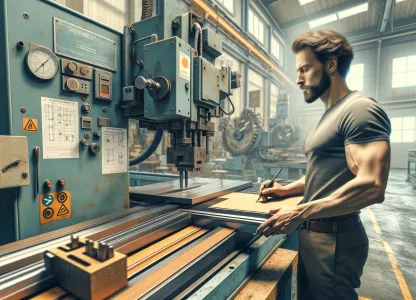
A Cold Saw Operator in metal mainly works with cutting and processing metals using cold saws, often in an industrial environment. The profession involves precise work where accuracy is crucial, as cuts and measurements must follow exact specifications. Tasks include setting up and monitoring machines, changing saw blades, inspecting material quality, and following safety routines. The work often takes place in workshops where noise, heavy lifting, and repetitive tasks are common, requiring both physical endurance and good awareness of the work environment. Collaboration with other machine operators and technicians is typical, especially in larger manufacturing processes.
Read more ->-

Opinion Landscape: Novus February 2026 – Social Democrats Still Largest
Thu, 19 Feb 2026 - 01:35 -

Policy rate remains at 1.75% – Riksbank signals stability
Thu, 29 Jan 2026 - 14:02


A Kalkylkontorist primarily works with calculating and compiling various types of estimates within warehousing, distribution, or production. The tasks often include handling invoices, order administration, inventory follow-up, and financial reporting. The Kalkylkontorist supports the business by analyzing costs, consumption, and resource usage, which requires accuracy and analytical skills. The work environment is generally office-based but closely connected to warehouse and logistics flows, involving collaboration with both finance staff and warehouse workers.
Read more ->
A cost estimator engineer in construction and civil engineering is responsible for preparing cost estimates and financial data before, during, and after construction projects. The work involves analyzing drawings, quantifying materials, assessing labor efforts, and calculating total project costs. The estimator often acts as a link between project management, procurement, and production, playing a central role in bidding processes and project financial follow-up. The work environment is mainly office-based, but site visits and meetings with contractors and clients are regularly conducted.
Read more ->
The calculation manager in construction and civil engineering is responsible for leading and quality-assuring the estimating work on major construction and infrastructure projects. The role involves preparing cost estimates, analyzing risks and opportunities, and coordinating the estimating process among different project teams. The calculation manager often acts as a central link between design, procurement, and management, ensuring that estimates are accurate, up-to-date, and aligned with client requirements and company business goals. The work environment is primarily office-based, but site visits to construction sites are regularly conducted to gather information and monitor project progress. The pace is often fast, requiring analytical skills and good communication abilities to manage multiple projects simultaneously.
Read more ->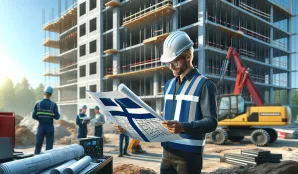
A calculator in construction and civil engineering is responsible for preparing cost estimates and calculations for construction projects, from early tender phases to completion. The work involves carefully analyzing drawings, technical descriptions, and quantity lists to calculate material consumption, labor effort, and machinery costs. The calculator works closely with project managers, purchasers, and site supervisors to ensure project budgets are met and that calculations are realistic. The work is often performed in an office, but regular visits to construction sites are common to verify conditions and gather additional information. The role requires high accuracy, analytical skills, and a good understanding of the construction process as well as current legislation and industry standards.
Read more ->
A turkey breeder is responsible for raising turkeys for meat production or breeding. Tasks include daily care of the animals, feeding, health and growth monitoring, as well as cleaning of stables and equipment. Turkey breeders often work in agricultural environments where the work can be physically demanding and varied, involving both machinery handling and manual labor. Hygiene routines, animal welfare, and documentation are central parts of the profession, especially in larger flocks where disease prevention and quality control are crucial.
Read more ->
A Kalkhusarbetare in tannery works with preparing and processing hides before the tanning process. Tasks include removing hair and flesh from animal hides, often using chemicals and specialized equipment. The work mainly takes place in industrial environments where manual and machine-based tasks are involved. Kalkhusarbetare often handle heavy lifts, operate in humid conditions, and deal with strong odors, requiring precision and good physical condition. The work environment is characterized by routines, safety regulations, and collaboration with other roles within the tannery.
Read more ->
A Kalkbrännare is responsible for monitoring and controlling the process where limestone is transformed into quicklime in special kilns. The profession involves handling large industrial machinery and ensuring that temperatures, raw materials, and fuel are supplied correctly to achieve the desired product quality. Kalkbrännare regularly check machine functions, perform simple maintenance, and report any operational disturbances. The work environment is often characterized by noise, high temperatures, and dust, requiring the use of protective equipment and careful safety procedures.
Read more ->
A Kaldoblåsare works at the heart of the metal industry's production processes and is responsible for monitoring and controlling cold rolling of metals. Tasks include starting, stopping, and adjusting machines, checking the quality of processed materials, and quickly addressing deviations or technical issues. The environment features large industrial facilities, high noise levels, and demands for precision and safety. They often collaborate closely with other process operators and technicians to ensure efficient and safe production.
Read more ->