News and articles
- Home
- Articles






Latest posts
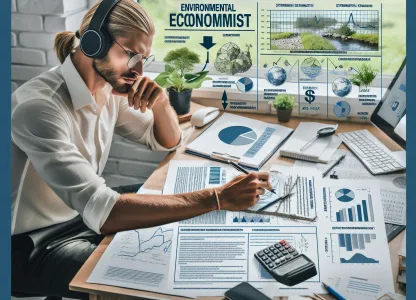
An Environmental Economist analyzes and evaluates economic issues related to the environment and sustainable development. Tasks often include investigations of environmental policy instruments, reviews of corporate environmental strategies, and socio-economic impact assessments of environmental measures. Environmental Economists collaborate with authorities, companies, and research institutes to develop solutions that combine economic growth with environmental sustainability. The work environment is generally office-based, involving project work, meetings, and occasionally field studies depending on the employer and focus area.
Read more ->
An Environmental Controller works with analyzing, monitoring, and reporting environmental performance within companies, organizations, or authorities. Tasks include collecting and evaluating environmental data, developing and implementing environmental management systems, and ensuring compliance with applicable environmental laws and internal environmental goals. The role also involves supporting management with decision-making regarding sustainability strategies and communicating environmental efforts both internally and externally. The work environment is typically office-based, involving meetings, analyses, and report writing, but may also include site visits and collaboration with different departments or external actors.
Read more ->-

Opinion Landscape: Novus February 2026 – Social Democrats Still Largest
Thu, 19 Feb 2026 - 01:35 -

Policy rate remains at 1.75% – Riksbank signals stability
Thu, 29 Jan 2026 - 14:02


An environmental assistant in waste management at a station is responsible for receiving, sorting, and handling different types of waste at recycling centers and waste stations. Tasks include guiding individuals and companies on proper sorting, safely handling hazardous waste, and monitoring the facility's safety and environmental routines. Environmental assistants contribute to sustainable waste management by ensuring materials are recycled correctly and environmental requirements are met. The work environment is often outdoors or in large halls, with varying weather conditions and sometimes heavy lifting.
Read more ->
Environmental assistants in waste management support and ensure efficient waste handling at workplaces, municipalities, or private companies. Typical tasks include sorting, weighing, and documenting waste, advising colleagues on proper procedures, and quality checks of sorting routines. The role may also involve practical work in the field, such as at recycling centers, as well as administrative tasks like reporting and environmental goal follow-up. The work environment varies but often involves physically active work both indoors and outdoors, where safety and accuracy are crucial.
Read more ->
An environmental worker in waste management at a station is responsible for receiving, sorting, and handling various types of waste and recycling materials from individuals and companies. Tasks include guiding visitors, ensuring waste is correctly placed, and maintaining the station's surfaces and equipment. The job often involves outdoor work year-round, requiring physical endurance and safety awareness. Contact with the public is a central part of the work, where service and clear communication are important qualities.
Read more ->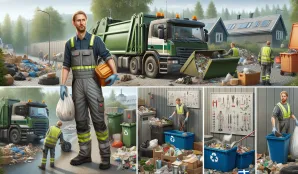
Environmental workers in waste management are responsible for collecting, sorting, and transporting household waste, recycling materials, and hazardous waste from homes, businesses, and public environments. The work is often performed using specialized vehicles and modern machinery, but manual tasks such as lifting bins and emptying containers also occur. The work environment is physically demanding and mostly outdoors in varying weather conditions. Safety and ergonomics are central, as heavy lifting and handling potentially dangerous materials are part of the job.
Read more ->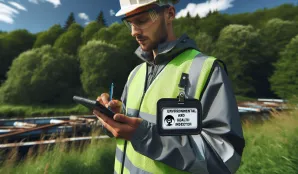
An Environmental and Health Protection Inspector works to monitor, investigate, and ensure compliance with laws and regulations within the environmental and health protection field. Tasks include inspecting food businesses, controlling environmental emissions, reviewing construction projects, and advising companies and the public on environmental protection and health. The work often involves close collaboration with other authorities, companies, and sometimes private individuals. Inspectors work both on-site and in offices, where report writing and documentation are important parts of the workday. The profession requires high accuracy, independence, and the ability to handle complex regulations.
Read more ->
An environmental and health protection officer primarily works to ensure compliance with laws and regulations in the environmental and health protection sector. The work involves investigating, assessing, and making decisions on cases related to, for example, environmentally hazardous activities, food safety, waste management, and supervision of various operations. Typically, the work takes place within municipal or government agencies, where the officer conducts inspections on-site and handles administrative tasks such as reports and decision documents. The work environment is largely office-based but also includes field visits and contact with companies, the public, and other authorities. The profession requires good analytical skills, precision, and the ability to communicate clearly both verbally and in writing.
Read more ->
Military chaplains have a unique role within the Swedish Armed Forces, responsible for providing spiritual support, moral guidance, and ethical advice to soldiers and officers. Tasks include participation in ceremonies and tradition maintenance, crisis support during difficult events, field operations, and training personnel in values and ethics. The work environment can range from office-based tasks at regiments to field missions during exercises or international deployments. A military chaplain is expected to be available for conversations, mentorship, and support to individuals or groups, often under stressful and demanding conditions.
Read more ->
Microscopists mainly work with analyzing and examining materials, samples, and biological substances using various microscopy techniques. The profession involves interpreting and documenting results from microscopic analyses, often within research, quality assurance, or diagnostics in laboratories. Tasks may also include sample preparation, instrument calibration, and reporting results to research leaders or other specialists. Microscopists are typically found in laboratory settings where precision, concentration, and technical skills are crucial for the work outcome.
Read more ->