News and articles
- Home
- Articles






Latest posts

A projectionist is responsible for managing and controlling the display of film, video, or digital content in cinemas, theaters, or similar environments. Tasks include ensuring that technical equipment functions correctly, adjusting picture and sound quality, and monitoring the projection process to guarantee an optimal experience for the audience. Projectionists often work in dark, soundproof rooms, which require good concentration and technical understanding. The work environment can be isolated and demands precision when handling advanced technology.
Read more ->
A projectile remover is responsible for identifying, neutralizing, and removing explosive remnants and ammunition from land areas. Tasks often include inspecting suspected areas, handling dangerous materials, and safely destroying projectiles. The work is usually conducted outdoors in varied terrain and can involve high risks, demanding precision and safety awareness. Projectile removers often work in teams and follow strict safety routines to minimize risks to themselves and the surroundings.
Read more ->-

Opinion Landscape: Novus February 2026 – Social Democrats Still Largest
Thu, 19 Feb 2026 - 01:35 -

Policy rate remains at 1.75% – Riksbank signals stability
Thu, 29 Jan 2026 - 14:02


An electrical power design engineer primarily works with planning, designing, and sizing electrical systems and facilities. Tasks include developing technical drawings, calculations, and specifications for power systems in various construction and industrial projects. The engineer often collaborates with other technical specialists, contractors, and clients to ensure projects comply with applicable regulations and technical requirements. The work environment is usually office-based but may also involve site visits to inspect facilities and installations.
Read more ->
A software developer works on designing, developing, testing, and maintaining software solutions for various industries and applications. The role includes everything from writing code and creating algorithms to collaborating with other developers, system architects, and users to ensure that the programs meet customer needs. The work environment is often office-based, but remote work and flexible hours have become increasingly common in the IT industry. Project-based work, rapid technological changes, and the need for continuous skills development are characteristic of the profession.
Read more ->
A software tester is responsible for ensuring the quality of software before it is released to users or clients. Tasks include planning, executing, and documenting software tests, often in collaboration with developers, project managers, and other IT specialists. The tester identifies bugs, security vulnerabilities, and usability issues, as well as proposing improvements. The work is typically performed in an office environment, often as part of an agile team, and involves both manual and automated testing. Flexible working hours and the possibility of remote work are common within the profession.
Read more ->
A software architect is responsible for designing, developing, and maintaining software used in various digital systems and applications. Tasks include requirements analysis, system design, coding, testing, and documentation. Software architects often collaborate in teams with other developers, project managers, and users to ensure solutions meet organizational needs. The work environment is usually office-based with opportunities for remote work and often involves long periods in front of a computer focusing on problem-solving and creative thinking.
Read more ->
A program host is responsible for welcoming and guiding visitors or guests at cultural events, TV and radio programs, or similar settings. Tasks include informing about the program content, handling audience questions, and ensuring smooth execution of the event. The work environment is often dynamic and can range from studio settings to various public venues depending on the nature of the event. Program hosts typically work in teams and need strong communication skills and a service-minded attitude to create a positive experience for participants and audiences.
Read more ->
A program scriptwriter is responsible for creating, editing, and adapting texts used in various types of program productions, such as TV, radio, and digital media. Tasks often include writing scripts, dialogues, and supplementary texts that support the program content. Scriptwriters typically work in a creative and dynamic environment where collaboration with producers, directors, and editors is central to ensure that the text content fits the program's purpose and target audience. The work is usually office-based with the possibility of flexible working hours depending on the nature of the production and deadlines.
Read more ->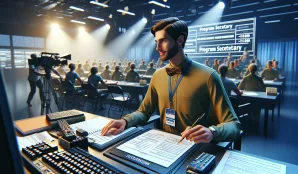
A program secretary is responsible for planning, coordinating, and administering programs and projects within various organizations, often within the culture and media sectors. Tasks include preparing meetings, documenting decisions, managing correspondence, and ensuring projects adhere to set timelines and budgets. Program secretaries typically work in an office environment, closely collaborating with project managers, managers, and external partners. The work environment is often structured but can be demanding with a fast pace and multiple tasks running in parallel.
Read more ->
A program editor is responsible for planning, developing, and quality-assuring content in various media programs, such as radio, TV, or digital platforms. Tasks include selecting program ideas, coordinating with producers and editorial teams, and ensuring content aligns with editorial guidelines and audience interests. The work is often in a dynamic and creative environment where collaboration and quick decision-making are common. The office setting may sometimes be complemented by fieldwork or recordings depending on the production's nature.
Read more ->