News and articles
- Home
- Articles

Latest posts

A track welder primarily works on joining and repairing rails and railway tracks through welding. Tasks include preparing welding surfaces, inspecting materials, performing the welding process, and conducting post-inspections to ensure the tracks meet quality and safety standards. The work often takes place outdoors under varying weather conditions and sometimes at inconvenient hours, as railway maintenance is often performed when traffic is low. The work environment can be physically demanding and requires high safety standards, precision, and good teamwork skills.
Read more ->
A welder within SÖM works with joining metal components using various welding methods, often within the industrial and manufacturing sectors. The work involves carefully following drawings and instructions to ensure that weld joints have the correct strength and quality. The work environment is usually workshop-based, where heavy machinery and tools are used, and high safety and precision standards are required. The work often occurs in shifts, and the environment can be noisy and hot, especially when working close to molten metal.
Read more ->-
Opinion poll: Indicator February 2026 – Social Democrats lead
Thu, 26 Feb 2026 - 19:35 -
Policy rate remains at 1.75% – Riksbank signals stability
Thu, 29 Jan 2026 - 14:02
A welder within robot technology is responsible for monitoring, programming, and maintaining welding robots in industrial production. Tasks often include setting up robots, checking the quality of welds, and troubleshooting issues in the process. In many cases, manual welding is also involved, especially for prototypes or custom orders. The work environment is characterized by industrial facilities with high safety standards, where protective equipment and strict routines are standard. Tight deadlines and quality requirements are common, demanding both technical expertise and precision.
Read more ->
A plastic welder primarily works with joining, repairing, and processing plastic parts using various welding methods such as hot air welding, extruder welding, and mirror welding. Tasks often include manual welding and handling automated machines, depending on the workplace focus and product complexity. The welder is responsible for following drawings, quality standards, and safety regulations, while working in an industrial environment with requirements for protective gear and precision. Some tasks may be performed on production lines, whereas more advanced or custom work can take place in smaller workshops or on-site at customer locations.
Read more ->
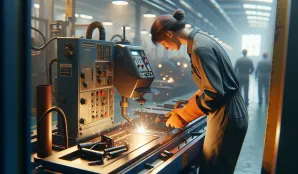
A welder works with joining metals using various welding methods such as MIG, TIG, or MMA. Tasks may include reading drawings, preparing workpieces, selecting the right materials and welding equipment, and ensuring quality in the finished work. Welders operate in a variety of industries, including manufacturing, construction and infrastructure, automotive, or shipbuilding. The work environment varies from indoor factory settings to outdoor construction sites, often at a fast pace and with demands for precision and safety. Protective equipment is always necessary to minimize risks such as eye injuries, burns, or inhalation of hazardous gases.
Read more ->
A welder specializing in gas primarily works on joining and processing metals using various gas welding methods, such as oxyacetylene welding. Tasks may include manufacturing, repairing, and maintaining metal structures within industry, construction, or workshops. The work environment often requires precision and safety, and can be noisy, hot, and sometimes confined or at heights. Protective gear is an essential part of daily work to minimize risks associated with gas, heat, and harmful fumes.
Read more ->
An electrician welder primarily works with joining and repairing various components and structures made of metal, where electric welding is used as the method. Tasks include manufacturing, maintenance, and repair of electrical installations in, for example, industrial buildings, power plants, or large infrastructure facilities. The work demands high precision, safety awareness, and knowledge of materials and electrical systems. The work environment can vary from workshops and factories to outdoor settings, often involving heavy lifting and exposure to heat, noise, and sometimes confined spaces.
Read more ->
A welder within arcatom primarily works on joining metals using the arc welding technique arcatom, characterized by high precision and accuracy requirements. Tasks include material preparation, setting up welding equipment, inspecting weld seams, and quality control of the finished work. The environment is often industrial and can involve work in a workshop, construction site, or manufacturing industry. Protective gear is essential to shield against heat, fumes, and intense light, and the work can be physically demanding and technically challenging.
Read more ->
A metal turner primarily works with machining metal materials into finished parts through turning, which is a form of cutting processing. Tasks include setting up, monitoring, and maintaining turning machines, both manual and computer-controlled (CNC). The results are often components for machines, vehicles, or industrial products with high precision requirements. The work usually takes place in a workshop environment where safety routines and accuracy are crucial, and shift work or working in noisy environments is common. Collaboration with other operators and technical knowledge are important parts of everyday life.
Read more ->
A Supportpress Operator mainly works with setting up, monitoring, and maintaining machines within metalworking, especially in production environments where precision and efficiency are crucial. Tasks often include handling and adjusting pressing machines, ensuring production meets quality standards, and troubleshooting minor technical issues. The work typically takes place in industrial facilities where the environment can be noisy and the pace high, with both day and shift work. Collaboration with other technicians and operators is essential to ensure a steady production flow and minimize downtime.
Read more ->