- Salary statistics
- Ysteriarbetare salary
Ysteriarbetare salary
Latest available salary statistics are for 2025. Compare average pay, salary range and related job listings.
34 700 - 38 900 SEK / month
Women earn 104% of what men do.
Industriell tillverkning
Related tools
Salary progression Ysteriarbetare
What does a cheese maker do? – Tasks and work environment
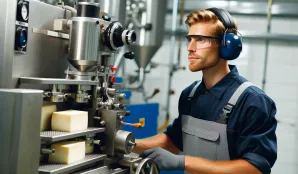
A cheese maker primarily works with the production of cheese and other dairy products on an industrial or artisanal scale. Tasks include monitoring pasteurization, fermentation, cheese making, and pressing of cheese curds, as well as handling various machines and equipment required in the process. Cheese makers are also responsible for quality control, cleaning, maintenance of production equipment, and documentation according to food legislation requirements. The work environment is often humid and may involve heavy lifting, working in cooled areas, and shift work, especially at larger dairies.
Salary development over time
The salary development for cheese makers has shown a clear increase over the past three years. In 2022, the average salary was 31,900 SEK per month, which increased to 36 900 in 2023 and has remained stable at the same level in 2024. This represents an increase of approximately 9.7% from 2022 to 2023, a relatively strong salary improvement compared to many other industrial professions. This positive trend can largely be explained by increased demand for trained machine operators in the dairy industry, partly driven by a greater focus on food safety and quality. The leveling off may be due to market stabilization and negotiations occurring at a calmer pace, despite continued high demand for labor.
Cheese maker salary – comprehensive overview
- Average salary: 36 900 SEK/month
- Lowest salary: 34,700 SEK/month
- Highest salary: 38,600 SEK/month
- Hourly wage: 210 SEK
- Women's salary relative to men: 104%
- Men's average salary: 34,700 SEK
- Women's average salary: 36,000 SEK
- Regional differences: Not specified
Education and qualifications
To work as a cheese maker, a high school education in food, industry, or natural resources is usually required, sometimes supplemented with courses in dairy technology. Many employers value experience from the food industry, especially if focused on dairy production. Practical skills are highly valued, and onboarding at the workplace is common.
- Formal education: High school education in food/industry, 2–3 years
- Certifications: Courses in food hygiene and dairy technology
- Internship: Often includes practical or trainee periods during education
- Prerequisites: Basic knowledge of chemistry and hygiene
- Tips: Experience with machinery and technical interest are advantageous
Cheese makers often need to have a good sense of detail and quality, as small deviations in the process can affect the final product. Many dairies focus on innovation and new flavors, making the profession varied and rewarding for those curious about food craftsmanship.
Common benefits and compensations
Cheese makers are often offered collectively negotiated benefits such as occupational pension, wellness allowances, and extra vacation days. Many workplaces also provide work clothing, subsidized lunch, and sometimes access to staff shops with discounted dairy products. Shift premiums and overtime pay are common for those working inconvenient hours.
Competition and challenges
Competition for positions as a cheese maker varies depending on region and the size of the local dairy operations. Larger dairies often have more available positions, while smaller facilities may have limited opportunities for new hires. The profession demands high precision and adherence to hygiene regulations, which can be challenging for those unaccustomed to strict food handling. Automation in the industry means technical understanding is increasingly important, along with physical stamina and endurance.
Tips for those wanting to become a cheese maker
To succeed as a cheese maker, it’s good to combine technical interest with a meticulous and quality-conscious attitude. Learning about food safety and hygiene rules increases chances of quickly entering the profession. A good sense of order facilitates documentation and control tasks, while teamwork skills are crucial in production teams. Showing initiative and willingness to learn new machines or processes is appreciated by employers. Flexibility is important, as tasks can vary daily. Being resilient and stress-tolerant helps especially during intensive production periods, and a genuine interest in dairy products and cooking can make the work more rewarding.
Key facts about cheese makers
- Average salary: 36 900 SEK/month
- Education level: High school in food/industry
- Work environment: Industrial, often humid and cool, shift work common
- Demand: 1,437 available jobs in the profession
- Gender distribution: Women earn 104% of what men do
Career paths and future prospects
After three to five years as a cheese maker, opportunities exist to advance to roles such as supervisor, production planner, or quality technician within the dairy industry. Specializations in cheese production, process optimization, or machinery maintenance are common. Forecasts from the Employment Service indicate continued high demand for trained workers in dairy and food production, driven by increased exports and a growing interest in locally produced foods. Technological developments also mean ongoing opportunities for further training and skills development, opening doors to roles like process developer or food safety trainer.
Frequently asked questions about cheese makers
- What is the average salary of a cheese maker?
- The average salary is 36 900 SEK per month. - What are the highest and lowest salaries for cheese makers?
- The highest salary is 38,600 SEK and the lowest is 34,700 SEK per month. - What do gender differences look like within the profession?
- Women earn on average 36,000 SEK, which corresponds to 104% of men's salaries. - What education is required to become a cheese maker?
- High school education in food or industry, often supplemented with courses in dairy technology. - What are the future prospects for cheese makers?
- The outlook is good with 1,437 available jobs in the profession, especially for those with technical skills. - Are there regional differences in salary?
- No clear regional salary differences have been reported for the profession. - What common benefits are offered?
- Collective agreements often include occupational pension, wellness allowances, and overtime pay.

Salary distributed by age and sector
| Age | Base salary | Monthly salary | |
|---|---|---|---|
| 25-34 | 33200 kr | 36600 kr | |
| 35-44 | 34000 kr | 38200 kr | |
| 55-64 | 32200 kr | 35700 kr | |
| Snitt | 104% | 32800 kr | 36900 kr |
| Age | Base salary | Monthly salary | |
|---|---|---|---|
| 25-34 | 33200 kr | 36600 kr | |
| 35-44 | 34000 kr | 38200 kr | |
| 55-64 | 32200 kr | 35700 kr | |
| Snitt | 104% | 32800 kr | 36900 kr |
| Age | Base salary | Monthly salary | |
|---|---|---|---|
| 25-34 | 33200 kr | 36600 kr | |
| 35-44 | 34000 kr | 38200 kr | |
| 55-64 | 32200 kr | 35700 kr | |
| Snitt | 104% | 32800 kr | 36900 kr |
| Age | Base salary | Monthly salary | |
|---|---|---|---|
| 25-34 | 32200 kr | 36700 kr | |
| 55-64 | 32000 kr | 35300 kr | |
| Snitt | 104% | 32400 kr | 36500 kr |
| Age | Base salary | Monthly salary | |
|---|---|---|---|
| 25-34 | 32200 kr | 36700 kr | |
| 55-64 | 32000 kr | 35300 kr | |
| Snitt | 104% | 32400 kr | 36500 kr |
| Age | Base salary | Monthly salary | |
|---|---|---|---|
| 25-34 | 32200 kr | 36700 kr | |
| 55-64 | 32000 kr | 35300 kr | |
| Snitt | 104% | 32400 kr | 36500 kr |
| Age | Base salary | Monthly salary | |
|---|---|---|---|
| Snitt | 104% | 33700 kr | 37800 kr |
| Age | Base salary | Monthly salary | |
|---|---|---|---|
| Snitt | 104% | 33700 kr | 37800 kr |
| Age | Base salary | Monthly salary | |
|---|---|---|---|
| Snitt | 104% | 33700 kr | 37800 kr |

About the data
All information displayed on this page is based on data from the Swedish Central Bureau of Statistics (SCB), the Swedish Tax Agency and the Swedish employment agency. Learn more about our data and data sources here.
All figures are gross salaries, meaning salaries before tax. The average salary, or mean salary, is calculated by adding up the total salary for all individuals within the profession and dividing it by the number of individuals. For specific job categories, we have also considered various criteria such as experience and education.
Profession Ysteriarbetare has the SSYK code 8162, which we use to match against the SCB database to obtain the latest salary statistics.
-

Open Application: Industrial Jobs in Umeå and Surroundings
Machine operators, dairy
Sat, 27 Jun 2026 - 00:03 -

Student Machine Operator at Skånemejerier (Long-term Part-time)
Machine operators, dairy
Thu, 25 Jun 2026 - 23:41


Compare salary, work tasks and job outlook in adjacent occupations to find roles with similar skills or pay levels.
-

Charcuterie worker, manufacturing salary
Average salary: 33 000 SEK/month • Industriell tillverkning
Machine operators, meat and fish processing industry
Compare with Ysteriarbetare
Tue, 14 Jul 2026 - 08:18 -
Textile machine adjuster, yarn preparation salary
Average salary: 32 200 SEK/month • Industriell tillverkning
Other machine operators, textile, leather and leather industry
Compare with Ysteriarbetare
Tue, 14 Jul 2026 - 07:14 -

Average salary: 33 900 SEK/month • Industriell tillverkning
Machine operators, rubber industry
Compare with Ysteriarbetare
Mon, 13 Jul 2026 - 01:29 -

Average salary: 47 800 SEK/month • Industriell tillverkning
Production supervisors
Compare with Ysteriarbetare
Thu, 9 Jul 2026 - 13:10 -

Average salary: 40 000 SEK/month • Industriell tillverkning
Rolling mill operators
Compare with Ysteriarbetare
Mon, 13 Jul 2026 - 09:37 -

Supervisor, confectionery salary
Average salary: 47 800 SEK/month • Industriell tillverkning
Production supervisors
Compare with Ysteriarbetare
Tue, 14 Jul 2026 - 10:08


