- Salary statistics
- Workshop fitter, manufacturing salary
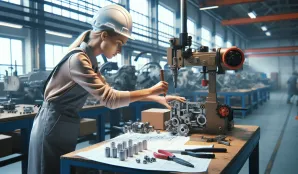
Workshop fitter, manufacturing salary
Latest available salary statistics are for 2025. Compare average pay, salary range and related job listings.
32 100 - 35 800 SEK / month
Women earn 95% of what men do.
Industriell tillverkning
Related tools
Salary progression Workshop fitter, manufacturing
What does a workshop assembler in manufacturing do? – tasks and work environment
A workshop assembler in manufacturing is responsible for assembling, adjusting, and inspecting parts for machines, vehicles, or other technical products. Tasks often include assembling components according to drawings and instructions, using hand tools and machinery, and performing quality checks on finished products. The work is usually carried out in larger or smaller industrial premises where safety routines and precision are critical. The work environment can be noisy, and the pace varies depending on production demands, but modern workshops often invest in ergonomic aids and good working conditions to prevent strain injuries.
Salary development over time
Wages for workshop assemblers in manufacturing have seen a steady increase in recent years. In 2022, the average salary was 29,600 SEK per month, which increased to 32 700 SEK in 2023. In 2024, the average salary has reached 33 500 SEK, representing an increase of approximately 10.5% over the three-year period. This salary growth reflects continued high demand for assemblers in the manufacturing industry, while collective agreements and wage negotiations have favored the profession. However, differences in salary development between men and women persist, with women earning on average 95% of men's salaries. Regional variations may occur depending on the location of the industry and demand in different parts of the country.
Workshop assembler in manufacturing salary – complete overview
- Average salary: 33 500 SEK/month
- Lowest salary: 29,700 SEK/month (women), 31,200 SEK/month (men)
- Highest salary: 35,600 SEK/month (men), 32,000 SEK/month (women)
- Hourly wage: 196 SEK/hour (based on 166 hours/month)
- Gender pay gap: Women earn 95% of what men do
- Regional differences: Salaries vary depending on the location of the industry
Education and qualifications
To work as a workshop assembler in manufacturing, a high school diploma with a focus on industry, technology, or vehicles is usually required. Many employers also value practical experience from the industry or relevant certifications. Some companies offer internal trainee programs or apprenticeship positions to give new employees a thorough introduction to the tasks. Basic knowledge requirements often include an interest in technology and good problem-solving skills. Self-study and short courses in assembly techniques or machine safety can provide a competitive edge during employment.
- High school education: Industry, technology, or vehicle programs (3 years)
- Certifications: For example, in assembly, welding, or machine safety
- Internships: Common during high school or as a trainee with an employer
- Prerequisites: Basic technical interest and problem-solving ability
- Self-study/courses: Opportunities to enhance skills through online courses or evening classes
Many workshop assemblers choose to specialize in a particular type of product or assembly technique, which can lead to more responsibility and variation in tasks. Specialists often have opportunities to participate in product development or mentor new colleagues, providing both professional pride and broader career opportunities.
Common benefits and compensations
Workshop assemblers in manufacturing are often covered by collective agreements that entitle them to holiday pay, occupational pensions, and overtime pay. Other common benefits include wellness allowances, work clothing, and subsidized lunches or employee discounts. In some cases, bonuses linked to production targets are offered, along with opportunities for skills development through internal or external training programs.
Competition and challenges
The labor market for workshop assemblers in manufacturing is characterized by a paradoxical situation: while there are many unemployed in the profession, employers report recruitment difficulties. This is often due to the need for the right skills and experience to meet industry requirements. Competition for the most attractive positions is high, especially in regions where industry is concentrated. Digitalization and automation also impose new demands for technical understanding and flexibility. Another challenge is that salary and working conditions differences between men and women still exist, despite a more balanced gender distribution than before.
Tips for those who want to become a workshop assembler in manufacturing
To succeed as a workshop assembler in manufacturing, it is good to have a genuine technical interest and a willingness to learn new tasks. Precision is an important trait, especially when assembling details where accuracy ensures quality. Being cooperative and communicative facilitates teamwork with colleagues and supervisors, especially on larger projects. Flexibility and the ability to quickly adapt to changes in production are also valuable qualities. Those who are solution-oriented find it easier to handle unforeseen situations and contribute to a smooth workflow. Practical experience from the industry, such as internships or summer jobs, often provides a clear advantage when applying for jobs. Finally, it is wise to continuously stay updated on new techniques and tools in the field.
Key facts about workshop assembler in manufacturing
- Average salary: 33 500 SEK/month
- Gender pay gap: Women earn 95% of men's salaries
- Education level: High school education (industry/technology/vehicles)
- Work environment: Industrial workshop, often shift work
- Job openings: 1,437 advertised positions within the profession
Career paths and future prospects
After three to five years as a workshop assembler in manufacturing, good opportunities exist to advance into roles with more responsibility, such as supervisor, quality technician, or specialist in a particular assembly technique. Some choose to further their education in production technology, automation, or maintenance, which can lead to engineering roles or technical coordinator positions. According to the latest forecast from the Employment Service, the prospects for employment are strong, and demand is expected to remain stable over the next five years. Despite competition for certain positions, there is a steady need for assemblers, especially for those with the right skills and willingness to develop further within the profession.
Frequently asked questions about workshop assembler in manufacturing
- What does a workshop assembler in manufacturing earn?
- The average salary is 33 500 SEK per month, with variations between 29,700 SEK and 35,600 SEK depending on experience, gender, and sector. - What education is required to become a workshop assembler?
- High school education with a focus on industry, technology, or vehicles is most common, sometimes supplemented with certificates or internships. - Are there many job openings for workshop assemblers?
- Yes, currently there are 1,437 job openings within the profession according to the latest statistics. - What are the future prospects for the profession?
- Demand is expected to remain unchanged over the next five years, but job opportunities are considered to be plentiful. - What tasks does a workshop assembler perform?
- Tasks mainly include assembly, adjustment, and quality control of components and products in an industrial environment. - What are the gender differences in salary?
- Women earn 95% of what men do within the profession, with differences in both the lowest and highest salary levels. - What benefits are common for workshop assemblers?
- Common benefits include occupational pension, holiday pay, wellness contributions, and sometimes bonuses linked to production.

Salary distributed by age and sector
| Age | Base salary | Monthly salary | |
|---|---|---|---|
| 18-24 | 97% | 29800 kr | 30900 kr |
| 25-34 | 99% | 32200 kr | 33200 kr |
| 35-44 | 94% | 32500 kr | 33400 kr |
| 45-54 | 98% | 33100 kr | 33900 kr |
| 55-64 | 89% | 34600 kr | 35100 kr |
| Snitt | 95% | 32700 kr | 33500 kr |
| Age | Base salary | Monthly salary | |
|---|---|---|---|
| 18-24 | 97% | 29800 kr | 30900 kr |
| 25-34 | 99% | 32200 kr | 33200 kr |
| 35-44 | 94% | 32500 kr | 33400 kr |
| 45-54 | 98% | 33100 kr | 33900 kr |
| 55-64 | 89% | 34600 kr | 35100 kr |
| Snitt | 95% | 32700 kr | 33500 kr |
| Age | Base salary | Monthly salary | |
|---|---|---|---|
| 18-24 | 97% | 29800 kr | 30900 kr |
| 25-34 | 99% | 32200 kr | 33200 kr |
| 35-44 | 94% | 32500 kr | 33400 kr |
| 45-54 | 98% | 33100 kr | 33900 kr |
| 55-64 | 89% | 34600 kr | 35100 kr |
| Snitt | 95% | 32700 kr | 33500 kr |
| Age | Base salary | Monthly salary | |
|---|---|---|---|
| 18-24 | 97% | 30100 kr | 31100 kr |
| 25-34 | 99% | 32300 kr | 33200 kr |
| 35-44 | 94% | 33000 kr | 33900 kr |
| 45-54 | 98% | 33300 kr | 34100 kr |
| 55-64 | 89% | 35500 kr | 35900 kr |
| Snitt | 95% | 33100 kr | 33900 kr |
| Age | Base salary | Monthly salary | |
|---|---|---|---|
| 18-24 | 97% | 30100 kr | 31100 kr |
| 25-34 | 99% | 32300 kr | 33200 kr |
| 35-44 | 94% | 33000 kr | 33900 kr |
| 45-54 | 98% | 33300 kr | 34100 kr |
| 55-64 | 89% | 35500 kr | 35900 kr |
| Snitt | 95% | 33100 kr | 33900 kr |
| Age | Base salary | Monthly salary | |
|---|---|---|---|
| 18-24 | 97% | 30100 kr | 31100 kr |
| 25-34 | 99% | 32300 kr | 33200 kr |
| 35-44 | 94% | 33000 kr | 33900 kr |
| 45-54 | 98% | 33300 kr | 34100 kr |
| 55-64 | 89% | 35500 kr | 35900 kr |
| Snitt | 95% | 33100 kr | 33900 kr |
| Age | Base salary | Monthly salary | |
|---|---|---|---|
| 18-24 | 97% | 29000 kr | 30200 kr |
| 25-34 | 99% | 31700 kr | 32800 kr |
| 35-44 | 94% | 31200 kr | 31900 kr |
| 45-54 | 98% | 32300 kr | 33300 kr |
| 55-64 | 89% | 31200 kr | 32000 kr |
| Snitt | 95% | 31300 kr | 32200 kr |
| Age | Base salary | Monthly salary | |
|---|---|---|---|
| 18-24 | 97% | 29000 kr | 30200 kr |
| 25-34 | 99% | 31700 kr | 32800 kr |
| 35-44 | 94% | 31200 kr | 31900 kr |
| 45-54 | 98% | 32300 kr | 33300 kr |
| 55-64 | 89% | 31200 kr | 32000 kr |
| Snitt | 95% | 31300 kr | 32200 kr |
| Age | Base salary | Monthly salary | |
|---|---|---|---|
| 18-24 | 97% | 29000 kr | 30200 kr |
| 25-34 | 99% | 31700 kr | 32800 kr |
| 35-44 | 94% | 31200 kr | 31900 kr |
| 45-54 | 98% | 32300 kr | 33300 kr |
| 55-64 | 89% | 31200 kr | 32000 kr |
| Snitt | 95% | 31300 kr | 32200 kr |

About the data
All information displayed on this page is based on data from the Swedish Central Bureau of Statistics (SCB), the Swedish Tax Agency and the Swedish employment agency. Learn more about our data and data sources here.
All figures are gross salaries, meaning salaries before tax. The average salary, or mean salary, is calculated by adding up the total salary for all individuals within the profession and dividing it by the number of individuals. For specific job categories, we have also considered various criteria such as experience and education.
Profession Workshop fitter, manufacturing has the SSYK code 8213, which we use to match against the SCB database to obtain the latest salary statistics.
-

Meticulous Masker Needed for Modern Production Environment in Western Sweden
Assemblers, metal, rubber and plastic products
Tue, 14 Jul 2026 - 21:12 -

Sunscreen Installer at Primetex in Jönköping
Assemblers, metal, rubber and plastic products
Mon, 13 Jul 2026 - 23:52 -

Fine Assembler for Aimpoint in Malmö
Assemblers, metal, rubber and plastic products
Mon, 13 Jul 2026 - 23:52 -

Technician for Electromechanical Products - Hughes Power System AB
Assemblers, metal, rubber and plastic products
Mon, 13 Jul 2026 - 21:25 -

Installer for Cable Laying, Step Assembly, and Metalwork
Assemblers, metal, rubber and plastic products
Mon, 13 Jul 2026 - 21:06
Compare salary, work tasks and job outlook in adjacent occupations to find roles with similar skills or pay levels.
-

Average salary: 36 800 SEK/month • Industriell tillverkning
Welders and gas cutters
Compare with Workshop fitter, manufacturing
Tue, 14 Jul 2026 - 17:55 -

Average salary: 36 000 SEK/month • Industriell tillverkning
Machine operators, surface treatment
Compare with Workshop fitter, manufacturing
Tue, 14 Jul 2026 - 13:54 -

Machine operator, textile industry, sewing salary
Average salary: 32 200 SEK/month • Industriell tillverkning
Other machine operators, textile, leather and leather industry
Compare with Workshop fitter, manufacturing
Tue, 14 Jul 2026 - 17:57 -

Average salary: 36 900 SEK/month • Industriell tillverkning
Machine operators, dairy
Compare with Workshop fitter, manufacturing
Tue, 14 Jul 2026 - 13:55 -

Charcuterie worker, manufacturing salary
Average salary: 33 000 SEK/month • Industriell tillverkning
Machine operators, meat and fish processing industry
Compare with Workshop fitter, manufacturing
Tue, 14 Jul 2026 - 13:08 -

Average salary: 35 700 SEK/month • Industriell tillverkning
Grinders etc.
Compare with Workshop fitter, manufacturing
Tue, 14 Jul 2026 - 18:51


