- Salary statistics
- Ventilation insulator salary
Ventilation insulator salary
Latest available salary statistics are for 2025. Compare average pay, salary range and related job listings.
40 800 - 40 800 SEK / month
Bygg & anläggning
Related tools
Salary progression Ventilation insulator
What does a Ventilation Insulator do? – Tasks and Work Environment
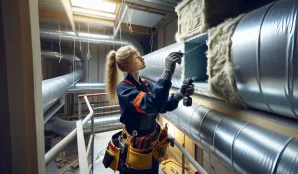
A ventilation insulator works with insulating ventilation ducts in various types of buildings, from residential houses to larger industrial facilities. The tasks include measuring, cutting, and installing insulation materials around ventilation pipes and units to reduce energy loss and prevent condensation. The work is often performed in teams and requires precision and physical effort, as the environment may involve confined spaces, work at heights, or construction sites with varying temperatures. Safety procedures are central, and proper protective equipment is always used to prevent work-related injuries.
Salary Development Over Time
Ventilation insulators have experienced a clear increase in salary levels in recent years. In 2022, the average salary was 32,700 SEK per month, while in 2023 it increased to 40 000 SEK, representing a salary increase of about 17.7% from the previous year. In 2024, the average salary has risen further to 40 800 SEK per month, a rise of approximately 3.9% from the previous year. This development reflects the increased demand for skilled insulation installers, especially within the construction and civil engineering sectors where energy efficiency and modern ventilation solutions have become increasingly important. The trend indicates that the profession is highly valued in the job market, particularly as the construction industry continues to demand specialist skills in ventilation and insulation.
Ventilation Insulator Salary – Complete Overview
- Average salary: 40 800 SEK/month
- Lowest salary: Data not available
- Highest salary: Data not available
- Hourly wage: 240 SEK/hour (based on 166 hours/month)
- Gender differences: Men earn 40 800 SEK, data for women is missing
- Regional differences: Data not available
Education and Qualifications
To work as a ventilation insulator, a high school vocational education in construction and civil engineering is usually required, often supplemented with an apprenticeship or internship. Some employers offer in-house training or trainee positions for new hires, and certifications in insulation and ventilation can be advantageous for career development. Practical experience is highly valued, and it is common to start as an apprentice to gradually build the skills needed for more advanced tasks.
- High school education: Construction and civil engineering program, 3 years
- Apprenticeship: Usually 1–2 years under supervision
- Certifications: Possible within insulation and ventilation, often through industry organizations
- Internship: Common part of training and introduction
- Prerequisites: Good physical condition and interest in practical work
Ventilation insulators often work at various sites, from modern office buildings to older industrial structures, making every workday different. The profession offers the opportunity to see tangible results of your work and often collaborate with various other trades on site. Those who appreciate variety and technical challenges may find great satisfaction in this role.
Common Benefits and Compensation
Ventilation insulators are often covered by collective agreements, which include occupational pensions, insurance, and sick pay. Other common benefits include wellness grants, work clothing, and sometimes bonuses linked to project results or hours worked. Some employers also offer further training and opportunities for specialization within ventilation technology or energy efficiency.
Challenges and Competition
The competition for services in ventilation insulation is currently limited, as the industry is characterized by high demand and a shortage of qualified workers. The main challenges include staying updated on new materials and methods and adhering to strict safety requirements at the workplace. Physical strain and working in sometimes unfavorable environments, such as confined spaces or at heights, demand endurance and safety awareness. For those driven and willing to develop, there are good opportunities to quickly take on more advanced tasks.
Tips for Aspiring Ventilation Insulators
To succeed as a ventilation insulator, practical skills and precision are important, as accurate measurements and correct installation are crucial for quality results. Good physical condition facilitates the work, especially during heavy lifts and in challenging environments. Teamwork skills are essential since the work often takes place in teams and involves close collaboration with other trades. Problem-solving and flexibility are valuable when unforeseen situations arise, such as interpreting drawings or making on-site adjustments. An interest in technology and energy efficiency is an advantage, as the profession evolves with new materials and requirements. Demonstrating responsibility and always following safety routines is vital to avoid accidents. Finally, a positive attitude and willingness to learn new skills can open doors to specialization or leadership roles in the industry.
Key Facts about Ventilation Insulators
- Educational level: High school vocational training with apprenticeship
- Work environment: Construction sites, often varied and sometimes physically demanding
- Demand: Great job opportunities, shortage of skilled workers
- Number of available jobs: 379 within the insulation installation profession
- Typical employment: Full-time, often project-based or permanent
Career Paths and Future Outlook
After three to five years as a ventilation insulator, the role can develop into more advanced tasks such as supervisory roles, project planning, or specialization in energy efficiency and technical insulation. According to the Swedish Public Employment Service's forecasts, opportunities within the insulation installation profession remain strong, and the recruitment situation is characterized by a skills shortage. The demand is expected to remain unchanged over the next five years, providing stable future prospects for those choosing the profession. There are also opportunities to start your own business or pursue further education in related fields such as ventilation technology or construction management.
Frequently Asked Questions about Ventilation Insulators
- What does a Ventilation Insulator earn?
- The average salary is 40 800 SEK per month, with an hourly wage of 240 SEK. - Are there salary differences between men and women?
- Salaries for men are 40 800 SEK, but data for women is missing. - What education is required to become a Ventilation Insulator?
- Usually, a high school vocational education in construction and civil engineering, often with an apprenticeship. - What is the job market like for Ventilation Insulators?
- There is a shortage of skilled workers and many job opportunities, with 379 available positions. - What benefits are common in the profession?
- Collective agreements, occupational pension, wellness grants, and work clothing are typical benefits. - Are there regional salary differences?
- No available data on regional differences for ventilation insulators. - What career opportunities are available after a few years in the profession?
- Opportunities include supervisory roles, specialization, or starting your own business.

Salary distributed by age and sector
| Age | Base salary | Monthly salary | |
|---|---|---|---|
| Snitt | 40800 kr | 40800 kr |
| Age | Base salary | Monthly salary | |
|---|---|---|---|
| Snitt | 40800 kr | 40800 kr |
| Age | Base salary | Monthly salary | |
|---|---|---|---|
| Snitt | 40800 kr | 40800 kr |
| Age | Base salary | Monthly salary | |
|---|---|---|---|
| Snitt | 40800 kr | 40800 kr |
| Age | Base salary | Monthly salary | |
|---|---|---|---|
| Snitt | 40800 kr | 40800 kr |
| Age | Base salary | Monthly salary | |
|---|---|---|---|
| Snitt | 40800 kr | 40800 kr |

About the data
All information displayed on this page is based on data from the Swedish Central Bureau of Statistics (SCB), the Swedish Tax Agency and the Swedish employment agency. Learn more about our data and data sources here.
All figures are gross salaries, meaning salaries before tax. The average salary, or mean salary, is calculated by adding up the total salary for all individuals within the profession and dividing it by the number of individuals. For specific job categories, we have also considered various criteria such as experience and education.
Profession Ventilation insulator has the SSYK code 7123, which we use to match against the SCB database to obtain the latest salary statistics.
-

Insulation Sheet Metal Worker on the West Coast – Bilfinger
Insulation installers
Thu, 9 Jul 2026 - 20:35 -
Ventilation Insulators Needed in Western Sweden (5-6 Years Experience)
Insulation installers
Thu, 2 Jul 2026 - 21:36



Compare salary, work tasks and job outlook in adjacent occupations to find roles with similar skills or pay levels.
-

Average salary: 39 200 SEK/month • Bygg & anläggning
Crane operators etc.
Compare with Ventilation insulator
Tue, 14 Jul 2026 - 20:03 -

Average salary: 50 800 SEK/month • Bygg & anläggning
Engineers and technicians in construction and engineering
Compare with Ventilation insulator
Tue, 14 Jul 2026 - 13:55 -

Average salary: 36 900 SEK/month • Bygg & anläggning
Painters
Compare with Ventilation insulator
Tue, 14 Jul 2026 - 21:18 -

Concrete workers, construction and civil engineering salary
Average salary: 40 500 SEK/month • Bygg & anläggning
Concrete workers
Compare with Ventilation insulator
Tue, 14 Jul 2026 - 15:05 -

Average salary: 39 200 SEK/month • Bygg & anläggning
Crane operators etc.
Compare with Ventilation insulator
Tue, 14 Jul 2026 - 22:14 -

Control engineer, construction and civil engineering salary
Average salary: 50 800 SEK/month • Bygg & anläggning
Engineers and technicians in construction and engineering
Compare with Ventilation insulator
Tue, 14 Jul 2026 - 09:21


